SAEDNEWS: Alfalfa and clover are among the plants that are often mistaken for one another due to their similar appearance. Join us as we take a closer look at the differences between these two plants and learn more about their unique characteristics.
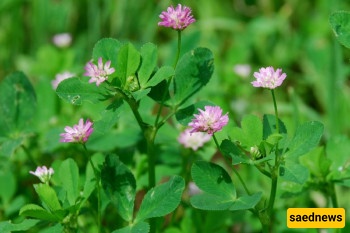
According to Saednews, Clover (Trifolium) is one of the most important forage plants of the legume family (Leguminosae) in temperate and humid regions. It has high value as both a forage and pasture crop and plays a significant role in livestock nutrition.
Clover plants are characterized by their three leaflets. Their scientific name, Trifolium, is derived from the Latin words “tria” meaning “three” and “folia” meaning “leaves,” referring to their three-leaflet structure.
Approximately 300 species of clover have been identified worldwide. Of these, about 25 species are agriculturally important, and only nine species, including subterranean clover, are cultivated commercially.
The greatest diversity of clover species occurs in the Mediterranean region. Around 150–160 species are found in Eurasia, 60–65 species in the Americas, and 25–30 species in Africa.
According to research conducted by Iran’s Plant Gene Bank and Genetic Resources Institute, approximately 54 clover species have been identified in Iran. Among them, Persian clover (Trifolium resupinatum) and Berseem clover (Trifolium alexandrinum) are widely cultivated.

All clover species perform best in cool climates. Among them, white clover is considered the most resilient.
Compared with alfalfa, clovers generally:
Contain a higher concentration of sugars.
Have a greater leaf surface area.
Require less irrigation water.
Are less tolerant of saline soils.
However:
Clover generally produces lower forage yields than alfalfa.
The digestible nutrient content of alfalfa is usually higher than that of clover.
Alfalfa leaves are oval-shaped.
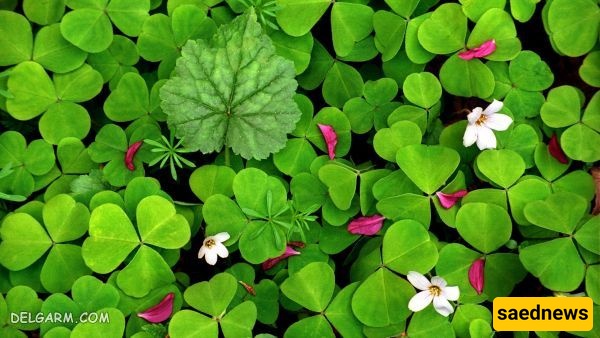
Clover leaves are pear-shaped or rounded.
Clover leaves are bright green and glossy.
Alfalfa leaves are darker green.
Clover contains more sugar than alfalfa, making it highly palatable to livestock.
Clover requires less water than alfalfa.
Alfalfa is more tolerant of saline conditions.
Clover is generally less resistant to soil salinity.
Alfalfa usually produces greater forage yields.
Clover typically produces less biomass but remains highly nutritious.
Alfalfa (Medicago sativa), known in some regions as lucerne, is one of the oldest cultivated forage crops. It is believed to have been first domesticated by the ancient Medes to feed horses.
Alfalfa originated in arid and semi-arid environments and is now cultivated throughout temperate regions of the world. It is recognized as one of the most valuable forage crops due to its high nutritional content and productivity.
In traditional Iranian medicine, fresh alfalfa is considered warm and moist, while dried alfalfa is regarded as warm and dry.
Alfalfa is rich in:
Vitamins
Minerals
Iron
Protein
Antioxidants
Supports growth and bone development in children.
Provides a rich source of iron and may help prevent iron-deficiency anemia.
Supplies vitamin C and other essential nutrients.
Acts as a mild natural laxative.
Helps improve energy levels and overall vitality.
Supports healthy blood formation.
Alfalfa sprouts are commonly consumed in salads and are widely available in supermarkets.
In several countries, including China, Russia, and the United States, fresh alfalfa is also used as a leafy vegetable similar to spinach.
Traditional herbal practices have used alfalfa seed infusions for:
Relief of diarrhea.
Soothing coughs and respiratory irritation.
Supporting general health and vitality.
Historically, poultices made from cooked alfalfa have also been applied externally for certain conditions.
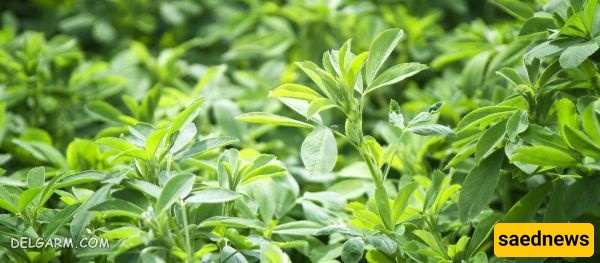
Despite its nutritional benefits, excessive consumption of fresh alfalfa may cause:
Bloating
Gas production
Digestive discomfort
Livestock that consume excessive quantities of fresh alfalfa may also experience severe bloating, which can become dangerous if not properly managed.
Both clover (Trifolium) and alfalfa (Medicago sativa) are highly valuable forage legumes used extensively in livestock production. Clover is known for its high sugar content, lower water requirements, and excellent palatability, while alfalfa stands out for its superior forage yield, greater digestible nutrient content, and stronger tolerance to saline conditions. Choosing between the two depends on climate, soil conditions, water availability, and livestock feeding objectives.