SAEDNEWS: Mandrake, also known as “Mahr-e-Giyah” or “Man-Plant,” is a perennial herbaceous plant belonging to the nightshade family (Solanaceae). It is famous for its thick, forked roots that sometimes resemble the shape of a human being.
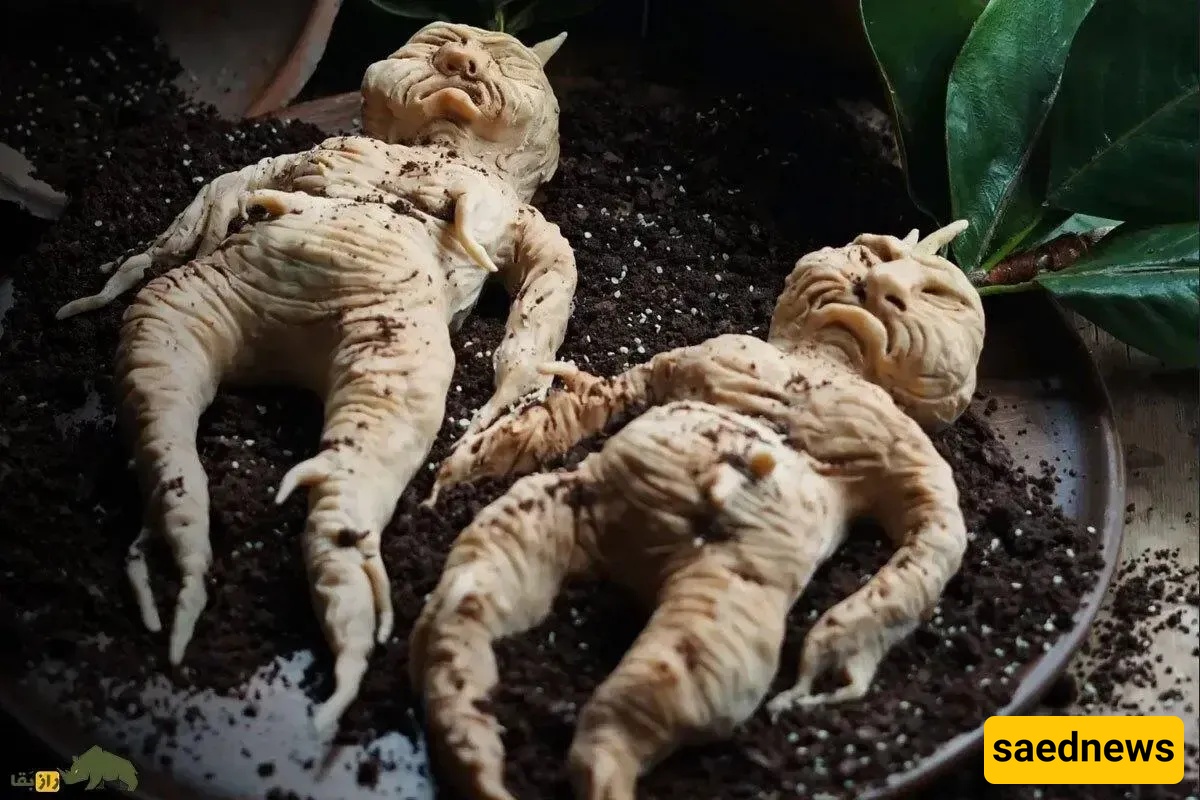
According to a multimedia report from the Saed News analytical media service, the “human-shaped plant” refers to the root of certain plants historically identified with species of the genus Mandragora, found in the Mediterranean region, or other similar species such as Bryonia alba. These plants, whose roots are used in various traditions, are also sometimes referred to as “mandrake.”
The Mediterranean mandrake is a perennial herb with egg-shaped leaves arranged in a basal rosette. It has a thick, often branched, vertical root that is typically elongated and tapered. This is followed by yellow or orange berry-like fruits. Different authors have classified these plants in various ways, and they are highly variable perennial herbs with long, thick roots (often branched) and almost no visible stem.
The leaves grow in a basal rosette and vary in size and shape, reaching up to about 45 cm (18 inches) in length. They are usually oval or broader toward the tip and may show varying degrees of hairiness.
Because mandrakes contain psychoactive tropane alkaloids and their roots often resemble human figures, they have historically been associated with superstition. For centuries, they were used in magical and ritual practices, and even today they appear in certain neo-pagan traditions such as Wicca and Odinism.