SAEDNEWS: Reasons Why Cakes Don’t Rise and How to Fix Them
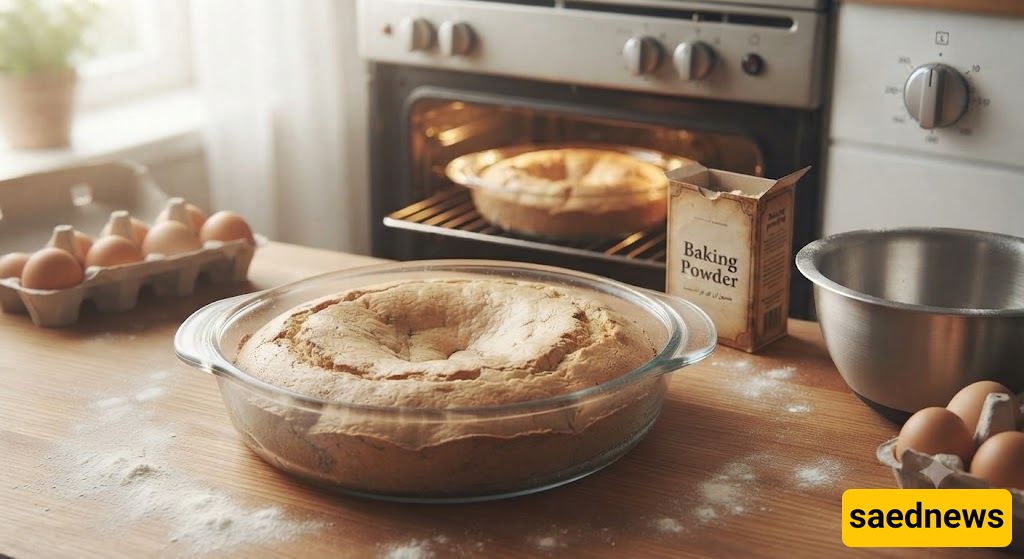
According to Saednews, One of the most enjoyable parts of home baking is preparing a soft, light, and fragrant cake. However, the result does not always turn out as expected. A cake may rise in the oven but collapse after being removed, remain undercooked in the center, or fail to reach the desired height. This leaves many home bakers wondering: Why doesn't my cake rise?
In this article, we explore the main reasons cakes fail to rise, common mistakes that cause cakes to collapse, and practical tips for baking a light, fluffy, and perfectly risen homemade cake.
Before exploring the reasons a cake may not rise, it helps to understand what makes a cake increase in volume.
Cake rising is usually the result of several factors working together:
Air incorporated into the batter while beating the eggs.
The reaction of baking powder or baking soda in a warm, moist environment.
Steam produced by the liquids in the cake batter.
The structure formed by flour proteins and gluten.
When these factors work together properly, the cake develops a light, airy, and spongy texture.
One of the most common reasons a cake fails to rise is expired or ineffective baking powder. Baking powder is a chemical leavening agent that produces carbon dioxide when activated by moisture and heat. This gas creates tiny bubbles in the cake batter, helping it rise.
If baking powder has been exposed to air or moisture for too long, it may lose its effectiveness and fail to produce enough volume.
How to fix it:
Always use fresh baking powder.
Store it in an airtight container in a dry place.
Follow the recipe's measurements. Adding more baking powder does not necessarily produce a fluffier cake.
Flour plays an essential role in a cake's structure. If it is heavily compacted or poorly combined with the other dry ingredients, the cake may develop a dense texture.
Sifting helps break up lumps and distributes baking powder more evenly throughout the flour.
How to fix it:
Sift the flour once or twice.
Mix the baking powder with the flour before sifting.
Avoid overmixing the batter after adding the flour.
Eggs play a crucial role in helping cakes rise. In particular, whipped egg whites act as a natural leavening agent in sponge cakes by trapping air.
If the egg whites are not whipped sufficiently, the batter may not contain enough air. On the other hand, vigorous mixing after adding the whipped egg whites can deflate the batter and remove that air.
Tips for whipping egg whites:
Use a completely clean, dry, grease-free bowl.
Make sure no egg yolk gets into the whites.
Beat the whites until they become voluminous and hold their shape.
Fold them gently into the batter using slow, circular movements.
Opening the oven door during the early stages of baking is a common mistake.
At this point, the cake's structure has not fully developed. A sudden drop in temperature can cause the cake to collapse as the air bubbles inside lose their stability.
How to fix it:
Preheat the oven thoroughly before putting the cake inside.
Avoid opening the oven door during at least the first half of the baking time.
Check for doneness at the appropriate time, using a wooden toothpick if needed.
The oven is one of the most important factors in successful cake baking. If the temperature is too low, the cake's structure may develop too slowly, affecting its ability to rise and hold its shape. If the temperature is too high, the outside may set too quickly while the center remains undercooked.
How to fix it:
Preheat the oven for approximately 15–20 minutes.
Place the cake pan on the middle rack.
If possible, use an oven thermometer to check the actual temperature.
Using cold eggs, milk, or yogurt straight from the refrigerator can prevent the ingredients from combining smoothly.
When ingredients are at room temperature, they generally blend more evenly, helping create a uniform batter and a better cake texture.
How to fix it:
Remove refrigerated ingredients from the refrigerator about 30 minutes before baking, allowing them to reach room temperature.
Excess fat can make a cake dense and interfere with the stability of the air bubbles in the batter.
Some bakers assume that adding more oil will make a cake softer, but too much can have the opposite effect.
How to fix it:
Measure all ingredients accurately.
Maintain the recipe's proportions of oil, flour, and liquids.
Avoid making untested substitutions that alter the balance of the ingredients.
The cake pan significantly affects the cake's height and final shape. If the pan is too large, the batter spreads out and may not rise to the desired height. If the pan is too small, the cake may remain undercooked in the center or overflow during baking.
The material also matters. Metal pans generally conduct heat efficiently and work well for many types of cakes.
How to fix it:
Choose a pan that matches the amount of batter.
As a general guideline, fill the pan no more than two-thirds full.
Place the pan on a level surface in the oven.
Overmixing is another common mistake in cake preparation. Flour contains proteins that form gluten when mixed with liquid. Excessive mixing develops too much gluten, making the cake tough and dense instead of soft and tender.
How to fix it:
Mix only until the ingredients are combined.
Use a spatula or spoon to fold the flour into the batter.
Avoid prolonged mixing with an electric mixer after adding the flour.
The order in which ingredients are combined can significantly affect the final result. Adding ingredients incorrectly may cause the batter to lose air or become unevenly mixed.
For example, many cake recipes call for beating the eggs and sugar until light and fluffy, then adding the oil and other liquids, followed by gently incorporating the flour.
How to fix it:
Follow the recipe's instructions carefully and add the ingredients in the specified order.
Once the batter is prepared, some chemical leavening reactions begin. If the batter sits for too long before baking, some of its leavening power may be lost, reducing the cake's ability to rise.
How to fix it:
Preheat the oven before preparing the batter.
Transfer the batter to the pan and place it in the oven promptly.
Many bakers grease every part of the pan, including the sides. However, for certain sponge cakes, greasing the sides can interfere with the cake's ability to rise.
Some sponge cakes need to grip the sides of the pan as the batter expands upward.
How to fix it:
For sponge cakes that rely on this technique, grease only the bottom of the pan.
Use parchment paper when appropriate.
Follow the specific instructions for your cake recipe, as other cake types may benefit from greasing the sides.
Incorrect measurements are a less obvious but significant reason cakes fail to rise. Adding too much flour, reducing the number of eggs, or increasing the amount of liquid can upset the balance of the recipe.
In baking, even small changes in ingredient ratios can affect the final texture and volume.
How to fix it:
Measure ingredients using a kitchen scale or standard measuring tools.
Follow tested recipes without making unnecessary changes.
Weigh flour rather than relying solely on volume measurements when possible.
Sometimes, the problem lies with the oven itself. The actual temperature may differ from the displayed setting, or certain areas of the oven may receive more heat than others.
This can cause one side of the cake to rise more than the other or different sections to bake at different rates.
How to fix it:
Place the pan in the center of the oven.
Avoid opening and closing the oven door repeatedly.
Use an oven thermometer to check the temperature and identify potential inconsistencies.
If a cake has not finished baking, its internal structure may not be strong enough to support its own weight. As a result, it can collapse after being removed from the oven.
How to fix it:
Before taking the cake out of the oven:
Check whether the surface is properly set and lightly golden, as appropriate for the recipe.
Insert a wooden toothpick into the center.
If the toothpick comes out clean or with a few dry crumbs, the cake is generally ready. Wet batter on the toothpick indicates that it needs more baking.
A cake that rises in the oven but sinks afterward usually has a problem with its internal structure or baking conditions.
If the middle of the cake has not fully baked, it cannot support its own weight and may collapse as it cools.
A low temperature can delay the formation of the cake's structure, making it more likely to sink.
A sudden temperature drop can destabilize the air bubbles inside the cake before its structure has set.
Too much liquid or too little flour can produce a weak, unstable structure that cannot retain its volume.
Cake problem | Possible cause | Recommended solution |
|---|---|---|
The cake does not rise at all | Expired or insufficient baking powder | Use fresh baking powder and measure accurately |
The center remains wet or doughy | Low oven temperature or insufficient baking time | Check the temperature and bake longer |
The cake collapses after removal | The center is underbaked | Make sure the cake is fully baked before removing it |
The cake is tough or dense | Overmixing after adding flour | Mix gently and only until combined |
One side rises more than the other | Uneven oven heat | Position the pan in the center of the oven |
The cake remains short | Pan is too large or there is too little batter | Choose an appropriately sized pan |
The cake is dry | Too much flour or excessive baking | Measure ingredients carefully and monitor baking time |
If you want a light, fluffy, bakery-style homemade cake, follow these ten tips:
Use fresh ingredients. Check the freshness of your baking powder and other ingredients.
Preheat the oven. Make sure the oven reaches the correct temperature before baking.
Sift the flour and dry ingredients. This helps distribute the ingredients evenly.
Beat the eggs correctly. Incorporate enough air according to the recipe.
Handle whipped egg whites gently. Fold them in without deflating the mixture.
Avoid overmixing after adding flour. Stop as soon as the batter becomes uniform.
Measure ingredients accurately. Maintain the correct proportions.
Choose the right pan. Make sure it suits the recipe and quantity of batter.
Bake the batter promptly. Avoid letting it sit unnecessarily before baking.
Keep the oven door closed. Allow the cake enough time to rise and set before checking it.
Common causes include improperly whipped egg whites, incorrect mixing techniques, ineffective baking powder, or opening the oven door too early. For sponge cakes, incorporating and preserving air in the egg mixture is especially important.
No. Too much baking powder does not necessarily improve a cake. Excessive amounts can create an unpleasant taste, cause the surface to crack, and make the cake rise rapidly before collapsing.
This can happen because of an incorrect oven temperature, an unsuitable pan, or excessive heat from the bottom of the oven. The outside may set too quickly while the center does not have enough time to expand and bake properly.
Yes. Some cakes, especially sponge cakes, rely primarily on air incorporated into whipped eggs to achieve their volume. However, baking powder plays an important role in many other homemade cake recipes.
A cake that fails to rise is not necessarily the result of one major mistake. More often, several small errors during preparation and baking combine to affect the final outcome.
Using fresh ingredients, measuring accurately, preparing eggs correctly, choosing the right pan, and maintaining a consistent oven temperature are among the most important factors in achieving a successful cake.
If you want a light, soft, and airy cake, do not focus solely on the amount of baking powder. Pay attention to the entire baking process, from preparing the ingredients to checking the cake for doneness.
With these practical tips, you can reduce the chances of ending up with a flat cake, a collapsed cake, or an undercooked center and enjoy a beautifully risen homemade cake every time.