SAEDNEWS: How to Make Chicken Fesenjan: A Step-by-Step Guide to a Rich, Flavorful, and Perfectly Thickened Persian Stew, with Tips for Balancing Sweet and Sour Flavors and Preparing Shredded Chicken.
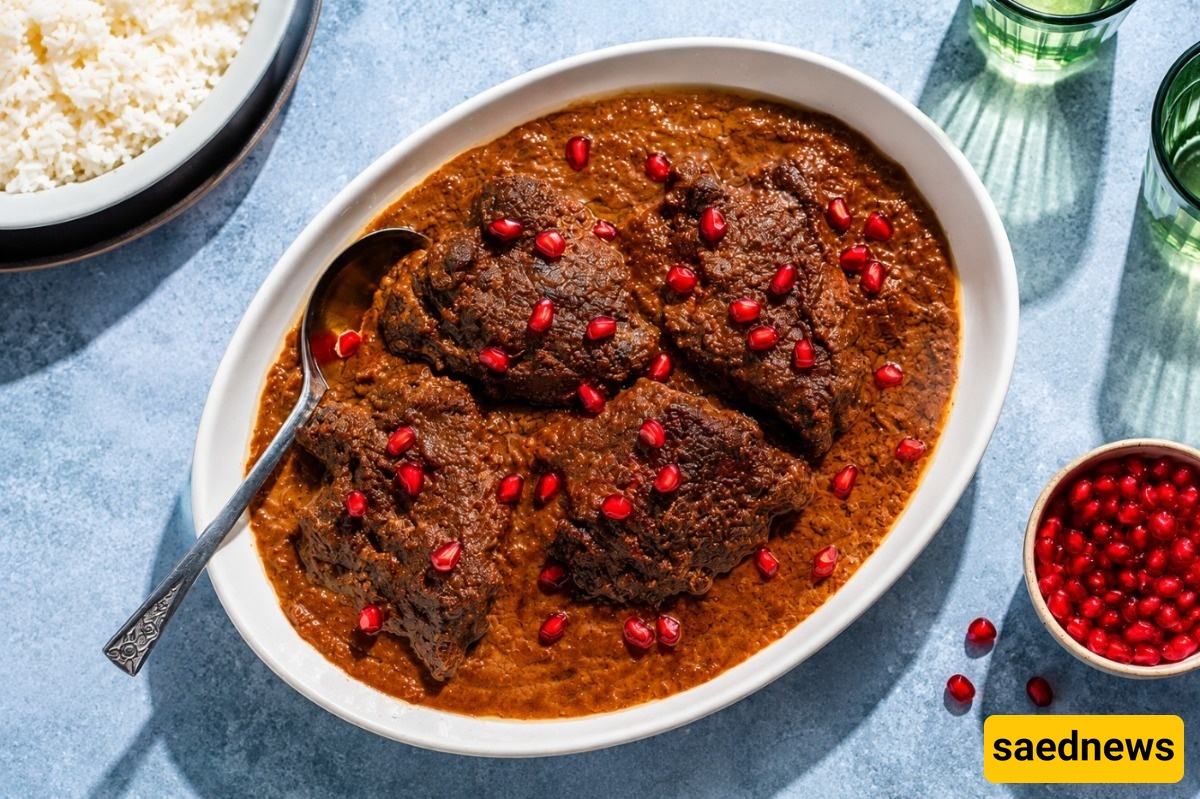
According to Saednews, Fesenjan is one of Iran’s most traditional and beloved dishes. It is made with ground walnuts and pomegranate paste, and depending on your preference, it can have a sour or sweet-and-sour flavor. In this version, we prepare Fesenjan with chicken, which cooks faster than the red-meat version. The tender chicken also absorbs the rich flavors of the walnuts and pomegranate paste beautifully.
By following the proper cooking time and ingredient ratios, you will end up with a thick, rich stew with a beautifully developed flavor and a layer of walnut oil on the surface.
This recipe makes approximately 4 to 6 servings. For 2 servings, simply halve the ingredients.
Ingredient | Amount |
|---|---|
Finely ground walnuts | 500 g |
Chicken pieces | 4–6 pieces |
Pomegranate paste | 250–300 g |
Medium onion, grated | 1 |
Sugar | 1–4 tablespoons, depending on the pomegranate paste and taste |
Turmeric, black pepper, salt | As needed |
Cold water | About 4–5 cups, added in stages |
Tomato paste | 1 tablespoon, optional |
Lemon juice | 1–2 tablespoons, only if needed |
Oil | As needed |
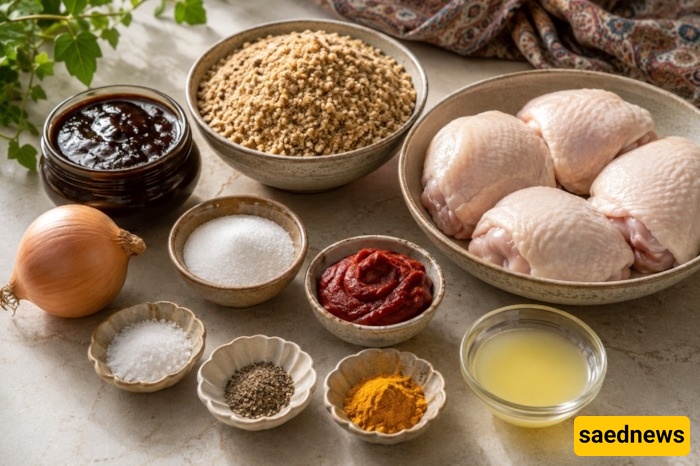
mportant: Tomato paste is not an essential ingredient in Fesenjan and is completely optional. Lemon juice should also not be added in a fixed amount. If your pomegranate paste is already sour, you may not need any lemon juice.
For 10 servings, double the quantities listed above.
Grate the onion and sauté it in a pot with a small amount of oil over medium-low heat until softened and translucent.
Add the turmeric and sauté for a few seconds. Then add the finely ground walnuts.
Cook the walnuts over low heat for only 2–3 minutes. Avoid prolonged frying, as the walnuts can become bitter.
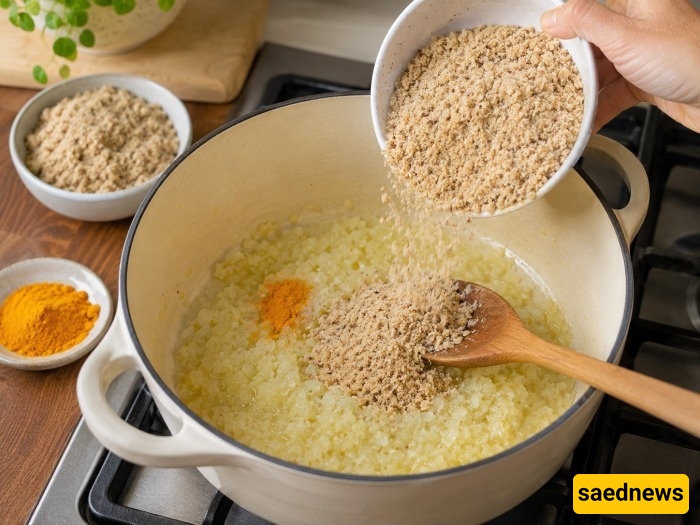
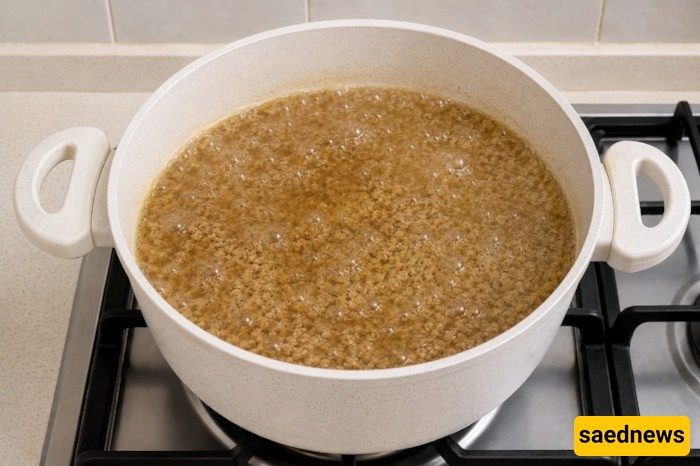
Add about 3 cups of cold water to the walnuts. Increase the heat and bring the mixture to a boil.
Once it starts boiling, reduce the heat and let the walnuts simmer gently for about 45 minutes to 1 hour.
If the liquid becomes too low during cooking, add a little more cold water. This gives the walnuts enough time to cook properly and release their natural oil.
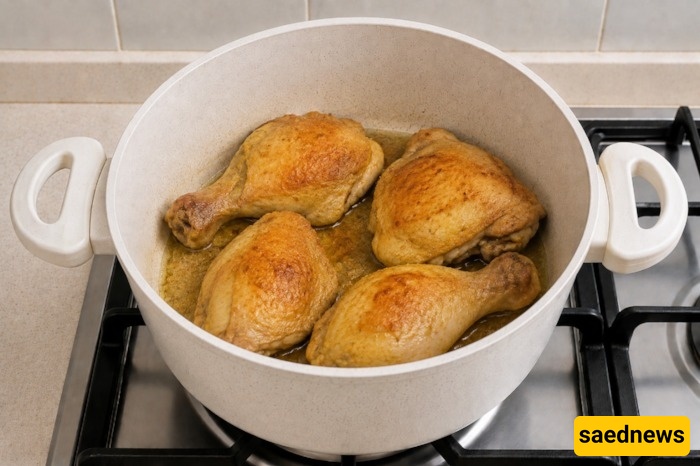
While the walnuts are cooking, season the chicken pieces with salt, black pepper, and turmeric.
Heat a little oil in a frying pan and brown both sides of the chicken until golden.
The chicken does not need to be fully cooked at this stage because it will finish cooking in the stew.
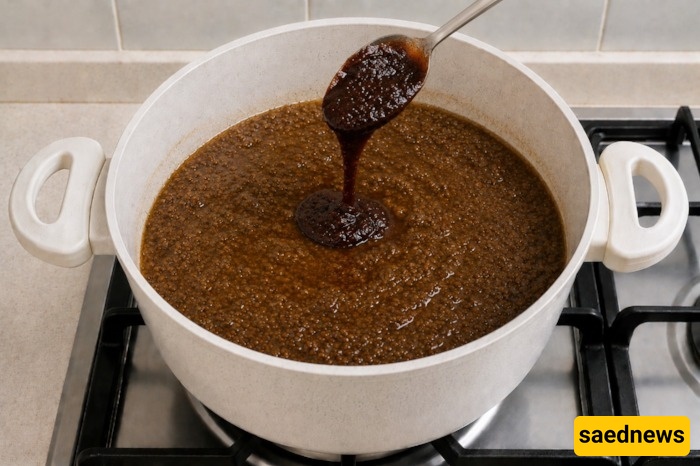
Once the walnuts are well cooked and begin releasing their oil, add the pomegranate paste and stir thoroughly to combine.
If you want a deeper color and choose to use tomato paste, add 1 tablespoon at this stage.
Allow the walnuts and pomegranate paste to cook together over low heat for about 20–30 minutes. This helps remove the raw taste of the pomegranate paste and allows the flavors to develop.
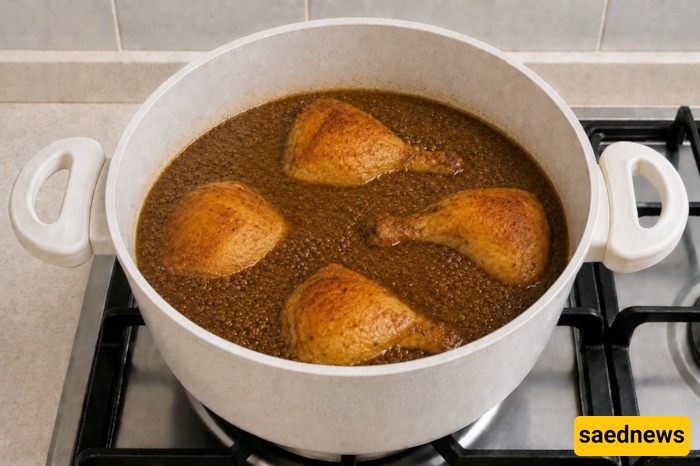
Place the browned chicken pieces into the pot.
If the stew has become too thick at this point, add a little cold water. Do not add too much, as Fesenjan should have a thick consistency when finished.
Partially cover the pot and let the stew cook over low heat for approximately 1 to 1½ hours.
Slow cooking allows the chicken to absorb the flavors of the walnuts and pomegranate paste while giving the stew time to thicken and develop its characteristic richness.
About 30 minutes before the end of cooking, taste the stew.
If you prefer a sweet-and-sour Fesenjan, gradually add sugar, tasting after each addition. The amount of sugar depends largely on how sour your pomegranate paste is, so avoid adding all of it at once.
If your pomegranate paste is sweet but you want a more sour flavor, add a small amount of lemon juice. With sour pomegranate paste, lemon juice is usually unnecessary.
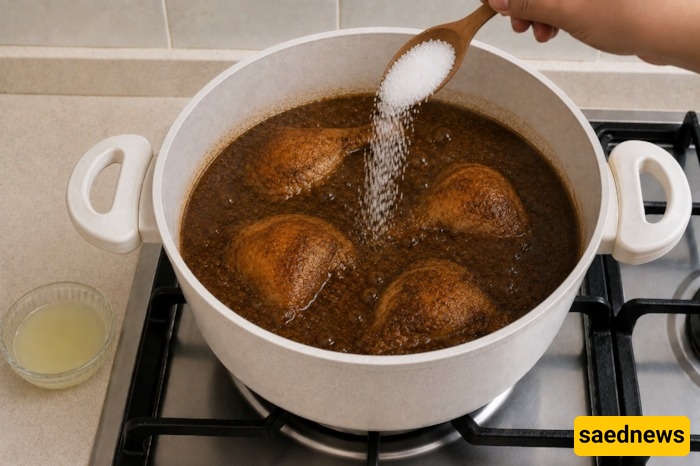
During the final minutes of cooking, keep the heat very low and allow the stew to finish cooking slowly.
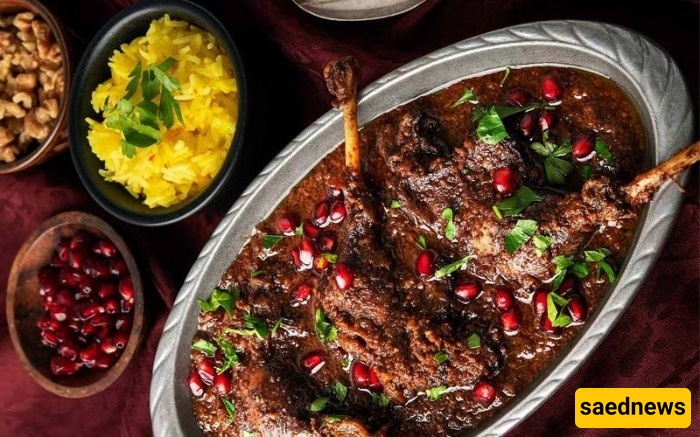
Fesenjan is ready when the sauce has become thick, the walnuts have released their oil, and a visible layer of oil has formed on the surface.
Turn off the heat and let the stew rest for a few minutes before serving.
Serve Fesenjan with steamed white rice.
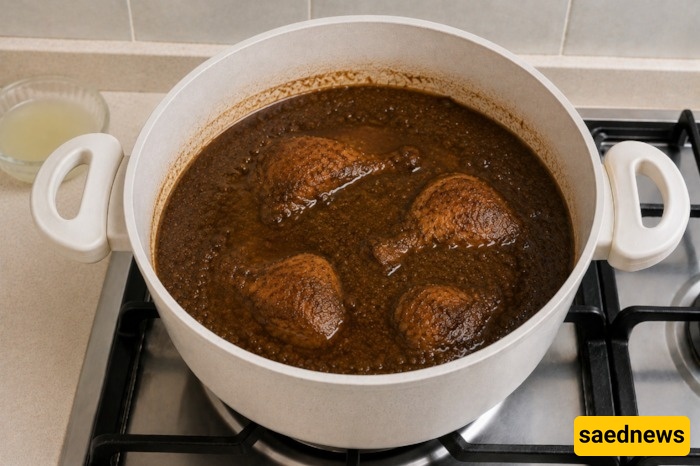
For the walnuts to release plenty of oil, grind them very finely using a food processor or meat grinder.
Do not fry the walnuts for too long, as they can become bitter. At the same time, do not add them completely raw, as this can give the stew an unpleasant taste and aroma.
If using tomato paste, keep the amount small so it does not overpower the traditional flavor of Fesenjan.
To encourage the stew to release its oil after frying the walnuts, immediately add cold water or a few ice cubes.
If you prefer a sour Fesenjan, adding about 1 level tablespoon of sugar can help balance the flavor and improve the color of the stew.
If making Fesenjan with red meat, using small meatballs instead of large pieces of meat can make the dish more attractive and easier to serve.
For a thicker, more velvety sauce, finely grate one apple into the stew during the final 30 minutes of cooking. Adjust the amount according to the quantity of stew.
For an even richer flavor, you can add ground pistachios. A good ratio is approximately one-third the amount of ground pistachios compared with the walnuts.
You can sauté the pomegranate paste together with the walnuts to give the stew a deeper color.
Saffron can be used instead of turmeric to give the dish a more appealing color and a pleasant aroma.
For a sweet-and-sour flavor, use sweet-and-sour pomegranate paste together with sugar or date syrup. Alternatively, use sour pomegranate paste with dried apricots.
For a smoother, more uniform stew, grate the onion using the fine side of a grater.
The use of spices is optional and depends on personal preference. You can also add about 1 teaspoon of cinnamon or a bay leaf.
For shredded chicken Fesenjan, chicken breast or thighs can be cooked separately with onion, a little turmeric, and water.
Once the chicken is cooked, remove the bones and shred the meat by hand or with a fork.
Prepare the Fesenjan using the traditional method with ground walnuts and pomegranate paste. When the stew is nearly finished and has thickened, add the shredded chicken.
Cook for another 20–30 minutes, which is enough time for the chicken to absorb the walnut and pomegranate flavors without becoming excessively soft or mushy.
If you want the chicken to remain juicier, chicken thighs are a better choice. Chicken breast has a lighter and leaner texture.
When preparing a quick version of shredded chicken Fesenjan, it is best to make the stew slightly thicker than usual because the shredded chicken will absorb some of the sauce.
Preparation time: Approximately 15 minutes
Cooking and resting time: Approximately 4 hours
Servings: About 4 people
Best served: Lunch or dinner
Ramadan: It can also be served as a Suhoor meal.
Fesenjan is traditionally served with white rice, allowing the rich walnut and pomegranate sauce to complement the rice perfectly.