SAEDNEWS: Fruit concentrate and fruit puree are two widely used products in the food industry that have fundamental differences in terms of production process, texture, nutritional value, shelf life, and applications. In this article, we will take a closer look at these differences so you can make the best choice for your product
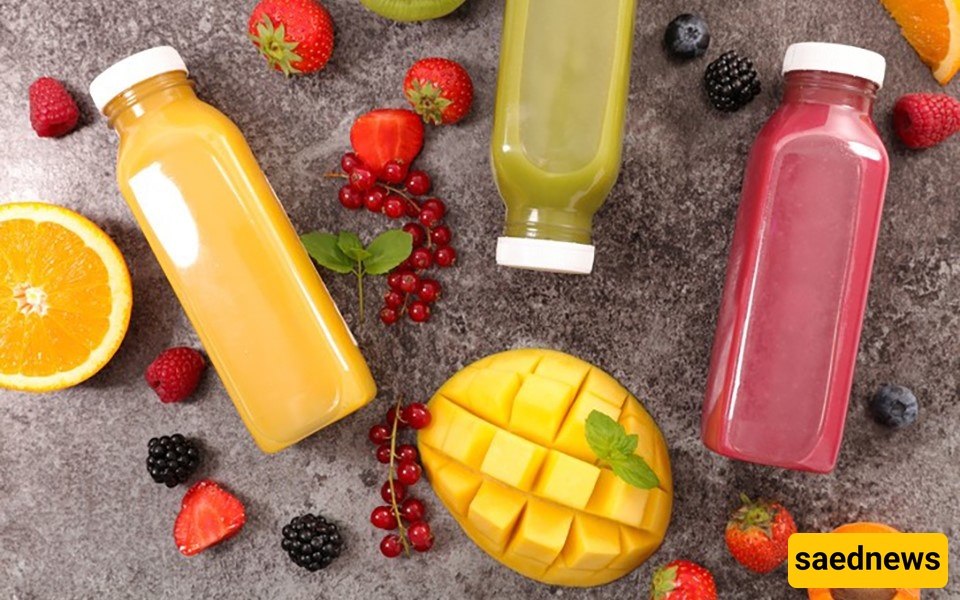
According to SAEDNEWS, Fruit concentrate is a product obtained by removing most of the water from fresh fruit. This process is usually carried out using thermal methods such as vacuum evaporation. In this method, the fruit juice is evaporated at temperatures lower than its normal boiling point in order to preserve nutrients and flavor. The final product is a thick liquid with a concentration about 3 to 7 times higher than the original fruit. Fruit concentrate typically contains around 65 to 70% soluble solids.
Fruit puree is produced by completely crushing fresh or frozen fruits. During production, the fruits are first washed, peeled, and de-seeded, and then processed using special machines into a smooth, uniform pulp. Unlike concentrate, no water removal or thickening process is applied in fruit puree, so the natural water content of the fruit is retained. Fruit puree usually contains about 10 to 15% soluble solids and has a soft, creamy texture.
1. Water content and concentration
The main difference between fruit concentrate and fruit puree is the amount of water they contain. Fruit concentrate is thickened by removing water and is therefore much more concentrated than puree. For example, producing 1 kg of orange concentrate requires about 5 to 7 kg of fresh oranges, while producing 1 kg of orange puree requires only about 1.2 to 1.5 kg of fruit.
2. Texture and consistency
Fruit puree has a soft, creamy, and relatively smooth texture similar to a thick sauce. This texture is due to the retention of both soluble and insoluble fruit fibers. In contrast, fruit concentrate is a thick, viscous liquid that behaves more like a dense syrup. It usually contains no solid particles or coarse fibers.
3. Fiber content
One of the key nutritional differences between the two products is their fiber content. Fruit puree contains both soluble and insoluble dietary fibers because the whole edible part of the fruit is preserved. These fibers are beneficial for digestive health. In contrast, fruit concentrate is generally fiber-free, as pulp and fibers are removed during processing.
4. Nutritional value
In terms of nutritional value, fruit puree is generally more nutritious than fruit concentrate. Puree contains higher levels of vitamins, minerals, and antioxidants because all parts of the fruit are preserved. Concentrate also contains nutrients, but some heat-sensitive vitamins such as vitamin C are reduced during the concentration process. However, due to its high density, fruit concentrate contains more calories and sugar per unit volume.
5. Taste and aroma
Fruit puree has a more natural flavor, closer to fresh fruit. Its aroma and taste are richer and more complex because the volatile aromatic compounds are preserved. Fruit concentrate also has a strong, sweet flavor, but it may develop a “cooked” or caramel-like taste due to the heat processing. Some volatile flavor compounds are lost during concentration.
6. Shelf life and storage
Fruit concentrate has a longer shelf life because of its high sugar and acid content and reduced water level. It can typically be stored at room temperature or in refrigeration for several months. Fruit puree, on the other hand, has a shorter shelf life due to its higher water content and full nutritional composition, and it usually requires freezing. Commercial purees are commonly preserved through pasteurization or freezing methods.