SAEDNEWS: Homemade lemon juice is a delicious and widely loved condiment with many fans across Iran. Here is a simple, step-by-step guide to preparing fresh homemade lemon juice.
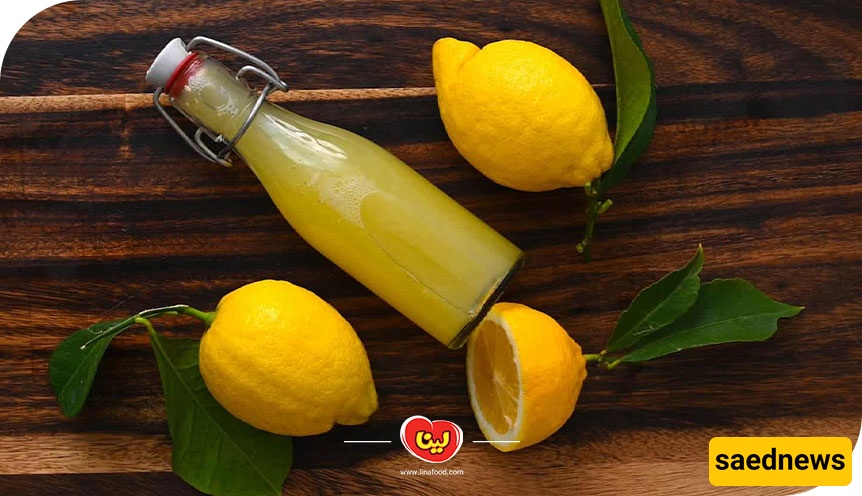
According to Saednews, Making lemon juice at home is a healthy and reliable way to preserve the natural properties of lemons. Homemade lemon juice contains no additives and is completely natural. It is worth noting that some dishonest producers mix a small amount of natural lemon juice with citric acid, artificial coloring, and water, then sell it as pure lemon juice. For this reason, the following method explains how to prepare fresh homemade lemon juice.
Sour lemons: 2 kg
Carrot: 1 piece
First, wash the lemons and dry them well. Then spread them out at room temperature or in a dark place for 1–2 days so that the peel becomes slightly dry; this helps prevent bitterness when extracting the juice.
Peel the carrot and set it aside for later use inside the juice container.
Cut the lemons in half and extract the juice using a manual juicer. Make sure to remove all seeds during the process. You can also use an electric juicer. After juicing, strain the liquid to remove any remaining pulp or seeds.
Pour the lemon juice into a glass container, seal it tightly, and store it in the refrigerator. After some time, remove the carrot from the bottle.
For longer storage, you can pour the juice into small containers, leave some empty space at the top, and store them in the freezer.
Freezing lemon juice in ice cube trays helps preserve its color and freshness. Each cube can be used as needed.
Drying the lemons helps prevent bitterness.
Use one carrot for every 4 liters of lemon juice.
Cover the container with a cloth or plastic wrap if necessary.
Removing seeds is important, as they can cause bitterness.
If bitterness remains, adding a fresh carrot and leaving it for another day may help.
Store lemon juice in dark-colored containers to reduce light exposure.
Glass containers are recommended for storage.
If the container is not dark, wrap it in a cloth.
In industrial production, lemons of various sizes are collected and washed, cleaned, and dried. They are then sliced and slightly heated. This heating step helps eliminate possible microorganisms and softens the fruit for easier juice extraction.
Next, the softened lemons are pressed to extract the juice. The juice is then filtered to remove seeds and pulp, resulting in a uniform liquid. To ensure safety and eliminate remaining microbes, the juice undergoes pasteurization. Finally, the pasteurized lemon juice is packaged in bottles, labeled, and prepared for market distribution. In some cases, pasteurization is done after bottling.
Homemade lemon juice is a natural and healthy alternative to commercial products, offering freshness and purity without additives.