SAEDNEWS: The iPhone 18 series, with a focus on the high-end Pro and Pro Max models, has been officially unveiled. With sales beginning on September 18, 2026, competition in the smartphone market is set to intensify. In this article, we cover everything you need to know about this new generation.
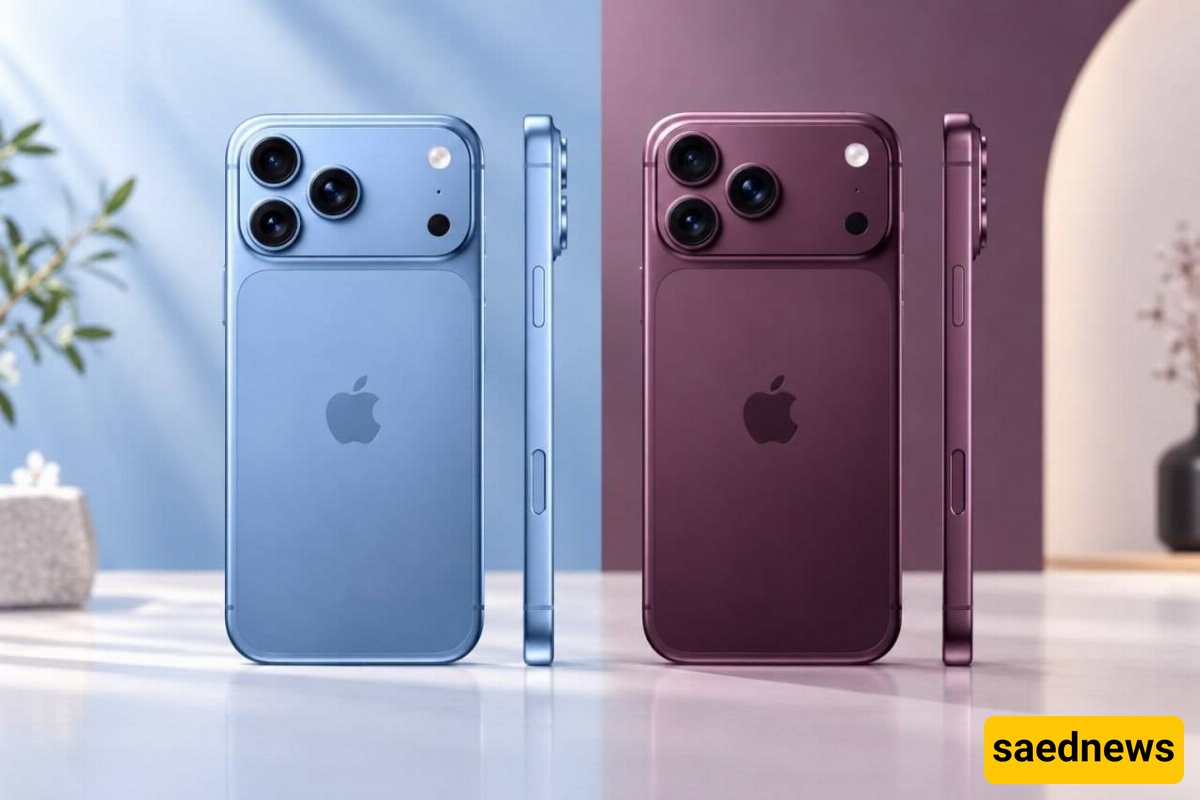
According to Saednews, The wait is finally over. With the official introduction of the iPhone 18, Apple has once again pushed the boundaries of the smartphone industry. The new generation of iPhone, which is set to hit the market on September 18, 2026, is far more than a simple upgrade. Equipped with the A20 Pro chip, a main camera with a variable aperture, and deeper artificial intelligence integration, it takes a significant step toward improving processing performance and battery life. In this article, we take a closer look at the most notable features and capabilities of the iPhone 18.
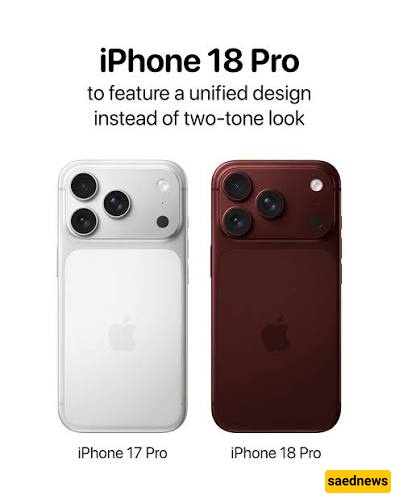
If you are wondering what the iPhone 18 looks like, the phone remains faithful at first glance to Apple's familiar and popular design language. However, a closer look reveals subtle and carefully considered changes to the internal structure and body details.
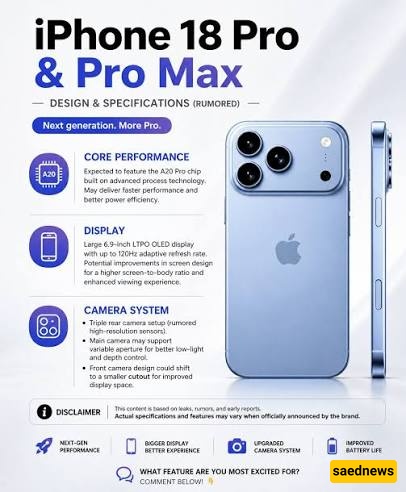
On the front, the Dynamic Island is now smaller and more optimized, providing useful information more efficiently than before. Overall, if you are expecting a completely revolutionary visual redesign, the iPhone 18 represents more of a purposeful evolution than a complete overhaul. Apple has chosen to focus the main strengths of the iPhone 18 Pro and Pro Max on internal hardware, camera quality, and processing performance.
For this generation of flagship models, Apple uses a durable aluminum body and offers four distinctive color options:
Black
Silver
Light Blue
Burgundy
Alongside the durable construction, these new colors give the professional iPhone models a distinctive and premium appearance, allowing users to enjoy both powerful hardware and an appealing design.
The key specifications of the new iPhone generation can be summarized as follows:
Advanced camera system: Apple uses a 48-megapixel Fusion camera with a variable aperture, including ƒ/1.48, ƒ/1.8, ƒ/2.8, and ƒ/4.0 settings. This provides greater control over incoming light and depth of field.
Telephoto camera: For capturing subjects from a distance, the phone features a 48-megapixel telephoto camera with 4x optical zoom, helping maintain image quality at different zoom levels.
Performance and processing: The combination of a new chip and an optimized cooling system makes these phones highly capable devices for demanding workloads.
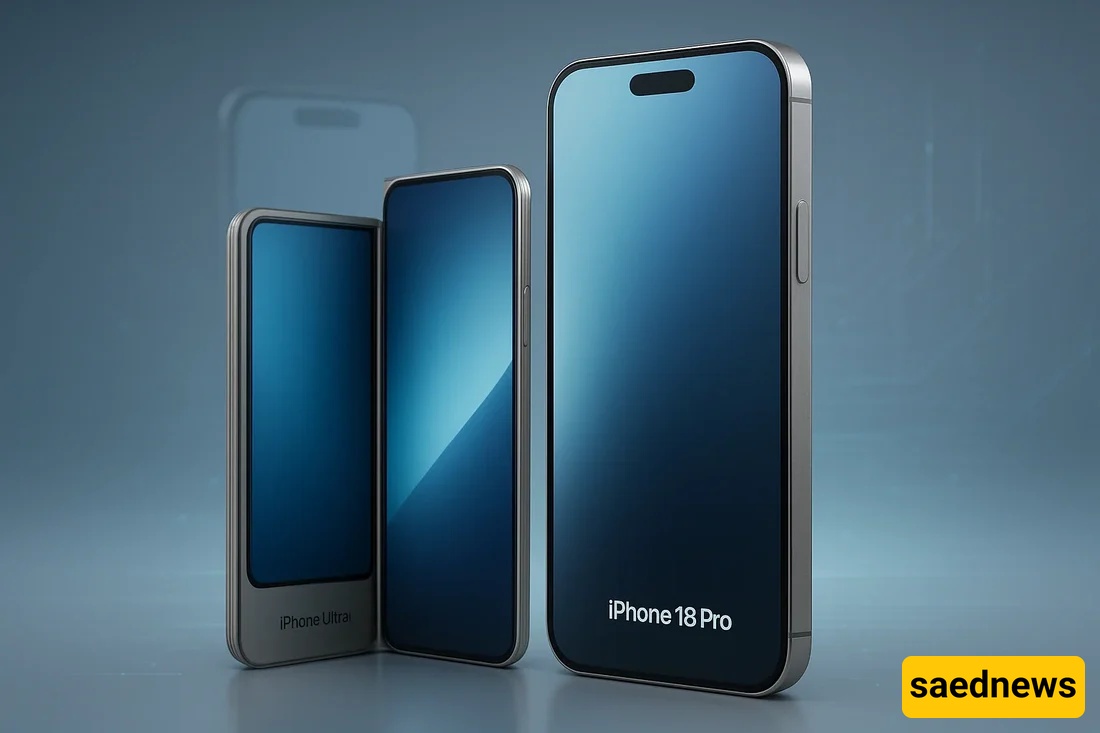
One of the major areas of improvement in the iPhone 18 generation is its camera system, alongside changes to processing hardware, thermal management, battery performance, and AI capabilities.
The camera system is one of the most significant features of the iPhone 18 Pro. With structural changes and new imaging technologies, Apple has introduced several upgrades aimed at improving mobile photography and video recording.
One of the most notable innovations is the addition of a variable aperture to the 48-megapixel Fusion main camera.
This is more than simply a technical specification. The camera can now intelligently control the amount of light entering the lens and adjust depth of field. This can make low-light photography, professional-looking portraits with soft and natural bokeh, and precise image-detail control easier and more flexible.
Alongside the main sensor, the phone includes a comprehensive set of imaging tools:
48-megapixel ultra-wide camera: Designed for capturing wide scenes with a high level of detail.
48-megapixel telephoto camera: Uses an advanced tetraprism design to provide 4x optical zoom.
Advanced optical image stabilization: A sensor-shift stabilization system helps reduce unwanted movement when capturing photos and videos, including during handheld shooting.
Apple has not designed the iPhone 18 Pro solely for photography. With professional video-recording tools, advanced recording formats, and precise image-control options, the device can serve as a compact mobile production studio.
For many types of projects, these capabilities can make the iPhone a practical alternative to dedicated professional cameras.
The A20 Pro chip is at the heart of the iPhone 18 Pro and Pro Max. Apple reportedly uses an advanced 2-nanometer manufacturing process for this processor, bringing another generation of performance improvements to its smartphones.
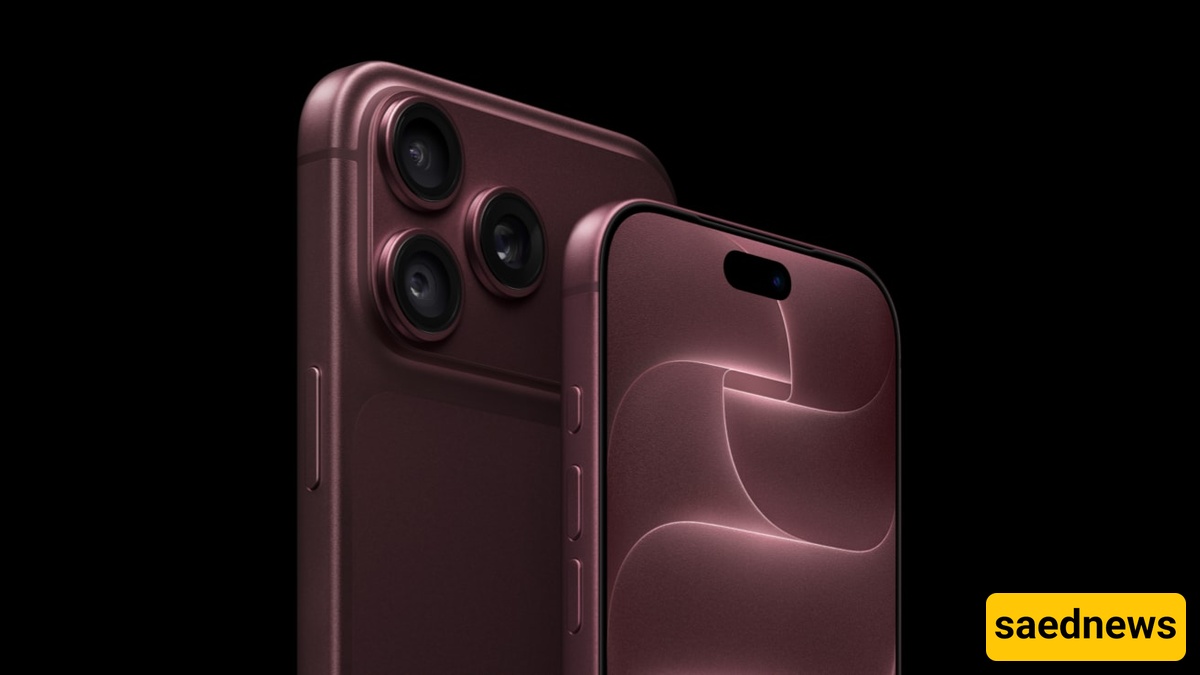
Here is a quick look at the reported specifications of the A20 Pro:
CPU: A powerful 6-core processor designed for demanding computational workloads.
GPU: A 7-core graphics processor with a reported 40% performance increase compared with the previous-generation A19 Pro.
Neural Engine: A new-generation Dual 16-core Neural Engine designed to significantly improve on-device artificial intelligence processing.
The hardware capabilities are not limited to demanding games. The A20 Pro can also support intensive video editing, complex image processing from the 48-megapixel camera, Apple's AI features, and multitasking with multiple applications running simultaneously.
These improvements are designed to help the iPhone 18 remain responsive and capable for years to come.
Users performing demanding tasks such as playing graphics-intensive games, recording high-resolution video for extended periods, or running complex AI workloads can experience increased temperatures and performance throttling.
For this generation, Apple uses a new vapor chamber cooling system designed to provide a larger contact area for faster heat dissipation.
According to the reported specifications, the new cooling system improves sustained performance by up to 40% compared with the previous generation, helping the phone maintain performance and controlled temperatures during demanding workloads.
Battery life is an important consideration for many smartphone buyers. Apple has introduced several optimizations aimed at extending the battery performance of the new generation.
According to Apple, the iPhone 18 Pro Max can provide up to 45 hours of video playback. Actual battery life can vary depending on applications, network conditions, settings, and usage patterns.
The fast-charging system has also been improved. With approximately 15 minutes of charging, the battery can reportedly reach 50% capacity.
The Pro Max model can also provide several hours of video playback after a short charging session, making it more suitable for users who frequently rely on their phones throughout the day.
The iPhone 18 Pro and Pro Max are available in multiple storage capacities to accommodate different usage requirements.
Because iPhones do not support expandable storage through memory cards, choosing the appropriate capacity at the time of purchase is particularly important.
For users who primarily take everyday photos and use their phones for social media and general browsing, the base 256GB capacity may provide sufficient space.
For users who rely heavily on the iPhone camera, record long videos, or regularly store large files, a higher-capacity model may be more appropriate.
One of the notable features of the iPhone 18 is its integration with iOS 27 and Apple's advanced Apple Intelligence capabilities.
Siri AI has been updated in this generation to provide a more capable personal assistant experience and help users perform more complex tasks.
At launch, Apple's AI features are primarily focused on English. Users should therefore check whether the features they need are available in their region and preferred language before purchasing.
As Apple's AI capabilities continue to develop, the technology is expected to play an increasingly important role in everyday smartphone use.

The choice between the two models depends largely on how you plan to use the device.
The Pro Max offers a larger display, making it suitable for users who want more screen space for tasks such as detailed video editing and multimedia consumption. Its larger size can also accommodate a higher-capacity battery.
The standard Pro is more compact and easier to handle, particularly for users who prefer operating their phone with one hand.
The larger dimensions and greater weight of the Pro Max may be less convenient for people who prioritize portability and everyday comfort. Before purchasing, users should therefore consider whether they place greater importance on a larger display or a more compact form factor.
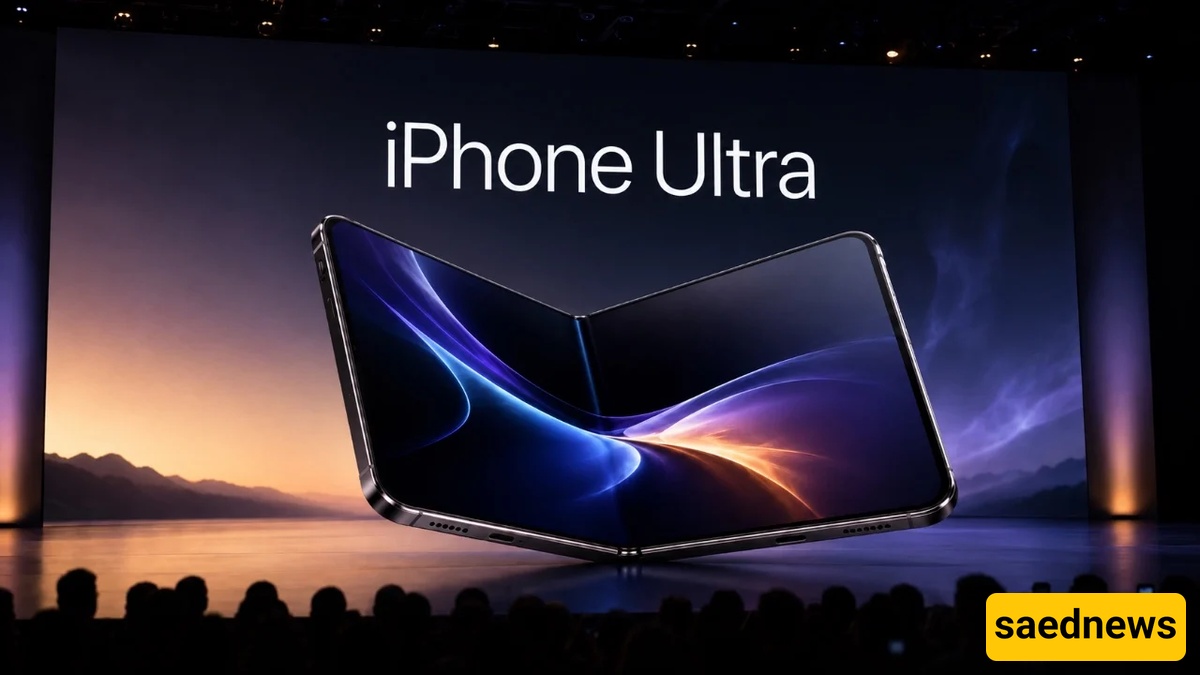
The iPhone Duo represents Apple's entry into the foldable smartphone market. The device features a 7.6-inch internal OLED display with a nano-texture finish and a 5.4-inch external display. Both displays reportedly support a 120Hz refresh rate.
The internal display also supports the Apple Pencil USB-C.

Multitasking: When unfolded, the larger screen provides enough space to run two applications simultaneously, such as a browser and messaging app or productivity software. This can be useful for reading, photo editing, and working with documents.
Foldable photography: By placing the phone on a flat surface without a tripod, users can use the main camera for selfies while viewing the subject on the external display. The Smart Take feature can also assist with group and family photos.
Dimensions and weight: The device is approximately 11.3mm thick when folded and weighs 254 grams, making it a relatively substantial smartphone.
Camera limitations: Unlike the Pro series, the Duo does not include a dedicated telephoto lens. Its main and ultra-wide cameras are both 48-megapixel units.
SIM support: The iPhone Duo supports eSIM only and does not include a physical SIM-card slot.
Pricing varies significantly across the different iPhone 18 models. For example, the Pro Max is expected to cost considerably more than the standard model.
When searching online stores or comparing prices, it is important to specify the exact model, such as the iPhone 18 Pro, to avoid confusion.
The final retail price of the iPhone 18 in Iran depends on more than Apple's international pricing. Several local factors can affect the price, including:
Exchange rates: Changes in the value of the U.S. dollar.
Additional costs: Import expenses and customs duties.
Legal requirements: Costs associated with phone registration.
After-sales services: Warranty type and the seller's payment terms.
Overall, the iPhone 18 generation combines hardware upgrades, camera improvements, enhanced thermal management, longer battery performance, expanded AI capabilities, and new form factors such as the iPhone Duo. For prospective buyers, the differences between the various models and storage capacities are key factors to consider when selecting the right device.