SAEDNEWS: The Indian Space Research Organisation (ISRO) successfully placed EOS-05, India’s first imaging satellite designed to operate from a geosynchronous orbit, into its planned sub-geosynchronous transfer orbit on Friday.
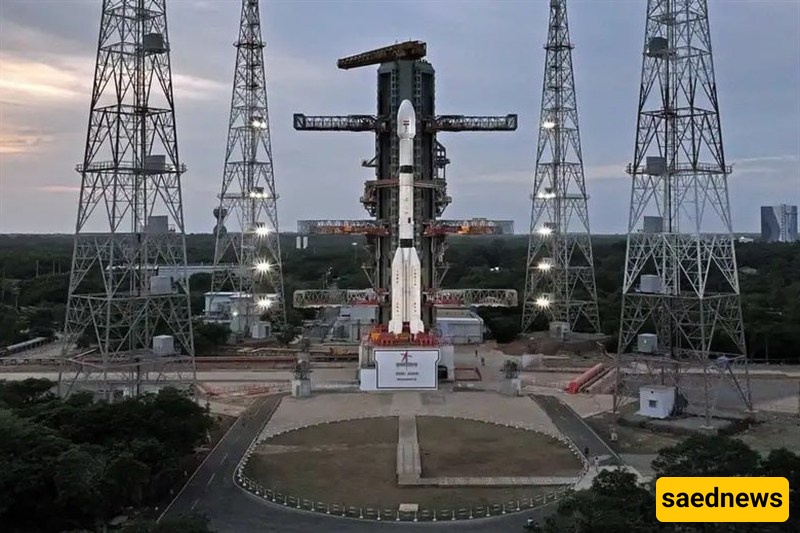
According to Saednews, India’s Geosynchronous Satellite Launch Vehicle, GSLV-F17, successfully lifted off from the Satish Dhawan Space Centre in Sriharikota at 2:55 a.m. local time (2125 UTC), carrying an Earth observation satellite.
Around 18 minutes after launch, the Indian Space Research Organisation (ISRO) confirmed that the satellite had been precisely placed into its designated orbit, declaring the mission a success in a post on X.
ISRO Chairman V. Narayanan said the rocket inserted the satellite into orbit with high precision. He noted that the mission represented the 107th launch from Sriharikota and the 19th flight of the GSLV.
Narayanan highlighted the progress made in the GSLV programme, noting that the vehicle carried a 1,536-kg payload during its first flight, while the latest mission transported its heaviest payload to date, weighing 2,367 kg. He attributed the improvement to reductions in structural mass and advances in the propulsion system.
The satellite is India's first dedicated imaging satellite designed to operate from a geosynchronous orbit. According to Narayanan, it will provide important strategic data for the country.
He also announced that ISRO plans to carry out six additional launches during the current financial year. These missions include the NVS-03 navigation satellite and the first uncrewed flight under India's Gaganyaan human spaceflight programme.
The latest mission was the first GSLV launch since GSLV-F16 successfully deployed the joint NASA-ISRO NISAR Earth observation satellite into a 743-km sun-synchronous orbit on July 30, 2025.
It was also ISRO's second orbital launch of 2026. Earlier in the year, PSLV-C62, carrying EOS-N1 and several other payloads, was unsuccessful after an anomaly occurred near the end of its third-stage flight on January 12.