SAEDNEWS: These days, artificial intelligence has become one of the most important tools in modern daily life. However, before using AI, it is better to understand some important points and considerations.
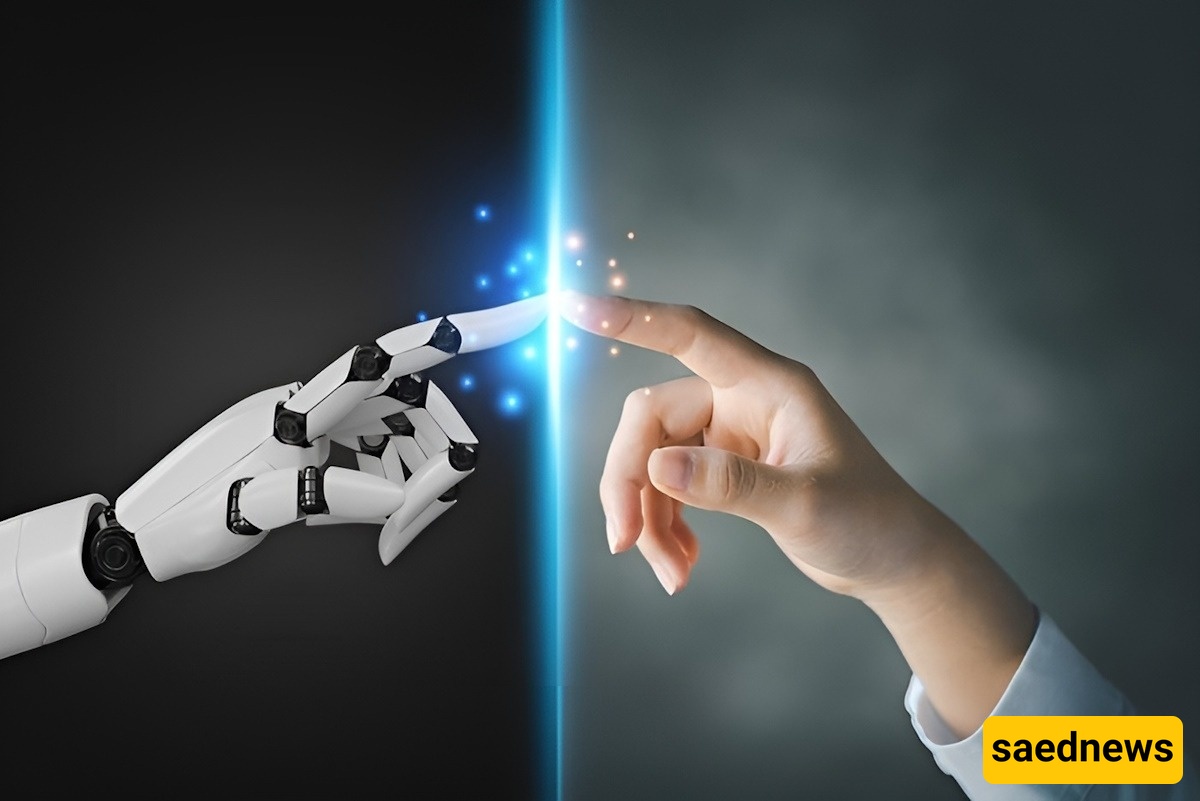
According to Saednews, Have you ever imagined a time when machines could analyze data, learn from experiences, and even make complex decisions? Today, Artificial Intelligence (AI) has become deeply integrated into our daily lives, making many tasks easier and more efficient. From virtual assistants to self-driving vehicles, AI can be found in almost every corner of the world. But what makes this revolutionary technology so powerful and influential? And will its benefits outweigh the possible concerns and challenges? This article explores the role of artificial intelligence in our lives and provides a deeper understanding of its capabilities, uses, and future potential.
Using artificial intelligence effectively requires clarity and precision to receive the best possible responses. One of the first steps is to clearly define your question or problem. You should specify exactly what information you need or what issue you want to solve.
For example, instead of asking:
"How can I create a program?"
you can ask:
"How can I write a Python program that identifies prime numbers up to 100?"
This approach helps AI understand your request better and provide more accurate answers.
Another important factor when interacting with AI is using appropriate keywords. These keywords should be directly related to your topic and help the AI system identify the most relevant information.
For example, if you are looking for information about "the use of artificial intelligence in healthcare," including these specific terms in your request allows AI to provide more relevant articles, research, and data.
Remember that AI can improve through feedback. After receiving an answer, if you need more details or find something unclear, you can refine your request, add additional information, or ask follow-up questions.

To use Google's AI-powered services, you can access them through internet-connected devices and Google platforms. For example, Google Assistant can help users set reminders, search for information, and control smart devices.
Similarly, Google Photos uses AI technology to organize images automatically and allow users to search photos based on their content.
Google’s artificial intelligence systems use advanced algorithms and large amounts of data to improve user experiences and make everyday activities more convenient.
Artificial intelligence can create significant changes in businesses and everyday life. To start using AI effectively, several important steps should be followed.
The first step is identifying what you want to achieve.
For example:
Do you want to build a chatbot that answers customer questions?
Do you want to analyze data and discover hidden patterns?
Do you want to optimize manufacturing processes?
Having a clear objective helps determine the right AI approach.
Selecting suitable tools for developing and implementing an AI project is extremely important. The right software, platforms, and algorithms can greatly influence the success of an AI system.
Data is the foundation of every artificial intelligence project. Without high-quality data, AI models cannot be trained effectively.
You need to collect sufficient and relevant data, then clean and prepare it. This process may include:
Removing incorrect or incomplete information
Normalizing data
Creating new useful features
For example, in a facial recognition project, collecting images and correctly labeling each face is a critical step.
At this stage, the AI model is designed and trained. Choosing the right algorithms is essential.
Common machine learning algorithms include:
Linear regression
Neural networks
Decision trees
Support vector machines
AI models must be trained using appropriate datasets and adjusted carefully so they can perform accurately on new information.
The AI model must be tested with new data to measure its performance.
Common evaluation methods include:
Accuracy
Recall
F1 score
If the results are not satisfactory, the model can be improved by:
Adjusting parameters
Using more data
Changing algorithms
Once the model is ready, it can be integrated into applications and systems.
This stage includes:
Connecting the model with existing systems
Testing it in real-world situations
Updating it regularly to improve performance
For example, a customer service chatbot must be integrated into a website and tested to ensure it responds correctly and meets customer needs.
Artificial intelligence uses algorithms and data to create powerful solutions across many industries. From improving quality of life to increasing productivity, AI has become an important part of the modern world.
AI is used for:
Diagnosing diseases
Predicting disease development
Providing personalized treatments
AI systems can analyze medical images and help detect diseases such as cancer with high accuracy.

Autonomous vehicles use AI algorithms to:
Analyze surroundings
Detect obstacles
Make real-time driving decisions
AI helps online businesses by:
Recommending products
Analyzing customer behavior
Improving sales strategies
Recommendation algorithms can provide personalized shopping suggestions based on user interests.
AI-powered chatbots and virtual assistants can:
Answer customer questions
Solve common problems
Improve user experiences
AI is used to:
Increase productivity
Predict equipment failures
Optimize production processes
AI can identify security threats, predict cyberattacks, and help protect digital systems.
Machine learning algorithms can detect unusual patterns in networks and identify potential risks.
AI supports education through:
Personalized learning programs
Student performance analysis
Automated educational content creation
AI is used in financial industries for:
Market prediction
Fraud detection
Investment portfolio optimization
AI helps farmers by:
Monitoring crops
Predicting weather conditions
Improving agricultural productivity
In entertainment, AI is used to:
Create new content
Analyze audience preferences
Improve user experiences
AI algorithms can recommend or generate personalized movies, music, and games based on individual interests.
Artificial intelligence has transformed the way people work, communicate, learn, and solve problems. Its ability to analyze information, recognize patterns, and make intelligent decisions has created opportunities across almost every industry. Although AI brings challenges such as privacy concerns, ethical issues, and security risks, its potential benefits continue to make it one of the most important technologies shaping the future.