SAEDNEWS: Lifespan of Male and Female Mosquitoes
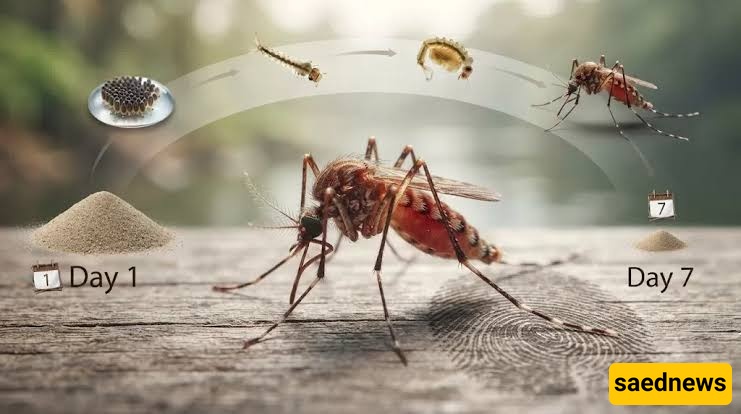
According to Saednews, Mosquitoes are small but highly important insects in the ecosystem and are found in almost every part of the world. These insects belong to the mosquito family and are especially significant in public health because of their ability to transmit diseases such as malaria and dengue fever.
One of the most frequently asked questions is: How long does a mosquito live? This article provides a scientific and detailed explanation of mosquito lifespan, life stages, and the factors that affect their survival.
The lifespan of a mosquito depends on several factors, including its species, temperature, humidity, and environmental conditions. In general:
Male mosquitoes: Usually live for about 5 to 10 days.
Female mosquitoes: Usually live for about 14 to 30 days (approximately 2 to 4 weeks).
Under favorable conditions, such as cool and humid environments, some female mosquitoes can survive for several months and may live up to around 6 months.
Female mosquitoes require blood to develop their eggs. This is why only female mosquitoes bite humans and animals, while male mosquitoes feed mainly on plant-based sources such as flower nectar.
The Mosquito Life Cycle
To better understand mosquito lifespan, it is important to know the different stages of their development. Mosquitoes have four main life stages:
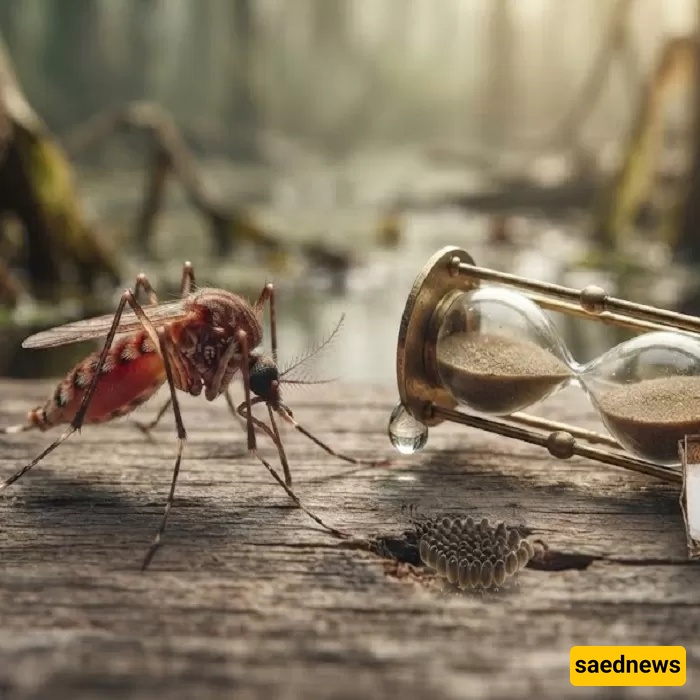
Female mosquitoes lay their eggs in stagnant water sources, including puddles, flower pots, abandoned containers, and water storage areas. These eggs later hatch into larvae when suitable conditions are available.
During this stage, mosquito larvae live in water and feed on organic materials and microorganisms. They remain in the water while growing and developing.
At the pupal stage, mosquitoes stop feeding and begin the transformation process that prepares them to become adult insects.
After completing development, the mosquito leaves the water and enters the environment. This is the stage that humans commonly see flying around homes and outdoor areas.
Why Are Mosquitoes Always Present Despite Their Short Lifespan?
Although mosquitoes usually have a short lifespan, their population remains high because they reproduce very quickly. The main reasons include:
Rapid reproduction cycles
Female mosquitoes laying hundreds of eggs during their lifetime
Fast development in stagnant water
Ability to adapt to different environments
Species such as Aedes aegypti can multiply quickly in tropical and warm regions and play an important role in spreading diseases.
Several environmental and biological factors influence how long mosquitoes survive:
Warm temperatures speed up mosquito development and shorten the time needed to complete their life cycle.
High humidity improves mosquito survival by preventing dehydration and supporting their activity.
Water sources are essential for mosquito reproduction because eggs and larvae need aquatic environments to develop.
Access to blood helps female mosquitoes produce eggs and increases their reproductive ability.
How to Reduce and Control Mosquito Populations
To reduce mosquito numbers and prevent their growth, consider the following methods:
Remove stagnant water around homes and gardens.
Clean flower pots, water containers, and outdoor objects regularly.
Install window screens and mosquito nets.
Use mosquito repellents or mosquito-control devices.
Maintain proper environmental hygiene.
Frequently Asked Questions
A male mosquito usually lives for about 5 to 10 days.
A female mosquito generally lives for 2 to 4 weeks, although some may survive for several months under ideal conditions.
Yes. However, female mosquitoes cannot produce eggs without a blood meal.
Some mosquito species can survive cold seasons by entering a dormant state or by protecting their eggs until favorable conditions return.
The answer to the question “How many days does a mosquito live?” is that mosquitoes generally have a short lifespan. Male mosquitoes usually live for less than 10 days, while female mosquitoes commonly survive for about 2 to 4 weeks. However, environmental conditions can significantly change their lifespan.
Despite their short lives, mosquitoes are considered important insects because of their rapid reproduction and ability to spread dangerous diseases. Removing stagnant water and maintaining clean surroundings are among the most effective ways to prevent mosquito population growth.