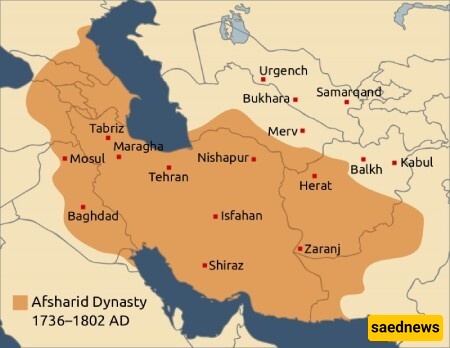
SAEDNEWS: The Afsharid Dynasty was an Iranian Turkic-origin dynasty that ruled Iran in the 18th century. It was founded in 1736 AD by Nader Shah Afshar after the defeat of Ashraf Afghan of the Hotaki dynasty and the removal of the Safavid ruler.
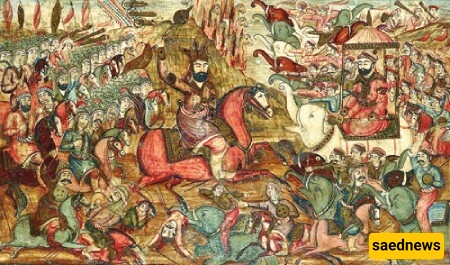
According to the Saed News analytical news website, The Afsharid Dynasty was a Persian and Turkic-origin ruling dynasty that governed Iran during the 18th century. It was founded by Nader Shah Afshar, who established his rule after defeating Ashraf Afghan and ending the remaining authority of the Safavid rulers. The name “Afshar” was derived from the Afshar tribe, a Turkmen tribal group that originally lived in northeastern Iran.
The Afsharid period lasted from 1148 to 1160 AH (1736–1747 CE) as a unified empire under Nader Shah, although remnants of the dynasty continued for several decades afterward. The dynasty was eventually replaced by the Qajar Dynasty.
After the collapse of the Safavid Dynasty and the Afghan invasion of Iran, the country entered a period of political instability and internal conflict. Nader Shah emerged as a powerful military commander who restored Iranian authority and created a new political order.
The Afsharid Dynasty became one of the most powerful Iranian governments of its time. Although its official existence was relatively short, it achieved major military victories and restored Iran’s influence across a large region.
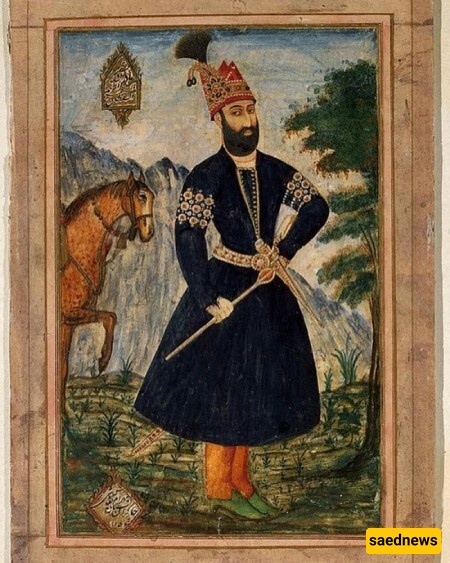
The dynasty’s exact duration is debated by historians, but many consider its effective period of rule to have lasted around 60 years. Four main rulers governed the dynasty:
Nader Shah Afshar
Ali Qoli Khan (Adel Shah)
Ebrahim Afshar
Shahrukh Mirza
The strongest period of Afsharid power occurred during the reign of Nader Shah, when Iran expanded through his military campaigns and became a major regional power.
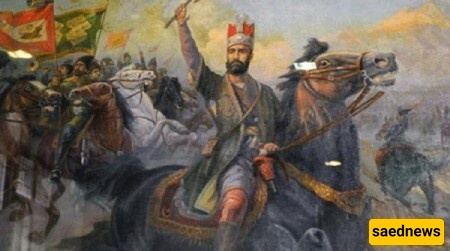
Nader Shah was born into a relatively unknown family connected to the Afshar tribe. His ancestors were among the Turkmen communities of Khorasan. Through military intelligence, courage, and strategic skill, he rose from a regional commander to one of the most influential rulers in Iranian history.
During the reign of Shah Tahmasp II, a Safavid claimant to the throne, Nader gained increasing influence. His military victories weakened the authority of Shah Tahmasp and increased Nader’s popularity among Iranians.
Nader expanded his control across Khorasan and later captured Mashhad. He also forced Russian forces to withdraw from Gilan after diplomatic negotiations. After defeating the Afghan rulers of Herat, he succeeded in liberating Isfahan, which had been occupied during the Afghan invasion.
Nader Shah is remembered as one of Iran’s greatest military leaders. His campaigns restored Iran’s territorial integrity and expanded its influence beyond its traditional borders.
One of his most famous military campaigns was the invasion of India in 1739, where his forces defeated the Mughal emperor Muhammad Shah. Nader returned to Iran with enormous wealth, including valuable treasures such as the famous Peacock Throne and the Koh-i-Noor diamond.
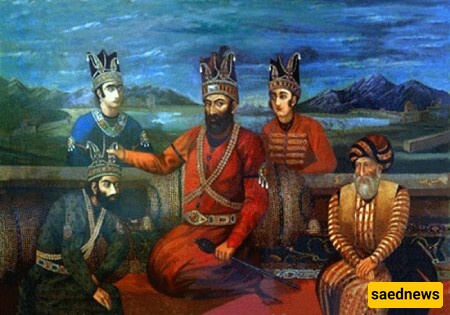
During his rule, Nader also attempted to improve relations between Sunni and Shia Muslims. After gaining control over Iraq, he organized a meeting of leading Islamic scholars in Najaf. He proposed that the Ja'fari school of Shia Islam be recognized as the fifth legal school of Islam alongside the Sunni schools.
He also sought agreements with the Ottoman Empire to allow Iranian pilgrims to visit Mecca and receive treatment similar to pilgrims from other Muslim regions.
After years of military campaigns, Nader Shah became increasingly suspicious, harsh, and authoritarian. His personality changed due to absolute power, constant warfare, and internal pressures.
Some of his senior officers eventually turned against him. In 1747, a group of commanders attacked his camp and assassinated him.
After Nader Shah’s death, the empire quickly weakened. His successors failed to maintain his military and political achievements, and Iran entered another period of division. Eventually, the Afsharid Dynasty was replaced by the Zand Dynasty in much of Iran, followed later by the Qajar Dynasty.
After Nader Shah’s death, his nephew Ali Qoli Mirza declared himself Adel Shah. However, his reign was short-lived.
He was followed by Ebrahim Mirza, a loyal supporter of Nader Shah, but Afsharid power continued to decline.
Later, Shahrukh Mirza, Nader Shah’s grandson through his son Reza Qoli Mirza, became ruler. He was only 14 years old when he came to power.
Shahrukh was later blinded by Solayman III, a religious ruler of Mashhad, but he remained a symbolic ruler. After one year, Karim Khan Zand took full control of political power, and decades later Agha Mohammad Khan Qajar killed Shahrukh, marking the final end of Afsharid authority.
During the Safavid period, Shia Islam had become the official religion of Iran. Nader Shah was originally a Shia Muslim, but after becoming ruler, he attempted to reduce religious conflicts between Iran and the Sunni Ottoman Empire.
He believed that sectarian divisions weakened Iran and created conflicts with neighboring Sunni powers. Therefore, he promoted the recognition of the Ja'fari school as a formal Islamic tradition.
Nader also prohibited certain religious practices, including public insults against the first three Sunni caliphs, because such actions were considered offensive by Sunni Muslims.
Historians still debate Nader Shah’s personal religious beliefs. Some accounts suggest that he was politically motivated rather than deeply committed to a specific religious ideology.
Nader Shah Afshar was buried in Mashhad, one of Iran’s most historically significant cities.
After establishing his rule, Nader chose Mashhad as the capital of Iran. Following his Indian campaign, he brought black marble stones from Azerbaijan to decorate his planned tomb. However, he later built another family mausoleum known as the Sun Palace (Emarat-e Khorshid).
After his assassination, his remains were moved several times. During the Qajar period, his body was transferred to Tehran by order of Agha Mohammad Khan Qajar. Later, Qavam al-Saltaneh built a tomb for him at one of the historical burial sites associated with Nader Shah.
In 1956 (1335 Solar Hijri), the National Heritage Society of Iran decided to construct a new memorial honoring Nader Shah. The famous Iranian architect Hooshang Seyhoun designed the monument, which was completed in 1963 (1342 Solar Hijri).
The modern tomb complex covers approximately 12,000 square meters within the larger Naderi Garden area of about 14,400 square meters. The site contains weapons, historical objects, and artifacts from the Afsharid period.
The main tomb building has a square design measuring approximately 15 by 15 meters, with a height of about 2.5 meters. The structure includes large stone columns and a roof reaching approximately six meters above the interior space.
Although the Afsharid Dynasty was short-lived, it played a major role in restoring Iran’s independence and military strength after the collapse of the Safavid Empire. Nader Shah remains one of the most famous military figures in Iranian history, remembered for his strategic brilliance, territorial expansion, and ambitious attempts to strengthen Iran as a major regional power.