Saed News: In their latest research, scientists have developed a technology that could increase data transmission speeds to levels that were considered impossible just a few years ago. This new achievement has attracted the attention of major technology companies and research centers around the world.
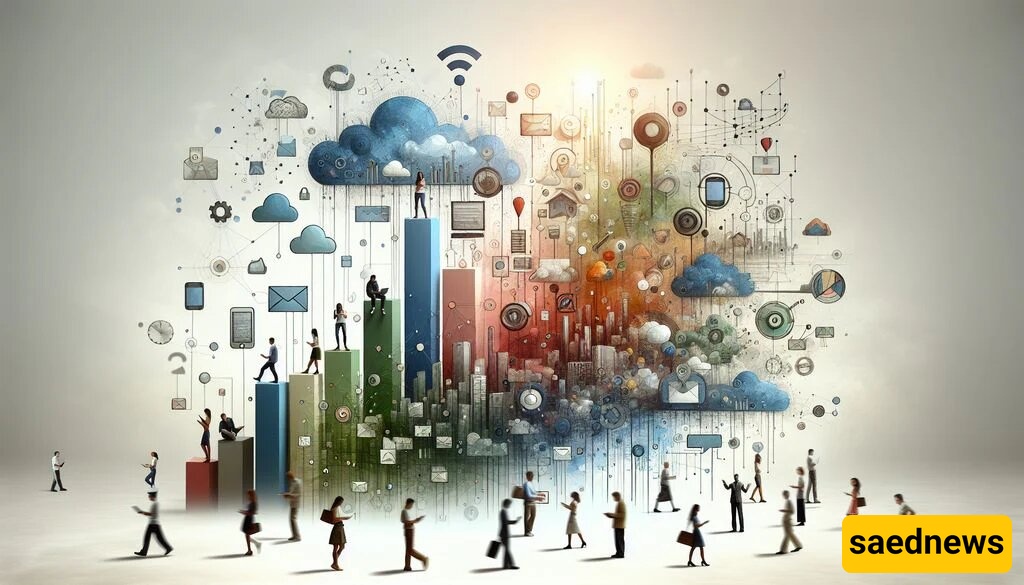
According to SAEDNEWS, as the world becomes increasingly dependent on the internet, limitations in data transmission speed remain one of the main challenges facing communication infrastructure. However, recent research suggests that a new generation of communication technologies is emerging that could permanently change these limitations. This technology is based on data transmission using light and advanced photonic systems, and in early tests it has achieved speeds exceeding those of current fiber-optic networks.
According to MIT Technology, the new technology is capable of transferring enormous amounts of data in a fraction of the time currently required. Unlike traditional systems that rely on electrical signals, this method uses light to move information, resulting in significantly higher speeds and lower latency.
The rapid growth of global data volumes—from online videos to artificial intelligence and cloud computing—has pushed existing infrastructure close to its limits. This new technology could not only increase internet speeds but also significantly reduce the energy consumption of data centers.
Experts believe that this advancement is more than just a laboratory breakthrough. In the near future, the technology could be used in areas such as telemedicine, smart vehicles, digital cities, and even space communications.
Despite this remarkable progress, challenges remain, including production costs, large-scale stability, and the infrastructure required for public deployment. Researchers are currently working on commercial versions of the technology so that it can be integrated into real-world networks.
If this technology reaches commercial deployment, the concept of high-speed internet could change forever. Near-instantaneous data transmission, the simultaneous execution of millions of AI operations, and real-time communication between devices are just some of the possibilities scientists envision for the future.