SAEDNEWS: This article takes a look at images from the wedding ceremony of Reza Shah’s youngest daughter and the controversy surrounding her marriage, which led to her being distanced from the royal court.

According to Saed News’ History Service, the marriage of Fatemeh Pahlavi, the sister of Mohammad Reza Shah Pahlavi, to an American citizen in Italy in 1950 (1329 in the Iranian calendar) became a major controversy in Iran.
Around 70 years ago, on this day, a scandal erupted that dominated the headlines of almost every newspaper and magazine in the country. It was an unprecedented event at the time, and few sensational stories afterward managed to capture the attention of the press in the same way. The marriage of Fatemeh Pahlavi, the sister of Mohammad Reza Shah, to an American man in Italy became a national topic of debate in Iran.
Fatemeh Pahlavi (born in Tehran in 1928) was the tenth child of Reza Shah Pahlavi and the fourth child of Esmat ol-Molouk Dowlatshahi, Reza Shah’s second wife. She began her early education in 1939 at the Zoroastrian Anoushirvan Dadgar High School in Tehran but left her studies unfinished. Following the Allied invasion of Iran and the exile of Reza Shah, Fatemeh traveled with her brothers and mother to Mauritius. During Reza Shah’s exile, she stayed on the island with her mother for seven months. However, after repeated requests from her mother, Reza Khan allowed them to return to Iran.
After returning from Mauritius, Fatemeh continued her education for about three years before leaving Tehran for Lebanon to attend university. However, only four months after arriving in Beirut, she received news of her father’s death and immediately returned to Tehran. Since her brothers Abdol Reza and Mahmoud Reza were planning a trip to the United States, she accompanied them. In America, she studied at a Washington high school for two years and became fluent in English.
After rejecting a marriage proposal from the then-prime minister, Abdolhossein Hazhir, Fatemeh met a 27-year-old American man named Vincent Lee Hillyer. Their marriage faced strong opposition and many obstacles, mainly because of religious issues. Hillyer was not Muslim and, under Iranian law at the time, could not marry a Muslim woman without receiving special permission from the Foreign Ministry. Later, because of his love for Fatemeh, Hillyer converted to Islam and changed his name to Ali.

However, religion was not the only challenge. The most difficult obstacle was gaining approval from the royal court. Fatemeh Pahlavi’s marriage coincided with the news of Reza Shah’s funeral in Tehran. It was believed that the royal wedding would overshadow coverage of the former king’s death, and newspapers would focus more on the princess’s marriage than on Reza Shah’s passing — which is exactly what happened.
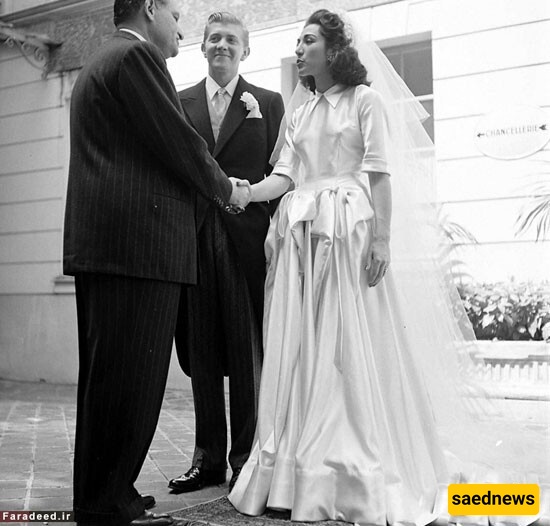
Historians also note that the media coverage of Fatemeh Pahlavi’s marriage occurred during the period of Iran’s oil nationalization movement, weakening the Shah’s political position.
The newspapers devoted more attention to Reza Shah’s daughter’s marriage than to his death. They portrayed the relationship between Fatemeh and Ali Hillyer as a real-life story of “Layla and Majnun,” creating public sympathy for the couple while criticizing the royal court for opposing their union.
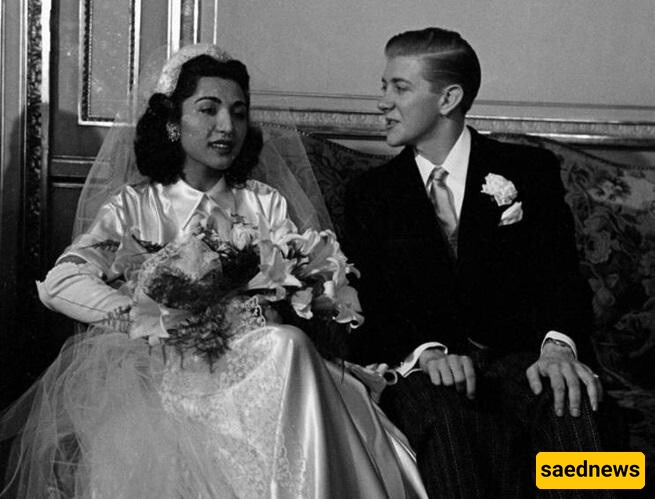
Eventually, due to public pressure, the royal court allowed Fatemeh and Hillyer to enter Iran in 1953 (1332 in the Iranian calendar). Although the couple received a warm welcome from many Iranians, their arrival marked the beginning of serious disagreements between them.

Their marriage lasted only five years after returning to Iran, and they eventually separated.
Esmat ol-Molouk Dowlatshahi, Fatemeh’s mother, described their problems as follows:
“Unfortunately, Hillyer was mentally unstable and extremely nervous, and he caused Fatemeh a great deal of suffering. His behavior became unbearable because of excessive drinking. During the final year of their marriage, after a severe argument with Fatemeh, he threw their baby into the air, resulting in the child’s death. After this incident, as well as his physical abuse of Fatemeh, the royal court pressured him to divorce her.”
The marriage of Fatemeh Pahlavi and Ali Hillyer produced one daughter and two sons. It is worth mentioning that Hillyer left Iran and returned to the United States without formally divorcing Fatemeh.
Fatemeh Pahlavi and Ali Hillyer officially divorced in August 1959. In November of the same year, Fatemeh married General Mohammad Khatami, an Iranian military commander. Their marriage resulted in one daughter named Pari and two sons named Kambiz and Ramin Khatami.
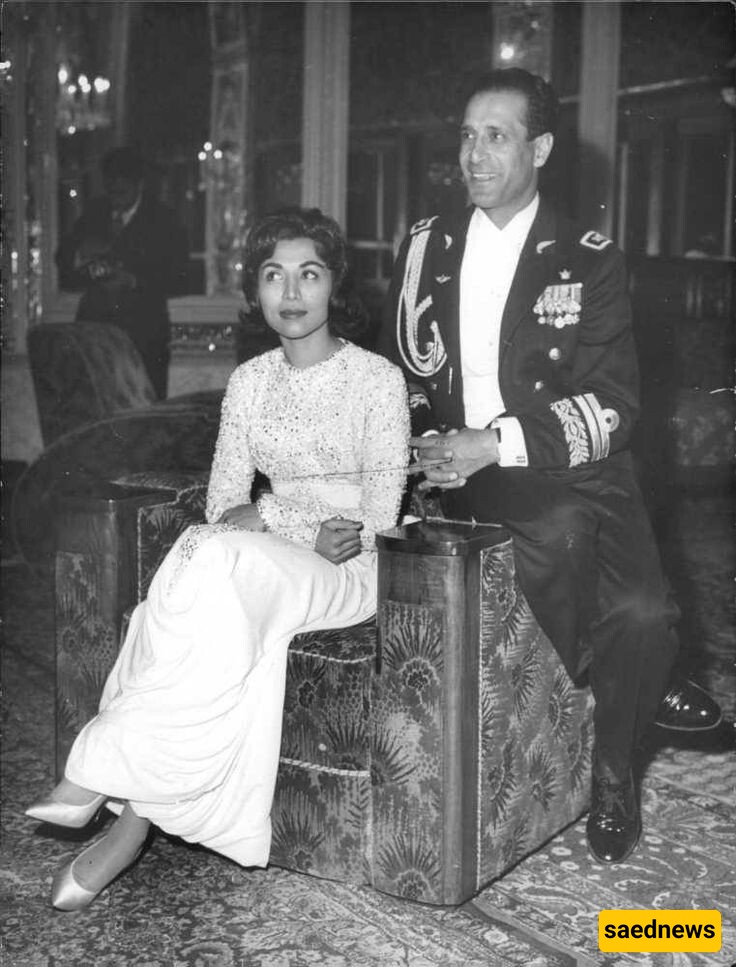
Mohammad Khatami died in 1975 when his aircraft crashed into a mountain near Dez Dam while he was engaged in kite flying.
Fatemeh Pahlavi was considered one of the wealthiest members of the Pahlavi royal family. In addition to the inheritance she received from her father, Reza Shah, she inherited a substantial fortune from her second husband, General Khatami.
Khatami had become a wealthy and influential figure through commissions reportedly received from foreign companies involved in military weapons purchases. After his death, Mohammad Reza Shah estimated his wealth at around $100 million, all of which passed to Fatemeh.

Fatemeh owned the Aryan Cotton Production and Supply Company in Gorgan, which had a capital of 5 million rials. She and her children were major shareholders in companies including Shokoofeh Arya Vegetable Oil Industries, CRC Company (which later established Persepolis Football Club), Tehran Bowling Building (Abdo), Nashiran Construction Company, and others.
She also owned numerous properties and villas in northern Iran.
Fatemeh Pahlavi occasionally played a role in politics and foreign relations, particularly in connection with China. She was also known for her interest in aviation and was reportedly one of the first Iranian women to become a pilot.

After the 1979 Islamic Revolution, Fatemeh Pahlavi lived in Paris for a period of time. She later moved between several cities and eventually died in London in 1987 at the age of 58.