saednews: Archaeologists have discovered a shrouded skeleton buried about 2,200 years ago in a tomb decorated with unusual wall paintings. The find offers new clues about ancient burial practices and art.
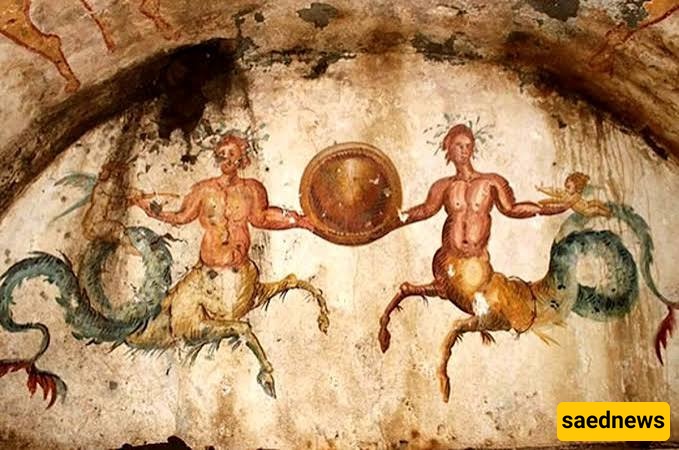
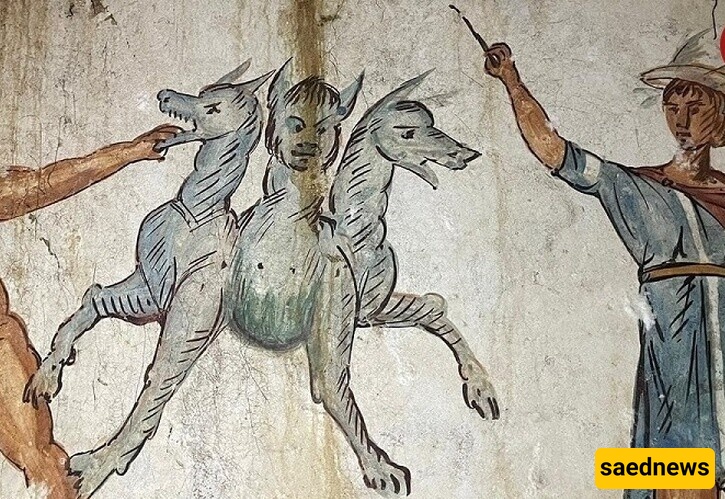
According to Saednews, Archaeologists in Italy have completed a more detailed investigation of the famous Cerberus Tomb, a 2,200-year-old burial chamber discovered near an ancient Roman-era cemetery in Giugliano. The tomb first gained attention last year because of its remarkably preserved wall paintings, including depictions of Cerberus, the mythical three-headed guardian of the underworld, and ichthyocentaurs—mythical sea creatures with a human upper body, horse forelegs, and a fish tail.
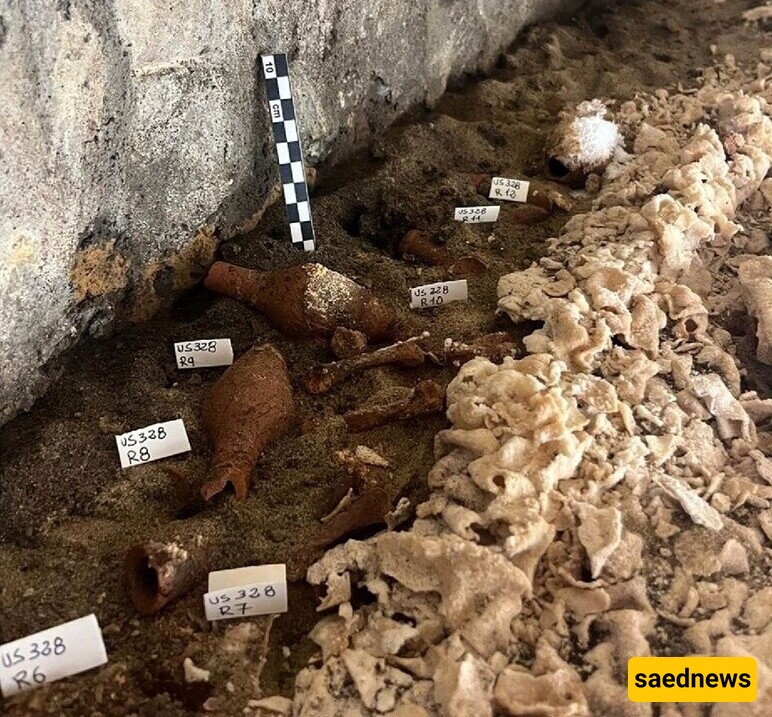
Recent excavations uncovered the skeleton of an individual wrapped in a burial shroud and surrounded by a variety of grave goods. These included ointment jars and a Roman strigil, a personal hygiene tool used to scrape dirt, sweat, and oil from the body before bathing.
According to Italy's Ministry of Culture, the deceased was buried lying on their back and remains in an exceptional state of preservation. Researchers believe the unique environmental conditions inside the burial chamber caused the shroud to undergo mineralization, helping preserve both the fabric and the human remains.
Experts from several scientific disciplines—including archaeology, chemistry, archaeobotany, and anthropology—are now working together to learn more about the individual. They suspect the person may have been the ancestor of the family for whom the tomb was built. Researchers also plan to study the burial shroud to determine where its fibers were produced.
Ancient pollen samples recovered from the tomb suggest that the deceased was treated with substances containing wormwood (absinthe) as well as Chenopodium (commonly known as goosefoot), a genus of flowering herbaceous plants.
Scientists are still awaiting DNA test results, which could reveal the individual's ancestry and identify any inherited genetic conditions.
Mariano Nuzzo, head of Italy's Ministry of Culture, said the Cerberus Tomb is expected to provide valuable insights into the Phlegraean region, a large volcanic area near the ancient city of Liternum. He added that the discoveries are expanding knowledge of the area's past while creating new opportunities for multidisciplinary research.