SAEDNEWS: During nearly 150 years of Qajar rule, Mahd-e Olya emerged as one of the dynasty's most influential figures, playing a notable role in the royal court and political affairs.
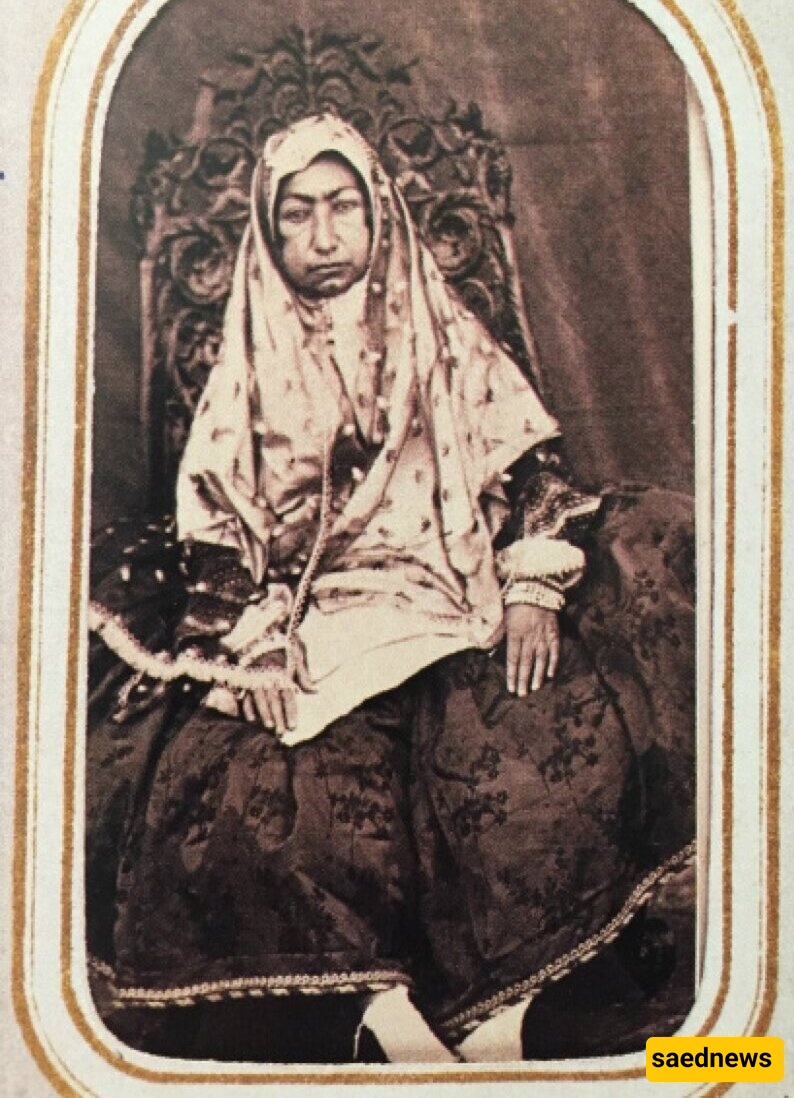
According to Saednews, Mahd-e Olya (Malek Jahan Khanom) was one of the most influential and controversial women in the court of Naser al-Din Shah Qajar. She was the wife of Mohammad Shah Qajar and the mother of Naser al-Din Shah. Born in 1805 (1184 in the Iranian solar calendar), she received the title Mahd-e Olya after her husband's accession to the throne. Her son often addressed her as Navab ("Her Excellency") or simply Khanom ("Lady").
She married Mohammad Shah at the age of 16, gave birth to Naser al-Din Mirza at 25, and five years later had a daughter named Ezzat al-Dowleh. She became a widow at the age of 40.
Mahd-e Olya was regarded as an unusually educated and capable woman for her time. She excelled in painting, embroidery, and calligraphy, spoke Arabic fluently, had some knowledge of French, and was well-versed in Persian poetry and prose. Several poems attributed to her have survived.
The original source also repeats historical allegations regarding her private life and personal relationships. These claims originated from court gossip and foreign diplomatic accounts and remain disputed by historians.
Following the death of Mohammad Shah, Mahd-e Olya reportedly secured the royal quarters and, with the support of the British envoy, effectively governed Iran for approximately 45 days without an official decree. During this politically unstable period, she maintained order until Crown Prince Naser al-Din Mirza arrived in Tehran and was crowned on the Marble Throne.
She maintained particularly close relations with the British legation, especially Colonel Justin Sheil, the British minister. During her son's reign, she also met Lady Sheil twice.
Lady Sheil described her as:
"The Shah's mother is a beautiful, self-confident, and intelligent woman who not only manages the royal harem but also plays an active role in affairs of state."
The French diplomat Count Arthur de Gobineau, who served as France's minister in Iran in the late 1850s, recorded numerous rumors concerning Mahd-e Olya's personal life. He wrote that widespread court gossip questioned the paternity of Mohammad Shah's children, including Naser al-Din Shah, and portrayed Mahd-e Olya as devoted to luxury and pleasure.
Gobineau further claimed that her residence had become a gathering place for idle Qajar princes and courtiers engaged in extravagant entertainment. The article also notes that musicians and dancers allegedly spread stories of these festivities throughout Tehran.
These accounts reflect contemporary opinions and rumors rather than established historical fact.
Mahd-e Olya's enduring historical notoriety largely stems from her alleged role in the downfall of Amir Kabir, one of Iran's most celebrated reformist prime ministers.
According to the article, Amir Kabir significantly curtailed the influence of royal courtiers, including Mahd-e Olya. He reduced court pensions and privileges, dispersed many of her supporters, and limited her involvement in state affairs.
The article further claims that Amir Kabir informed the Shah about conduct within the royal family that he believed damaged the monarchy's reputation. It alleges that a proposal was once made to assassinate Mahd-e Olya during a royal hunting expedition, but the plan became known to Mirza Aqa Khan Nuri, who warned her. This information was later allegedly used against Amir Kabir.
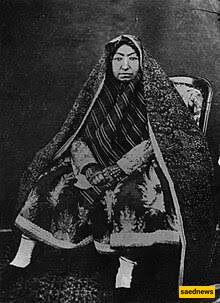
Ultimately, the article attributes the political intrigue of Mahd-e Olya and her allies as a major factor leading Naser al-Din Shah to order Amir Kabir's execution.
On January 10, 1852 (20 Dey 1230 in the Iranian calendar), royal agents killed Amir Kabir by opening his veins in the Fin Bathhouse in Kashan.
In her later years, Mahd-e Olya reportedly became more devoted to religious observance. During Ramadan, she hosted women each evening for iftar, after which they recited the Qur'an together. During the months of Muharram and Safar, professional mourners were invited daily to recite elegies commemorating the martyrdom of Imam Husayn.
She also frequently accompanied the Shah on pilgrimages to the Shi'a holy shrines in Iraq.
Seeking to leave behind a positive legacy, Mahd-e Olya sponsored the construction and restoration of several public buildings, including:
Mahd-e Olya Garden
Hakim Bashi School within the royal citadel
The shrine of Zobeydeh Khatoon near Rey
Restoration of the mosque known as the Mosque of the Shah's Mother
Mahd-e Olya died in 1873 (1252 in the Iranian solar calendar). According to the article, she was deeply out of favor with Naser al-Din Shah at the time of her death. Her body was transferred to Qom, where she was buried beside Mohammad Shah in the shrine of Hazrat Masumeh.