SAEDNEWS: Before affordable mechanical alarm clocks became common, British workers known as “knocker-uppers” walked the streets at night and early morning to wake customers for work. Some used sticks or whistles, while London’s Mary Smith famously used dried peas fired from a pea shooter.
According to SaedNews: Long before people could depend on alarm clocks, they found inventive ways to wake up at a particular hour. Ancient methods included the water clock, attributed to the Greek philosopher Plato and designed to whistle like a kettle, as well as the medieval candle clock, in which nails placed in a candle eventually fell onto a metal pan as the wax burned away.
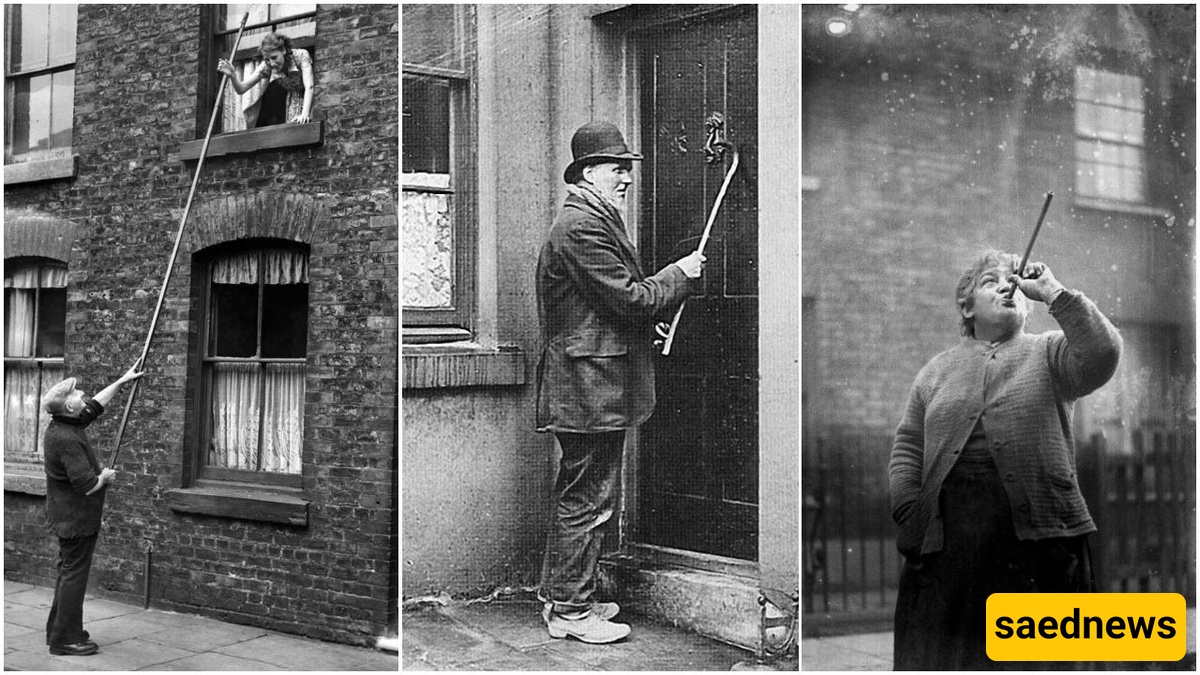
The Industrial Revolution created a new demand for reliable wake-up methods. As workers moved from farms into factories, being late could mean losing a job. In England, some people solved the problem by hiring “knocker-uppers,” workers who spent the night and early morning moving through neighborhoods and waking customers. Like the mechanical alarms that later replaced them, these human alarm clocks were not always welcomed.
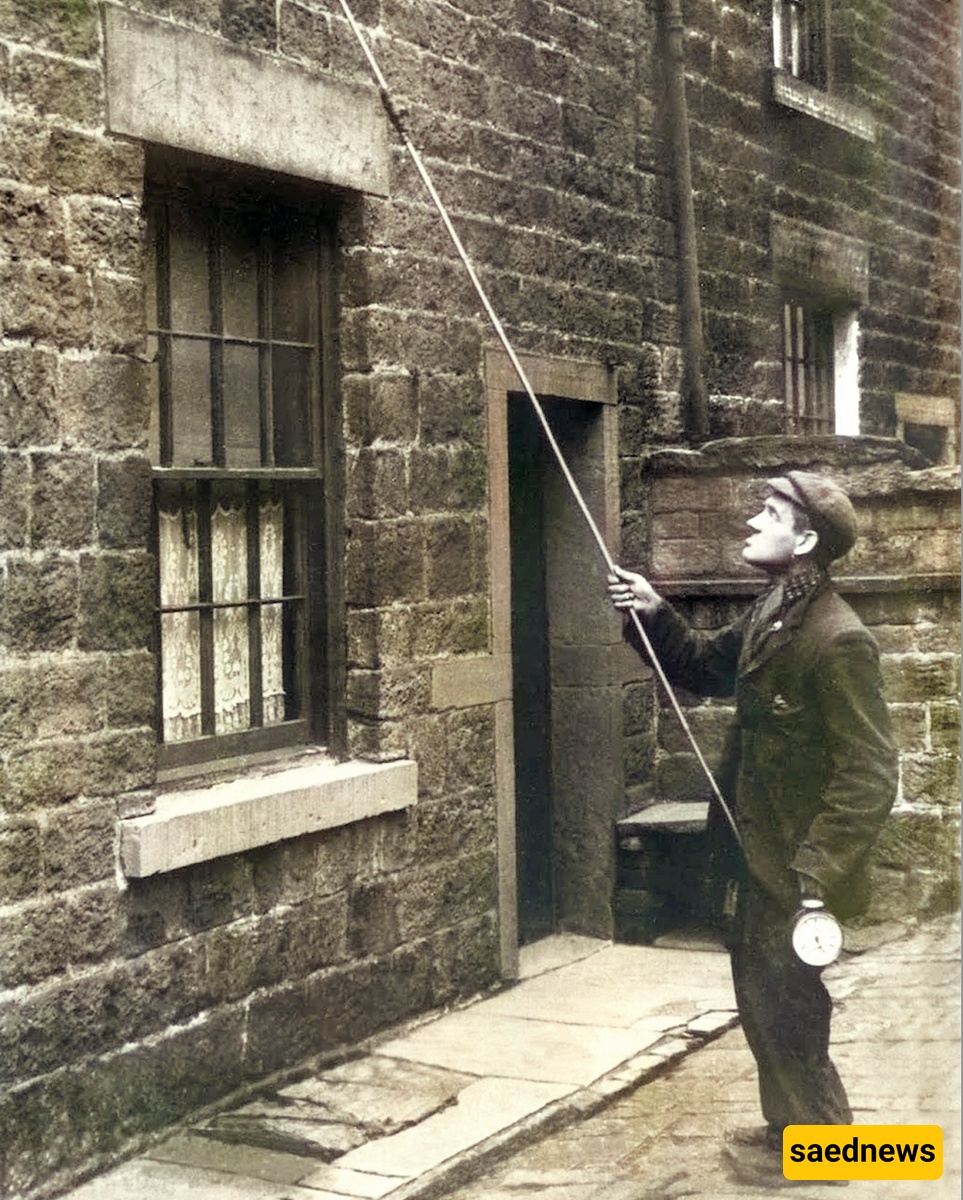
There was no single method. Some knocker-uppers tapped windows with long poles or sticks, while others used whistles. Mary Smith, who worked in London’s East End, had a particularly unusual technique: she carried a pea shooter. Photographs of her using it helped make her famous, and she later became the subject of a children’s book.
A 1930s account says Smith earned six pence a week by waking sleeping workers with dried peas shot at their windows.
Not everyone greeted the knocker-uppers warmly. One worker interviewed by a Canadian newspaper in 1878 recalled that some customers thanked her and wished her good morning through their windows, while others were “surly or hot-tempered,” responding with angry grumbles much like people today react to an unwanted phone alarm.
Despite their modest role, knocker-uppers served an important community function. Factory employment offered little protection, and employers could readily dismiss workers who arrived late. Because these wake-up workers were already walking the streets while most residents slept, they sometimes acted as unofficial vigilantes and first responders. One reportedly rescued a family from a burning house, while another alerted a fire station after noticing a shop on fire.
The work was not particularly lucrative. Mary Smith reportedly earned six pence a week, an amount that was barely enough to buy a four-pound loaf of bread. Those who did the job full-time generally did so because they needed the income. Some were children trying to contribute to their families, while others used the work to supplement earnings from another occupation.
The profession even intersected with one of London’s most notorious crimes. According to testimony from one of two men who approached a police officer after Jack the Ripper’s first known victim, Mary Ann Nichols, was discovered, the officer was busy carrying out his knocking rounds. Rather than immediately inspect the crime scene, he continued with his daily work.
Knocker-uppers gradually disappeared in the early 20th century as mechanical alarm clocks became affordable and widely available. Mary Smith’s daughter, Molly Moore, inherited the family occupation and became one of London’s last knocker-uppers. She continued waking customers into the Second World War, even while German air raids threatened the city.