SAEDNEWS: Artificial intelligence has decoded Greek text hidden inside a scroll buried by the eruption of Mount Vesuvius nearly 2,000 years ago, helping solve one of archaeology's greatest mysteries.
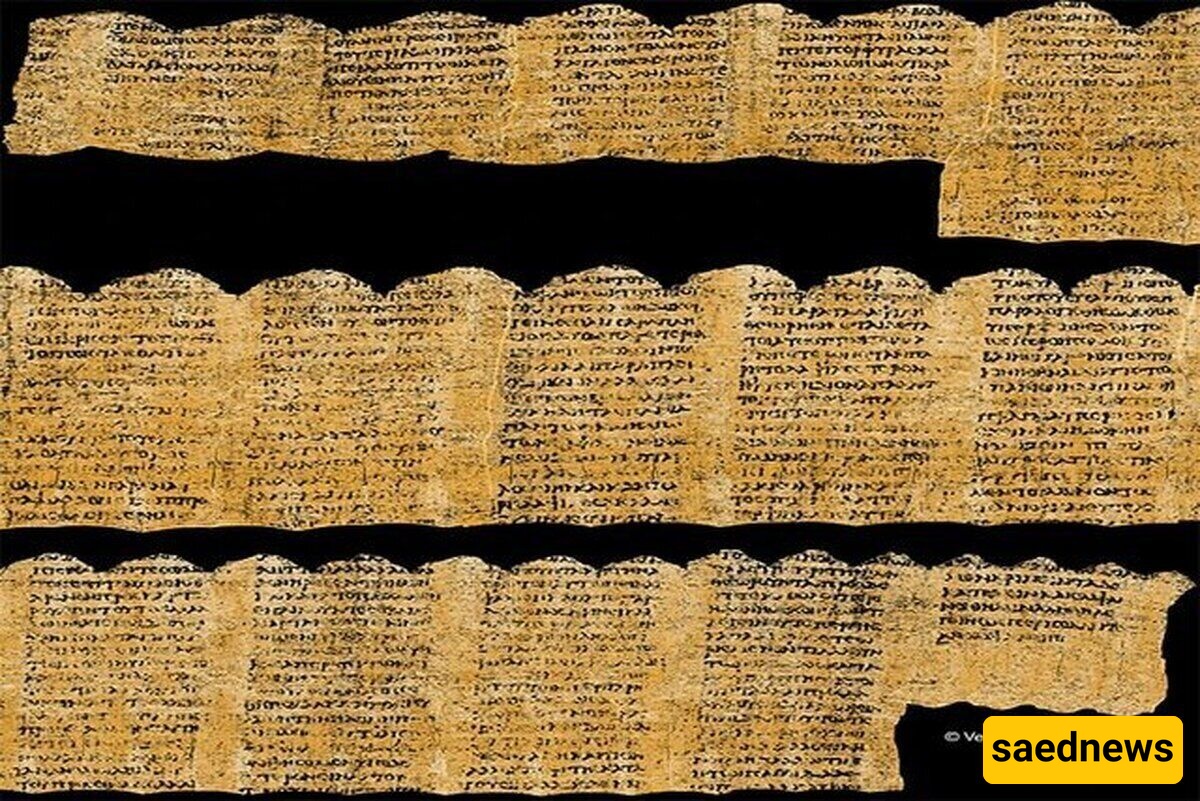
According to ISNA, as reported by Saed News Analytical and Information Agency, ...Researchers have achieved a major breakthrough in the study of the ancient world by using artificial intelligence and machine learning to decipher a previously unread papyrus scroll buried nearly 2,000 years ago by the eruption of Mount Vesuvius.
The achievement came through the Vesuvius Challenge, an international competition that encouraged participants to develop machine learning algorithms capable of reading carbonized papyrus scrolls without physically opening them. By training their models on high-resolution scans of rolled papyrus, the winning team successfully uncovered portions of an unknown philosophical work discussing the nature of the senses and pleasure.
The breakthrough is expected to transform the study of ancient literature by enabling researchers to decode many more unopened scrolls. Historians believe these texts could dramatically expand our understanding of classical philosophy, science, and everyday life in the Roman world.
Kenneth Lapatin, Curator of Antiquities at the J. Paul Getty Museum in Los Angeles, described the accomplishment as something he had always considered a dream becoming reality. The newly deciphered text discusses various sources of pleasure, including music, the taste of capers, and the color purple.
Bob Fowler of the University of Bristol, one of the competition judges, called the achievement "a historic moment." Three students—from Egypt, Switzerland, and the United States—shared the competition's $700,000 grand prize for developing the winning methods.
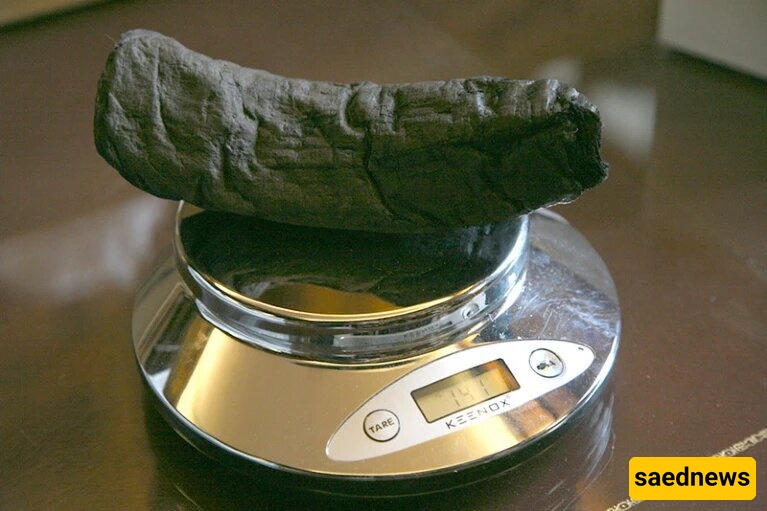
The deciphered manuscript is one of hundreds of remarkably preserved papyrus scrolls discovered during the 18th century in a luxurious Roman villa at Herculaneum, Italy. Carbonized by volcanic ash during the eruption of Mount Vesuvius in AD 79, these scrolls make up the only surviving intact library from the ancient Greco-Roman world.
Because the scrolls are extremely fragile, attempts to physically unroll them over the centuries often caused severe damage or destroyed them entirely. Many fragments remain under study by papyrologists, while approximately 280 complete scrolls are believed to have survived. Most are housed in the National Library of Naples, with others preserved in Paris, London, and Oxford.
Computer scientist Brent Seales of the University of Kentucky has spent nearly two decades developing technologies to reveal the hidden texts inside the sealed scrolls. His team created software capable of virtually unwrapping the papyri using three-dimensional computed tomography (CT) scans.
In 2019, two scrolls from the Institut de France in Paris were transported to the Diamond Light Source synchrotron near Oxford for exceptionally high-resolution scanning.
Although the virtual unwrapping process proved successful, a major obstacle remained. The carbon-based ink used by ancient scribes has nearly the same density as the carbonized papyrus, making the writing almost invisible in CT images.
Seales and his colleagues proposed using machine learning to identify subtle patterns that distinguish ink from papyrus. However, the enormous volume of imaging data made the challenge too great for a single research team.
Technology entrepreneur Nat Friedman became fascinated by the Herculaneum Scrolls after watching one of Seales' presentations online. He partnered with Seales to launch the Vesuvius Challenge, contributing $125,000 in initial funding while Seales released both the scanning data and virtual unwrapping software to the public.
The competition began in March 2023 with a grand prize for the first team able to read four separate passages of at least 140 characters each before the end of the year.
According to Friedman, the competition succeeded because it combined collaboration with competition. Smaller milestone prizes encouraged steady progress, while winning machine learning code was openly shared so participants could build upon one another's advances.
A crucial breakthrough came in mid-2023 when American entrepreneur and former physicist Casey Handmer noticed faint crack-like textures in the scans that appeared to correspond to ancient Greek letters.
Luke Farritor, a computer science student at the University of Nebraska–Lincoln, used these patterns to train a machine learning model that successfully revealed the Greek word porphyra, meaning "purple." His discovery earned the competition's first major prize in October.
Youssef Nader, an Egyptian doctoral student based in Berlin, independently produced even clearer images of the hidden text and received second place.
Their techniques were rapidly shared with other competitors, allowing the entire research community to improve their decoding methods before the December 31 deadline.
During the final week alone, organizers received 18 submissions. After technical evaluation and expert transcription by papyrologists, only one team fully satisfied the competition's requirements. The winning group consisted of Luke Farritor, Youssef Nader, and Swiss robotics student Julian Schilliger from ETH Zurich.
Federica Nicolardi, a papyrologist at the University of Naples Federico II and one of the competition judges, described the results as extraordinary, saying researchers were astonished by the quality of the recovered images.
Scholars are now racing to analyze the newly revealed philosophical text while preparing to decode entire works hidden within the remaining scrolls.
The next phase of the Vesuvius Challenge aims to read at least 85 percent of a complete scroll, bringing researchers closer than ever to unlocking one of history's greatest lost libraries. The success demonstrates how artificial intelligence is opening unprecedented opportunities for archaeology, history, and the study of the ancient world.