SAEDNEWS: Trump is reportedly considering a plan for limited strikes against Iran in the Strait of Hormuz. The proposed operation is aimed at preventing Iran from rebuilding its radar and missile capabilities and reducing Tehran’s ability to target vessels passing through the strategically vital waterway.
According to the political service of Saed News, Axios reported that a plan for limited strikes has been placed before the U.S. president as American military officials grow increasingly concerned that Iran could restore parts of its military capabilities in the Strait of Hormuz. These capabilities could include radars, air-defense systems, and anti-ship missiles, potentially allowing Iran to target vessels with greater accuracy.
One U.S. official explained that Washington wants to reduce the risk of attacks against oil tankers, U.S. Navy ships, and American military aircraft. The official described the proposed approach as “mowing the grass,” a term referring to periodic strikes intended to prevent an adversary from rebuilding and strengthening its military capabilities.
The White House responded to the report by saying: “The president has all options available to him. The Iranians want a deal, but they always arrive a day late and a dollar short.” The expression means that Iran acts too late and that its proposals are insufficient.
Axios also examined U.S. military activities in the Strait of Hormuz over the past two months, claiming that American forces have gradually taken control of a substantial portion of the waterway as part of a campaign aimed at weakening Iran’s military capabilities.
According to the report, alongside military operations designed to reduce Iran’s capabilities, the United States has conducted a low-profile effort to clear naval mines while simultaneously attempting to facilitate the passage of ships through the Strait of Hormuz.
Axios claims these measures have reduced Iran’s ability to target oil tankers while increasing the movement of vessels and the flow of oil exports through the strategic waterway.
The report further argues that these actions have weakened part of the leverage Iran previously held over the control and security of the Strait of Hormuz.
According to Khabar Online, Axios’s claim of increased oil exports through the Strait comes as the German chancellor warned the previous day that rising fuel prices and disruptions to oil exports through the waterway were making conditions more difficult for Germany and Europe. He questioned how the impact of $100-a-barrel oil could be offset if the Strait of Hormuz were blocked.
The United States has sought, through what appears to be a media-driven battle over competing narratives, to portray shipping through the Strait as normal. However, satellite imagery reportedly presents a different picture on the ground, showing that oil tankers are reluctant to transit the waterway because of safety concerns and are passing through only sporadically.
Despite these developments, U.S. officials now say U.S. Central Command (CENTCOM) has become concerned about Iran’s efforts to rebuild its military capabilities in the Strait of Hormuz.
The concern specifically involves Iranian radars, air-defense systems, and anti-ship missiles. If these systems are restored and redeployed, they could improve Iran’s ability to detect and accurately target vessels.
A U.S. official told Axios that one incident in recent days has heightened CENTCOM’s concerns: an Iranian surface-to-air missile was reportedly fired toward an American F-35 fighter jet.
According to the official, the fighter was providing air cover for ships transiting the Strait of Hormuz. The Iranian missile did not come close enough to pose a genuine threat to the aircraft, but the official described the incident as evidence that Iran was attempting to rebuild its military capabilities.
Against this backdrop, CENTCOM officials have reportedly told U.S. Defense Secretary Pete Hegseth, Chairman of the Joint Chiefs of Staff Gen. Dan Caine, and the White House in recent days that the U.S. military may have to conduct periodic strikes against Iran to maintain the security of the route used by oil tankers leaving the Gulf.
According to CENTCOM’s assessment, the United States may need to carry out intermittent attacks against Iran if it wants to enable dozens of oil tankers to leave the Persian Gulf each day with a reasonable level of security.
This is the approach outlined in CENTCOM’s proposed plan: limited, periodic strikes designed not to launch a large-scale military operation, but rather to prevent Iran from rebuilding capabilities that could make shipping through the Strait of Hormuz more dangerous.
U.S. officials said Hegseth supports the proposal and sent it to the White House several days ago for review and a decision.
However, the situation inside the White House has reportedly shifted in recent days. U.S. officials said the Donald Trump administration was reluctant last week to approve the strikes because of concerns that such an action could lead to further escalation with Iran.
The developments on Sunday, however, may have changed Trump’s calculations.
According to Axios, Iranian ballistic-missile attacks on U.S. bases in Jordan on Sunday could prompt Trump to reconsider his position on carrying out limited strikes.
The attacks reportedly came after U.S. forces targeted Iranian personnel who, according to American officials, were preparing to launch mine-carrying rockets into the Strait of Hormuz.
The latest escalation between the two sides could therefore become the factor that moves the CENTCOM- and Hegseth-backed proposal from consideration at the White House closer to actual implementation.
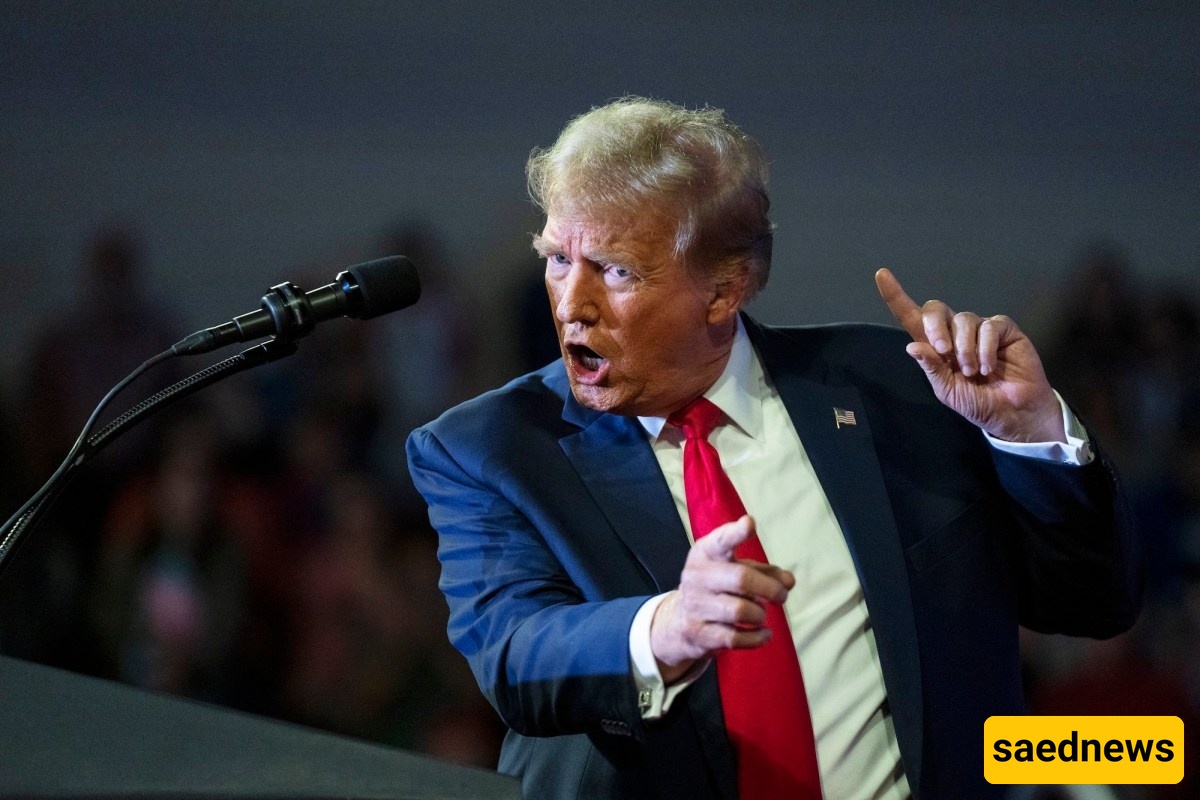
Trump also took a tough stance Monday morning when speaking with Fox News about the Iranian attacks. He said the United States would respond and “hit them hard.”
Axios therefore reported that although Trump had not approved the limited-strike plan before the latest confrontation, the escalation of tensions in recent days could change his position.