SAEDNEWS: A detailed account of the martyrdom of Hazrat Abu al-Fadl al-Abbas, based on reliable Shi’a sources, including a complete narrative of his sacrifice and devotion during the Battle of Karbala.
According to Saednews, Hazrat Abu al-Fadl al-Abbas, the son of Imam Ali, the brother of Imam Hussein, and the commander and standard-bearer of his army, was one of the greatest examples of courage and devotion in history. He was also one of Imam Hussein’s strongest sources of support during the events of Karbala in 61 AH, where he was ultimately martyred alongside his brother.
Hazrat Abbas was renowned for his exceptional beauty, noble character, courage, and loyalty. His complete obedience to God, the Prophet, and the infallible Imams, as well as his unwavering commitment to the path of truth and his Imam, reflected the highest qualities of human character.
After the martyrdom of Lady Fatima, Imam Ali married Umm al-Banin, and Abu al-Fadl al-Abbas was born from this marriage. Historical sources record his birth as having taken place on 4 Sha'ban, 26 AH.
Hazrat Abbas became known not only for his physical strength and bravery but also for his extraordinary loyalty to Imam Hussein. During the events of Ashura, his actions demonstrated his willingness to sacrifice everything for his brother and Imam.
On the day of Ashura, the forces of the enemy prevented Imam Hussein and his companions from accessing the water of the Euphrates. As the thirst became increasingly severe, even the children cried out from thirst.
Imam Hussein and Hazrat Abbas went toward the battlefield in an attempt to obtain water. According to historical accounts, Abbas remained close to Hussein, fighting alongside him and following him wherever he went.
When Imam Hussein approached the Euphrates, the enemy attempted to prevent him from reaching the water. One of the soldiers from the Banu Darim tribe called on the others to block Hussein’s access to the river.
Imam Hussein prayed that the man would himself suffer from thirst. The man then shot an arrow that struck Hussein in the throat. After removing the arrow, Imam Hussein raised his hands beneath the wound and saw them filled with blood. He then turned to God and complained about what was being done to the grandson of the Prophet.
Meanwhile, the thirst had become unbearable. Hazrat Abbas returned toward his position, but the enemy surrounded him from every direction and separated him from Imam Hussein.
Despite being isolated, Abbas continued to fight alone.
When Hazrat Abbas set out to obtain water, he expressed his fearlessness in the face of death. His words reflected his determination to protect Imam Hussein and remain faithful to his cause.
He fought his way through the enemy forces and managed to disperse them as he advanced toward the Euphrates.
According to historical accounts, Abbas was attacked while approaching the river. Zayd ibn Warqa al-Juhani concealed himself behind a palm tree, while Hakim ibn al-Tufayl assisted him. Hakim struck Abbas's right arm.
Despite losing his right hand, Abbas took his sword in his left hand and continued fighting. He declared that even if his right hand had been severed, he would continue defending his religion and his Imam, the truthful grandson of the Prophet.
He continued fighting until he became severely exhausted.
Hakim ibn al-Tufayl then attacked him again from behind a palm tree and struck his left arm, severing it as well.
After losing both arms, Hazrat Abbas continued his struggle. He encouraged himself not to fear the enemy and expressed hope in the mercy of God and the companionship of the Prophet.
Eventually, he took hold of the water container with his teeth. Before he could return with the water, an arrow struck the container, causing its water to spill.
Another arrow struck his chest. Some historical accounts also mention that an arrow struck his eye and that an enemy soldier from the Tamim tribe attacked him with an iron club, causing him to fall from his horse.
In his final moments, Hazrat Abbas called out in a loud voice:
“My brother, come to my aid.”
When Imam Hussein reached Abbas beside the Euphrates and saw him on the ground, he wept intensely.
He then said:
“Now my back is broken and my means have become few.”
The death of Hazrat Abbas was therefore not merely the loss of a brother for Imam Hussein; it represented the loss of one of his greatest supporters and protectors on the battlefield.
Imam Ali ibn al-Hussein, known as Imam Sajjad, later remembered the sacrifice of his uncle Hazrat Abbas with great reverence.
He is reported to have said:
“May God have mercy upon my uncle Abbas, son of Ali. He sacrificed himself and passed his trial beautifully. He gave his life for his brother until both of his hands were severed.”
This narration is cited in Al-Khisal by Shaykh al-Saduq and in his Amali.
The separation of Hazrat Abbas's two hands is therefore also mentioned in a narration attributed to Imam Sajjad.
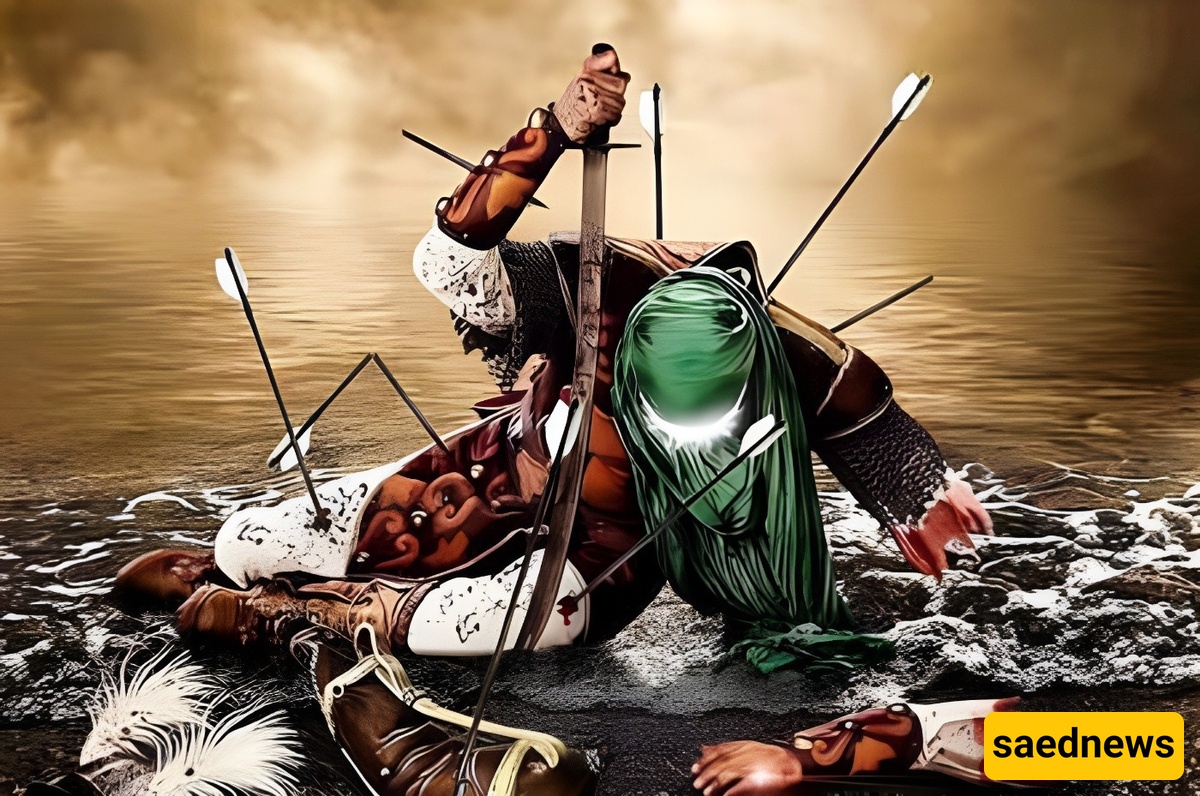
One of the most enduring symbols associated with Hazrat Abbas is the water-skin he carried during his attempt to bring water to the camp of Imam Hussein.
Even after losing both arms, his determination remained focused on completing his mission. His struggle to protect the water and take it back to the thirsty children has become a powerful symbol of loyalty, self-sacrifice, and devotion.
Some historical reports state that after his martyrdom, Hakim ibn al-Tufayl took his clothing as spoils.
The shrine of Hazrat Abbas is located in Karbala and is one of the most important pilgrimage sites for Shia Muslims.
It stands northeast of the shrine of Imam Hussein. The area between the two shrines is known as Bayn al-Haramayn, meaning “Between the Two Shrines.”
The shrine of Hazrat Abbas continues to attract millions of pilgrims who come to commemorate his courage, loyalty, and ultimate sacrifice for Imam Hussein at Karbala.