SAEDNEWS: A senior Iranian diplomat in Egypt wrote that the reasons behind Egypt’s decision not to join the agreement involving Saudi Arabia, Turkey, and Pakistan are linked to the country’s regional strategy and its policy of maintaining a balance of power.
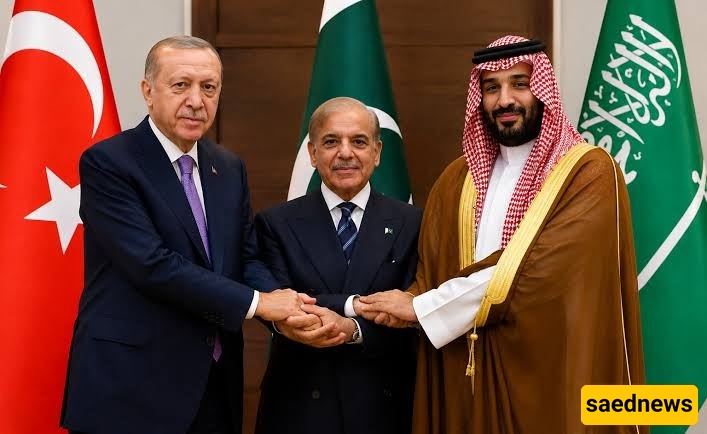
According to a political analysis published by Saed News, Mohammad Hossein Soltani, former head of Iran’s Interests Section in Egypt, outlined several reasons why Egypt has not joined the agreement involving Saudi Arabia, Turkey, and Pakistan. He argues that Egypt’s regional strategy and its policy of maintaining a balance of power are the main factors behind its decision.
First, unlike Turkey, Pakistan, and Saudi Arabia, Egypt shares a border with Israel. Under the terms of the Camp David Accords, Egypt cannot easily join security-related alliances in the same way as the other three countries. Statements by Pakistan’s prime minister suggesting that such an agreement could potentially act against Israel further reinforce Egypt’s reservations.
Second, Egypt sees itself as a leading Arab power and possesses one of the strongest military forces in the Arab world. Cairo believes that regional security is closely connected to its own security interests in the Persian Gulf and the Red Sea. Therefore, it may be reluctant to join an alliance in which two of the three members are non-Arab countries.
Third, Egypt does not want the region’s political and security balance—particularly regarding Iran—to shift in a direction that could conflict with Egyptian interests. The analysis notes that Egypt had previously opposed the idea of forming an “Arab NATO” aimed at confronting Iran, even before the recent 12-day war involving the United States, Israel, and Iran.
Fourth, Turkey, Pakistan, and Saudi Arabia may be concerned about future regional developments and possible Israeli plans that could threaten Ankara, Islamabad, or Riyadh. Egypt, however, does not want to place itself on a list of potential future targets by joining such an alliance.
Fifth, Egypt generally avoids participating in alliances primarily centered on military and security objectives. Its approach is shaped by lessons drawn from previous regional conflicts and wars.
Sixth, Egypt’s political leadership is influenced less by Saudi Arabia and is more closely aligned with the United Arab Emirates on key regional issues. Cairo is well aware of the rivalry between Riyadh and Abu Dhabi and does not want its strategic relationship with the UAE to be damaged.