SAEDNEWS: A senior Ansarullah political official says years of Saudi military preparations and support for forces inside Yemen have failed to overcome what he described as Yemen’s determination. He attributes the setback to intelligence operations, precision strikes and a “siege for siege” equation.
According to SaedNews: A senior official from Yemen’s Ansarullah movement says Saudi Arabia’s years of military preparations have failed to achieve their intended objective, arguing that developments on the battlefield have forced Riyadh to reconsider its calculations.
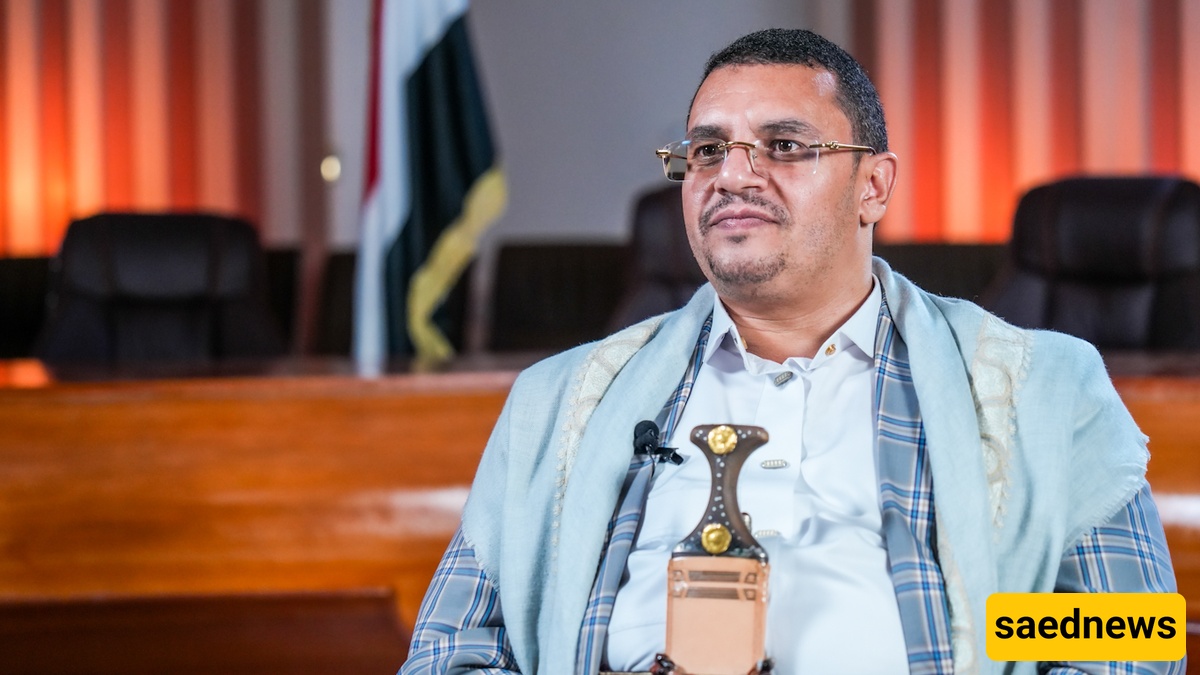
Hizam al-Asad, a member of Ansarullah’s political office, made the assessment while describing what he characterized as Saudi Arabia’s long-running strategy toward Yemen. His comments were presented as an explanation of how the movement views the latest phase of tensions between the two sides.
At the center of al-Asad’s argument is a claim that Saudi Arabia spent years building military and political mechanisms intended to avoid what he described as responsibility for paying the salaries of Yemeni public-sector workers and lifting the blockade imposed on Yemen.
According to the Yemeni official, Riyadh provided financial and military support and helped establish armed formations inside Yemen. He said the objective was to portray the conflict as an internal Yemeni civil war rather than as a confrontation involving outside intervention.
That interpretation is a political claim made by an Ansarullah official and reflects the movement’s view of the conflict. It also provides the context for his broader argument: that the military preparations built up over several years ultimately failed to produce the outcome Saudi Arabia had sought.
Al-Asad pointed specifically to what he described as intensive intelligence monitoring by Yemeni forces and precision attacks against military positions and weapons storage facilities.
He said these operations delivered a major shock to Saudi calculations at the beginning of the latest escalation.
The significance of his statement lies not simply in the claim that military targets were attacked, but in the argument that years of preparation could be undermined by a combination of intelligence capabilities and targeted strikes.
In his account, the battlefield equation has therefore shifted from one based primarily on Saudi military preparations to one in which Yemen can impose costs on the other side as well.
Al-Asad described this development through the phrase “siege for siege,” presenting it as a strategic equation that has become central to Yemen’s response.
The phrase suggests a reciprocal approach: pressure imposed on Yemen would, in his assessment, be met with pressure on the opposing side. For Ansarullah, this is presented as a means of changing the calculations surrounding the conflict rather than simply responding to individual military actions.
The official went further, saying that the establishment of this equation had effectively neutralized the military preparations Saudi Arabia had accumulated over several years.
His assessment comes against the backdrop of a conflict in which competing sides have repeatedly sought to shape the political and military environment through pressure, alliances and battlefield operations. Al-Asad’s remarks frame the latest developments as evidence that military preparations alone cannot guarantee a political outcome.
Another important part of his statement concerns the Saudi-backed armed formations inside Yemen. Al-Asad argued that their creation and support were part of an effort to maintain the appearance of an internal conflict.
From his perspective, however, the continued confrontation has instead become a broader strategic contest in which military capabilities, intelligence gathering and economic and political pressure are closely connected.
The reference to intelligence operations is particularly significant in his account. Rather than describing the attacks as isolated incidents, he linked them to what he called careful intelligence monitoring. That framing suggests that the effectiveness of precision strikes, in his view, depends not only on weapons but also on the ability to identify military positions and weapons depots.
The second element is the reported impact on Saudi calculations. Al-Asad said the attacks produced a “major shock” at the beginning of the new round of tensions. His argument is that the ability to threaten military facilities changes the assumptions underlying the opposing side’s planning.
The third element is the “siege for siege” equation, which he presented as the culmination of these developments. In his telling, the equation demonstrates that pressure on Yemen can generate a response capable of imposing costs on the other side.
It is important to distinguish these claims from independently verified battlefield assessments. The source material reflects the position of an Ansarullah political official and does not provide independent evidence establishing the full extent of the alleged military impact.
Nevertheless, the remarks reveal how the Yemeni movement is interpreting the current strategic environment. Rather than presenting the conflict simply as a contest of military strength, al-Asad portrays it as a struggle over which side can sustain pressure and force the other to alter its calculations.
His conclusion is unequivocal: the years of Saudi military preparation, in his assessment, have failed when confronted with Yemen’s determination and the new strategic equation.
Whether that assessment translates into a lasting change in the balance of power remains a broader question. But the statement itself highlights the central issue facing the conflict: whether continued military pressure will produce a political breakthrough or instead deepen the cycle of escalation.
For observers of the Yemen conflict, the “siege for siege” formula therefore stands out as the most consequential part of the message. It signals that, from Ansarullah’s perspective, the next stage of confrontation will be shaped not only by battlefield strength but by the ability of each side to withstand pressure and impose costs in return.
That makes the latest statements more than a declaration of military confidence. They are also an indication of how the Yemeni movement wants its adversaries—and the wider region—to understand the current balance. The question now is whether this strategic equation will remain a rhetorical position or become a durable feature of the conflict.