SAEDNEWS: The office of U.S. Vice President J.D. Vance has announced that his planned trip to Switzerland, which was scheduled in connection with the memorandum of understanding between Iran and the United States, has been canceled.
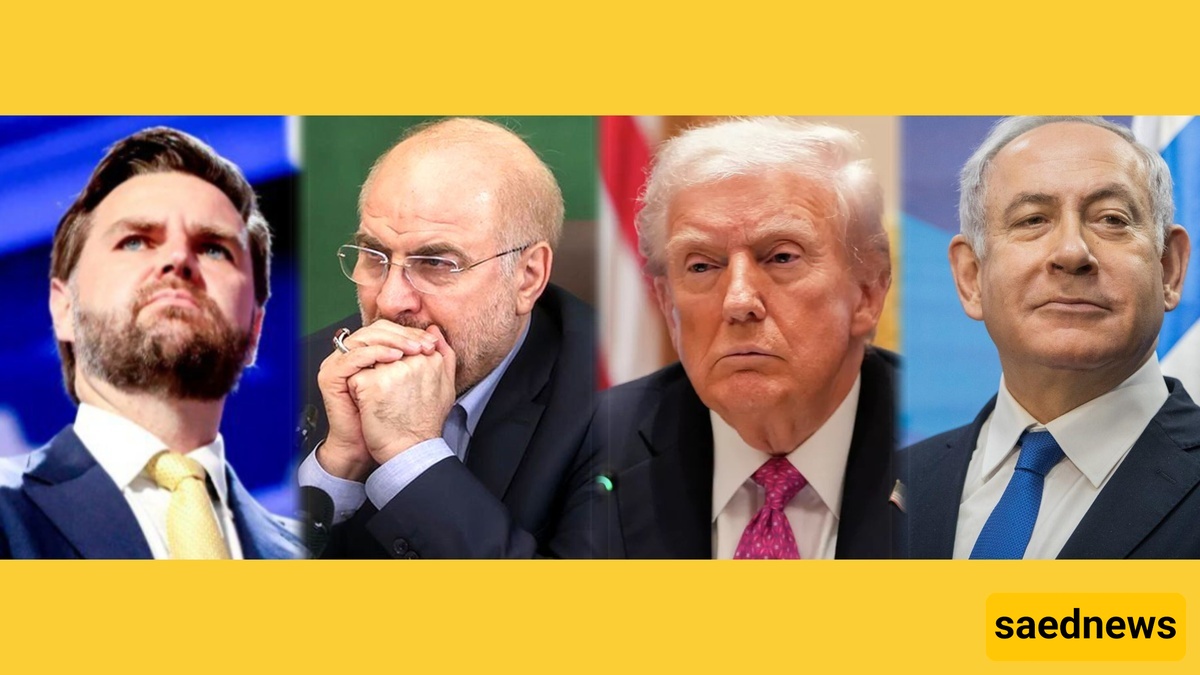
According to Saednews political reports, the X account "Open Source Israel" quoted a spokesperson for U.S. Vice President J.D. Vance as saying:
"As the Vice President stated during his press conference, planning for the upcoming technical talks has not yet been finalized, and the U.S. delegation was prepared to depart at the earliest possible opportunity."
The spokesperson added:
"However, the logistics of these negotiations have never been simple or predictable. At present, the Vice President will not be leaving tonight. We will provide updates as soon as there is clarity regarding the next steps."
The White House also confirmed the cancellation of Vance’s trip but stated that the United States still expects technical negotiations with Iran to begin as soon as possible.
Earlier on Thursday evening, Al Mayadeen reported that the Iranian negotiating delegation had suspended its planned trip to Switzerland due to the continuation of Israeli attacks in southern Lebanon.
According to the report, the Iranian delegation had been preparing to travel in order to begin the first round of the planned 60-day negotiations before the trip was put on hold.
The source stated that Tehran had previously informed both the American side and mediators that developments in Lebanon were a key factor in determining whether negotiations would proceed, continue, or be halted.
The source further noted that Tehran warned that Israel’s continued military operations up to 10 kilometers inside Lebanese territory constituted a clear violation of the first clause of the memorandum of understanding and the framework agreement.
Israeli Prime Minister Benjamin Netanyahu recently claimed that Israeli forces would not withdraw from southern Lebanon, arguing that such a presence was necessary to ensure security in northern Israel.
Although Israel has reduced the scale of its operations in Lebanon, it continues to conduct drone strikes and artillery attacks in various areas.
Meanwhile, Hezbollah announced that it had confronted attempts by Israeli forces to infiltrate a town in southern Lebanon. The group emphasized that it would not permit any continued Israeli military presence on Lebanese territory.
The first clause of the 14-point memorandum of understanding reportedly reached between Iran and the United States obliges all parties to end military operations on all fronts, including Lebanon.
The clause states:
"The United States of America, the Islamic Republic of Iran, and their allies in the ongoing conflict sign this memorandum to declare the immediate and permanent cessation of military operations on all fronts, including Lebanon. From this point forward, both sides commit not to initiate any war or military operation against one another, to refrain from threatening or using force, and to guarantee Lebanon’s territorial integrity and sovereignty. The final agreement will confirm the permanent end of the war on all fronts, including Lebanon, and the other provisions of this clause."
Despite this, former U.S. President Donald Trump has made contradictory statements regarding whether the Lebanese front is included in the ceasefire arrangement.
In recent days, he has at times argued that Israel has a "right to defend itself," a position that critics say has effectively given Israel greater freedom to continue military operations in Lebanon.
On Thursday, Fars News Agency reported that officials in Tehran, citing the explicit provisions of the Iran–U.S. memorandum concerning Lebanon’s territorial integrity and the cessation of attacks on the resistance front, stated that any further progress in negotiations would depend on the full and unconditional implementation of U.S. commitments in this area.
According to the report, Iranian officials have made it clear that Iran does not intend to fulfill its obligations unilaterally. They argue that the framework was designed so that if the other side fails to honor its commitments at the initial stage, not only would negotiations be suspended, but the credibility of the agreement itself would be called into question.
Analysts, referring to competing interpretations of the recent attacks—one suggesting Israeli defiance of the United States and another portraying coordinated actions between Washington and Tel Aviv—argue that for Iran, the underlying motives are irrelevant. What matters, they say, is the clear wording of the memorandum and the actual cessation of attacks.
They maintain that no further steps toward negotiations should be taken as long as military actions against Lebanese territory and the resistance front continue.
Political experts also believe that Iran’s insistence on the simultaneous implementation of commitments reflects a new diplomatic approach, one that prioritizes practical verification of obligations over reliance on American assurances, unlike previous experiences.