SAEDNEWS: Iranian Foreign Minister Seyed Abbas Araghchi said a historic war-ending agreement will be digitally signed in the coming days. The 14-point deal includes lifting the naval blockade, releasing Iran’s frozen assets, a ceasefire in Lebanon, and a new mechanism for collecting service fees in the Strait of Hormuz.
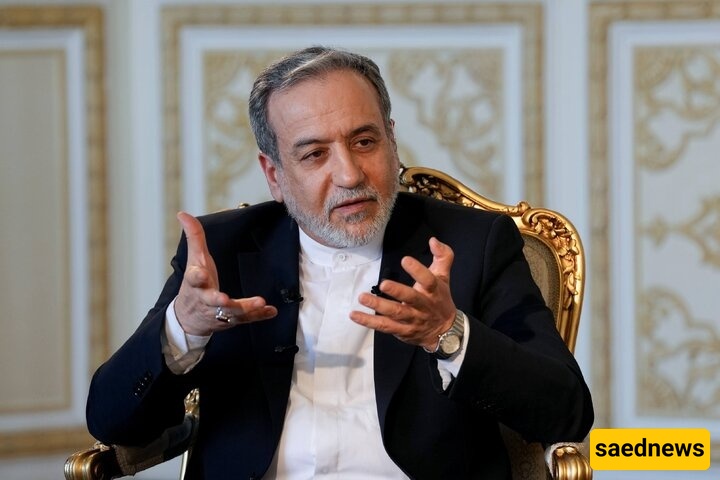
According to Saed News political desk, Iranian Foreign Minister Seyed Abbas Araghchi announced during a special interview on Iran's Khabar Network that a 14-point memorandum of understanding (MoU) between Iran and the United States has been finalized. The agreement is said to be the result of more than two months of intensive negotiations and detailed review by Iran's Supreme National Security Council.
According to the foreign minister, the memorandum, which is expected to be signed digitally and remotely in the near future, officially declares the end of hostilities on all fronts, including Lebanon. He stated that, for the first time in 47 years, the United States would be formally committed in writing to respecting the sovereignty of the Islamic Republic of Iran.
Araghchi emphasized that diplomacy advances alongside achievements on the battlefield, describing Iran's strategic victories in recent conflicts as the primary factor that brought the opposing side to the negotiating table. Referring to the resilience of the Iranian people and armed forces, he said:
“When our enemies lost hope of achieving their objectives through military conflict and realized that the Iranian people would not surrender, they requested negotiations. This agreement transforms battlefield achievements into the legitimate and internationally recognized rights of the Iranian people.”
One of the most significant achievements of the agreement's first phase is the complete lifting of the U.S. maritime blockade against Iran and the unconditional release of all frozen Iranian assets.
Beyond this, the foreign minister announced fundamental changes in the management of the world's most strategically important waterway. Iran, which has provided security and search-and-rescue services in the Strait of Hormuz free of charge for many years, will now, in coordination with regional partners such as Oman and in consultation with stakeholder countries including China, introduce a new mechanism for collecting transit and navigation service fees.
The strong presence of Iran's armed forces in the strait will remain as a key deterrent, but the management of maritime traffic will no longer follow previous practices.
In addition, the upcoming agreement includes a comprehensive reconstruction plan aimed at compensating for economic damages suffered by the country. Once implemented, the plan is expected to inject substantial financial resources into Iran's economy.
Despite reaching an initial agreement, the most challenging issues have been postponed to a second round of negotiations. Araghchi stated that due to what he described as excessive U.S. demands during the current phase—including a request for zero uranium enrichment—the nuclear dossier and the complete removal of sanctions will be addressed during a 60-day period following the signing of the initial memorandum.
Iran's position remains firm at this stage: uranium enrichment will not be halted, and any decision regarding higher-level enriched materials can only be implemented through dilution within Iranian territory.
The foreign minister warned that the 60-day period is conditional. If the United States fails to fulfill the provisions of the initial memorandum—including lifting the blockade and releasing frozen assets—Iran will not proceed to the second phase of negotiations, and all processes will revert to the pre-agreement status.
Araghchi concluded by asserting that, relying on its deterrent capabilities, Iran will no longer permit any power to use threats as a tool in diplomacy.