SAEDNEWS: After 40 days of intense fighting, claims of U.S. defeat are growing, with Trump facing economic pressure, rising prices, and domestic anger amid the Strait of Hormuz tensions.
According to the political service of SaedNews, Brigadier General Sanaei-Rad, a senior military official, has revealed in a recent interview that the United States is “empty-handed” in these confrontations. He says that after three months of tensions and 40 days of intense fighting, Washington, despite having the world’s largest military, has achieved none of its objectives.
He claims that the Americans intended to destroy Iran’s missile capabilities and push the country toward internal division, but are now facing a major and unforeseen problem called the “closure of the Strait of Hormuz,” an event that has significantly increased global pressure on Trump.
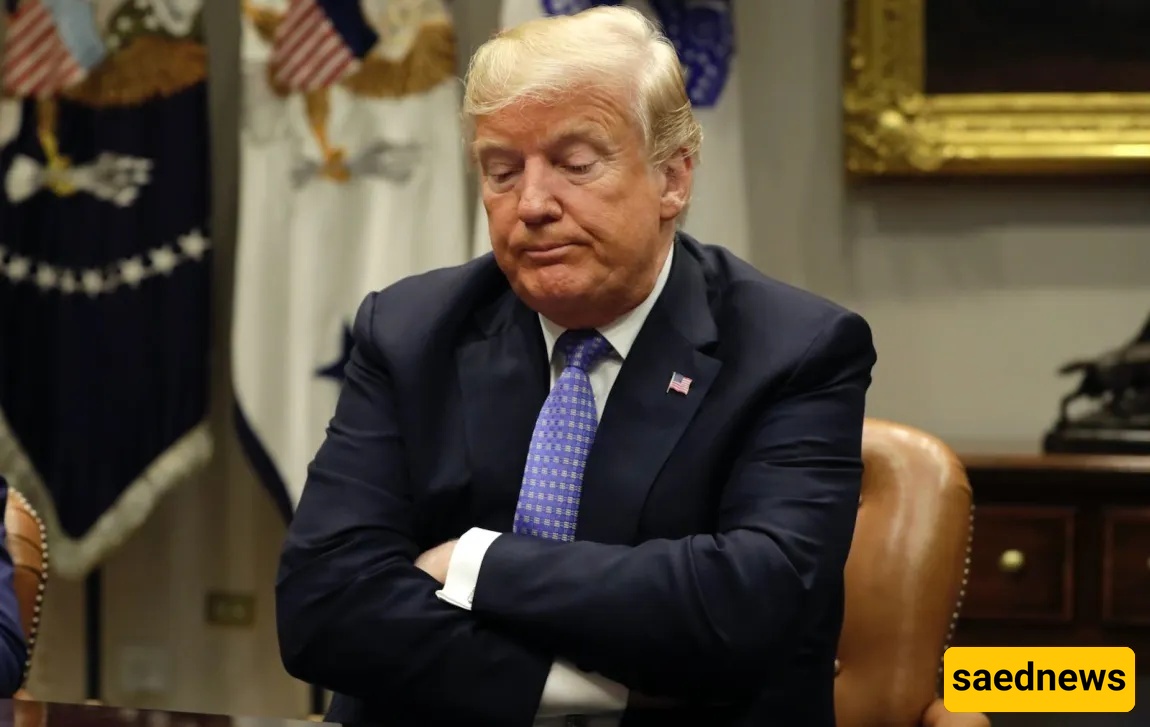
On the other hand, he says the situation inside the United States has also become highly chaotic. People who had trusted Trump’s slogan of “America First” are now seeing their tax money being wasted on an ineffective war and believe they will have to pay the cost through severe inflation. Alongside this, he argues that Trump’s alleged lies and exaggerations have caused people to stop believing his statements.
He also refers to what he describes as “horrific actions,” such as attacks on hospitals and civilian homes in areas like Minab, saying these have increased global hatred toward White House policies and reduced the impact of Western media narratives.
According to SaedNews’ exclusive analysis, when a heavily armed country’s military cannot achieve its goals on the battlefield, it shows that real power is not only about advanced weapons. He argues that Trump has trapped himself in a situation from which there is no escape, believing he could gain a “national hero” image through a quick attack, but instead the closure of the Strait of Hormuz and the resulting price increases in the U.S. have harmed American citizens first.
He concludes by asking what the end result of this failure will be for Trump, stating that the United States is no longer the unquestioned superpower it once was. He argues that when a leader loses credibility even among his own people, his global reputation is severely damaged. In his view, the result of this conflict is the loss of American taxpayers’ money and growing global resentment due to harm to innocent civilians. If the situation continues, he suggests, Trump will not only lose in the Middle East but also face defeat within the United States in what he calls the “biggest political gamble” of his career.