Saed News: The Director General of the International Atomic Energy Agency (IAEA) warned about the consequences of attacks on nuclear facilities, referring to recent incidents involving nuclear sites during the Russia–Ukraine war and attacks targeting nuclear power plants in Iran and the United Arab Emirates.
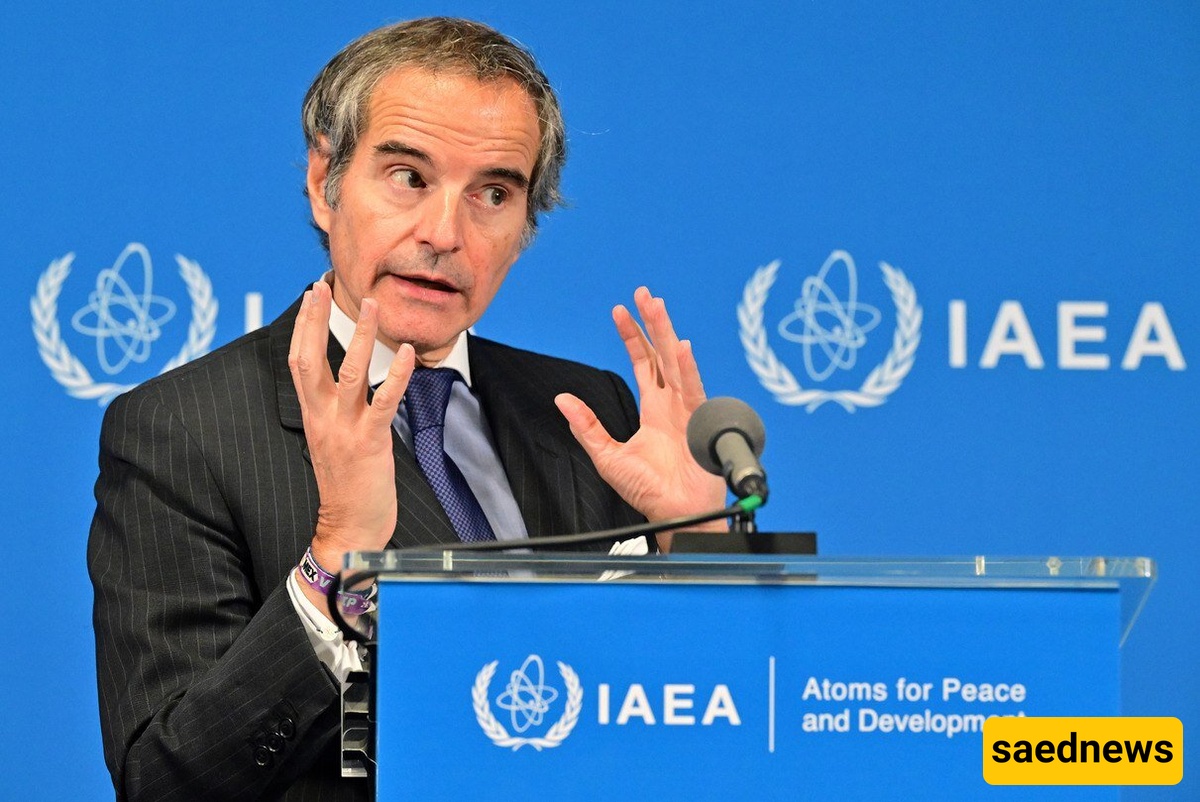
According to SAEDNEWS, Rafael Grossi, Director General of the IAEA, stressed during a special Board of Governors meeting regarding the attack on the Barakah Nuclear Power Plant in the UAE that nuclear safety is a universal issue and that targeting nuclear facilities is unacceptable.
Referring to recent attacks during the Russia–Ukraine conflict and damage to certain nuclear facilities in the region, Grossi warned that any direct strike on an operating nuclear power plant could have severe consequences for both the environment and human life.
He explained that operational nuclear plants such as Barakah contain large quantities of nuclear material, and damage to them could result in the widespread release of radioactive substances. He also noted that attacks on the electricity supply lines of an active nuclear plant increase the risk of a reactor core meltdown. In the worst-case scenario, such incidents could require mass evacuations, sheltering measures, the distribution of stable iodine, and even food restrictions, highlighting that the issue is not merely a technical concern but also a humanitarian and regional threat.
According to Saed News’ analysis, Grossi’s message was not simply a technical warning. In practice, he sought to establish a clear political and security boundary: nuclear facilities should not become part of the battlefield, even during wartime.
The agency’s reference to recent incidents involving Barakah, Zaporizhzhia, and Bushehr underscores that the danger is neither hypothetical nor distant; rather, it has manifested itself in recent months.
This position may serve as a direct message to all parties involved in conflicts that escalating tensions around nuclear facilities is not merely a national issue but one with potentially cross-border consequences. From this perspective, Grossi’s emphasis on dialogue and diplomacy is more than a general statement—it is a call to prevent military crises from reaching a stage where managing the consequences becomes far more difficult than preventing the attack itself.