SAEDNEWS: An Iranian lawmaker has claimed that Iran and the United States reached an understanding on a ceasefire, the release of $12 billion in frozen assets, easing oil-sale restrictions, and reopening maritime routes, prompting widespread reactions.
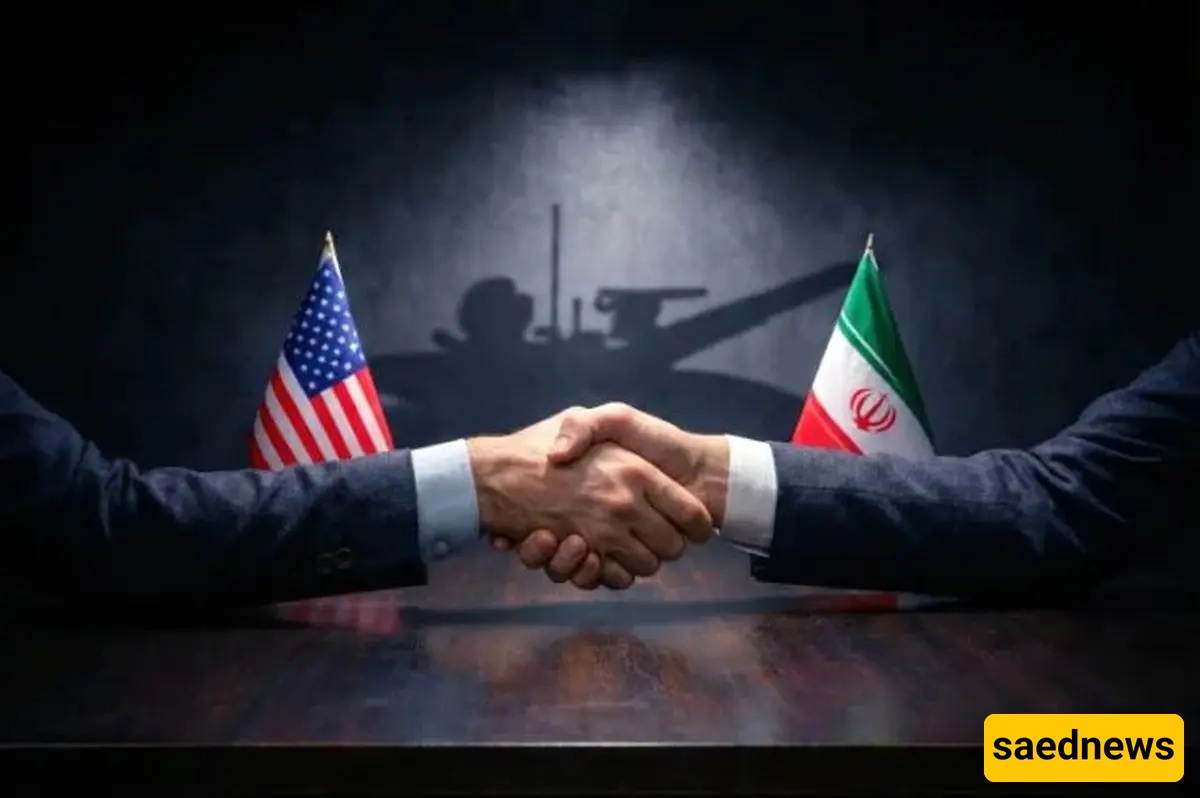
According to Saed News Agency’s political desk, Mohsen Zangeneh, a member of Iran’s parliamentary Budget and Planning Commission, outlined what he described as the current state of negotiations between Iran and the United States. He claimed that the two sides have reached preliminary understandings on a complete cessation of hostilities, refraining from threats and the use of force, lifting maritime restrictions, maintaining Iran’s sovereignty over the Strait of Hormuz, the gradual release of Iran’s frozen assets—including an initial $12 billion tranche—allowing unrestricted oil sales, and beginning a process aimed at achieving a final agreement within the next 60 days.
According to Zangeneh, Iran’s right to uranium enrichment is non-negotiable. He added that future negotiations would focus on issues such as the full removal of sanctions, the release of all blocked Iranian assets, and the withdrawal of U.S. forces from areas surrounding Iran’s borders. He also claimed that an initial agreement had been reached to establish a $300 billion reconstruction fund for Iran. He emphasized that all such arrangements remain subject to approval by Iran’s highest authorities. Zangeneh further argued that the conflict between the two countries has shifted from the military arena to the maritime domain and asserted that Iran would ultimately emerge successfully despite ongoing pressures and restrictions.
In his assessment of post-war conditions and the course of Iran–U.S. negotiations, Zangeneh explained that Iran’s Supreme National Security Council had adopted a ten-point framework as the basis for negotiations and authorized the negotiating team to engage with U.S. representatives accordingly.
The parliamentarian representing Torbat-e Heydarieh and Mahvelat stated that, as referenced in a message from Pakistani Prime Minister Shehbaz Sharif, these ten principles became the foundation of talks beginning on April 8. He said the first round of negotiations was held in Pakistan, followed by consultations that led both sides to seek agreement on several preliminary principles.
Zangeneh stated that the parties have reportedly agreed that once a memorandum of understanding is signed, hostilities would cease across all fronts. He said both sides would commit to an immediate and permanent halt to fighting and refrain from threats or the use of force in any theater.
He further stated that the United States would be expected to lift what he described as a maritime blockade, allowing Iran to resume shipping operations in the Persian Gulf and the Gulf of Oman at pre-war levels.
According to Zangeneh, the Strait of Hormuz would remain under Iranian ownership and administration, with Iran continuing to collect navigation and security service fees while keeping the waterway open to commercial vessels. He claimed that, during the 60-day period designated for reaching a final agreement, maritime activity would gradually return to pre-war levels while preserving Iran’s sovereignty and management authority.
Responding to a question about countries considered hostile to Iran, he argued that under the 1982 convention governing maritime law, Iran retains the right to act against vessels whose passage threatens national security, describing this as a sovereign right of the Islamic Republic.
Zangeneh said Iran had conditioned the end of hostilities on the release of its frozen assets. He claimed that these funds were expected to be fully released within 30 days.
He added that Iran initially demanded the release of at least half of the assets at the outset, a proposal he said the United States resisted. According to his account, Qatar later offered to mediate and facilitate the arrangement.
Zangeneh claimed that following visits by Mohammad Bagher Ghalibaf, Abbas Araghchi, and Abdolnaser Hemmati to Qatar, an understanding was reached with the Emir of Qatar. Under this arrangement, approximately half of Iran’s estimated $24 billion in blocked assets—around $12 billion—would be made available to Iran through a specified mechanism.
The lawmaker also claimed that the United States had agreed not to obstruct Iranian oil exports immediately after the end of hostilities. Under the reported understanding, Iran would be allowed to continue selling oil freely while negotiations toward a final agreement proceed.
Zangeneh stressed that no discussions on Iran’s nuclear program have taken place at this stage. He said that only mutually agreed issues were being addressed and that certain matters, particularly Iran’s right to uranium enrichment, are not open to negotiation.
He explained that once a ceasefire and preliminary understanding are formally announced, a 60-day period would begin for negotiating a comprehensive agreement. According to him, Iran would seek the complete lifting of sanctions, the release of all frozen assets, and the withdrawal of U.S. forces from areas surrounding Iran’s borders during that period.
Addressing the issue of compensation, Zangeneh said the United States opposed the use of the term “war reparations.” Instead, he claimed that a preliminary agreement had been reached to establish a $300 billion fund financed by Gulf states and the United States.
He stated that the fund’s resources would be directed toward Iran’s reconstruction and development through a mechanism to be designed during the 60-day negotiation period.
Zangeneh emphasized that any eventual agreement would have to be reviewed by Iran’s Supreme National Security Council and submitted to Ali Khamenei for approval. He noted that implementation would depend on authorization from the Supreme Leader or any institution designated to conduct such a review.
The lawmaker argued that although negotiations are underway, Iran remains engaged in what he described as an intense maritime confrontation with the United States. He cautioned against assuming that the conflict has fully ended simply because active battlefield operations have ceased.
According to Zangeneh, the confrontation has shifted from missile and drone warfare to competition at sea. He claimed that U.S. naval deployments are intended to prevent vessels from bypassing maritime restrictions, particularly Iranian ships.
At the same time, he said Iranian naval forces from both the Revolutionary Guard and the regular military are working to maintain control over the Strait of Hormuz. He asserted that vessels currently transiting the area are those that accept Iran’s conditions and pay the required service fees.
Zangeneh claimed that the United States initially declared that ships complying with Iranian conditions would not be permitted to bypass maritime restrictions. He said that, despite those statements, many such vessels are now successfully reaching their destinations.
The parliamentarian criticized the United States and Israel, arguing that their claims of supporting the Iranian people are contradicted by restrictions affecting ships carrying medicine, medical supplies, pharmaceutical materials, and other essential goods.
He contended that such actions directly affect the livelihoods and welfare of ordinary Iranians.
Concluding his remarks, Zangeneh argued that Iran’s economy is more resilient than that of the United States. He stated that, with public support, government efforts, and what he described as divine assistance, Iran would ultimately emerge from the ongoing confrontation in a stronger position.