SAEDNEWS: Iran and China possess a solid complementary foundation for the development of economic and trade relations. The two countries enjoy significant long-term opportunities for cooperation in areas such as energy security, infrastructure development, supply chain integration, and geoeconomic collaboration.
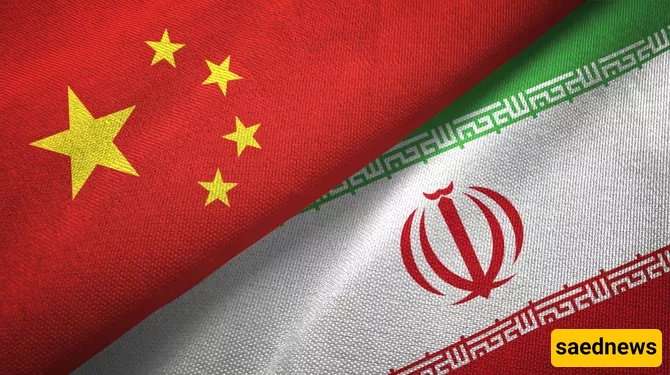
According to Saednews citing IRNA The following are the core potentials and prospects for deepening economic and trade cooperation between China and Iran:
As one of the countries with the largest oil and natural gas reserves in the world, Iran is capable of providing a long-term and stable energy supply to support China’s sustained economic growth. In return, China remains Iran’s largest and most reliable destination for crude oil exports.
With the advancement of the 25-year Comprehensive Cooperation Agreement between China and Iran, bilateral cooperation is gradually upgrading from simple crude oil trade to deeper integration across the petrochemical value chain. This includes joint refining projects, technical cooperation in liquefied natural gas (LNG), and the co-development of petrochemical industrial parks.
Iran occupies a strategic geographical position linking Central Asia, the Middle East, and Europe. China’s world-class expertise in high-speed railways, ports, and bridge construction aligns closely with Iran’s pressing needs to modernize its transportation infrastructure, including projects such as the Tehran–Mashhad high-speed railway and the expansion of the ports of Chabahar and Bandar Abbas.
China’s mature capabilities in 5G communications, satellite navigation, smart city technologies, and cross-border e-commerce can help Iran accelerate the development of its digital economy, particularly within a relatively constrained international environment.
The growing consensus between China and Iran regarding de-dollarization and local-currency settlement, including direct RMB–rial currency swaps, significantly reduces geopolitical risks associated with bilateral trade.
Following Iran’s formal accession to the Shanghai Cooperation Organization (SCO) and BRICS, the two countries can explore safer and more efficient channels for cross-border payments, investment, and financing within multilateral financial frameworks, including mechanisms linked to the New Development Bank.
Chinese automotive brands and construction machinery manufacturers have already established a substantial presence in the Iranian market. Future cooperation is increasingly shifting from direct imports toward localized assembly operations (CKD/SKD) and the development of domestic supply chains for parts and components.
Against the backdrop of climate change and global energy transition, Iran possesses abundant solar and wind resources. As the world’s largest manufacturer of photovoltaic and wind-power equipment, China has extensive opportunities to cooperate with Iran in clean-energy development.
Despite the significant potential for cooperation, external sanctions and long-arm jurisdiction continue to pose constraints. Consequently, China–Iran trade is increasingly facilitated through flexible and pragmatic mechanisms such as non-dollar settlements, barter arrangements (including oil-for-infrastructure models), and direct cooperation between small and medium-sized enterprises.
Financial cooperation centered on RMB transactions, combined with the establishment of joint-venture manufacturing facilities in Iran, may represent the most effective path toward mutually beneficial outcomes. RMB-based cooperation serves as the primary financial artery for overcoming external constraints, while localized manufacturing through joint ventures provides the long-term industrial foundation. Together, these two pillars offer a practical framework for overcoming geopolitical obstacles and achieving sustainable win-win cooperation.
In response to external sanctions and the limitations of the SWIFT system, bilateral trade between China and Iran has increasingly shifted toward RMB-denominated pricing, settlement, and clearing. This transition helps shield critical trade flows—particularly in energy and bulk commodities—from external financial pressures.
The RMB earned by Iran through exports of oil and petrochemical products to China can be directly utilized to purchase Chinese machinery, electronic components, automotive parts, industrial equipment, and technology. This creates a closed-loop trade cycle that significantly strengthens Iran’s balance-of-payments position.
With Iran’s deeper participation in BRICS-related frameworks, both countries are accelerating efforts to connect China’s CIPS network with Iran’s domestic financial payment systems. Such integration can provide safer, more efficient, and lower-cost financial channels for businesses and investors in both countries.
To protect domestic industries and preserve foreign exchange reserves, Iran has long maintained restrictions on the import of various industrial finished goods, including automobiles. Through joint ventures and localized assembly operations (CKD/SKD), Chinese companies can effectively overcome these barriers while gaining direct access to both Iranian and neighboring regional markets.
Joint ventures involve far more than factory construction. They facilitate the transfer of industrial management expertise, engineering capabilities, manufacturing know-how, and supply-chain development in sectors such as automotive components, renewable energy equipment, and smart home appliances. This aligns closely with Iran’s broader objective of reducing dependence on hydrocarbons and achieving industrial self-sufficiency.
Iran offers exceptionally competitive energy costs, a well-educated and youthful workforce, and a strategic location connecting Central Asia, the Caucasus, and the Middle East. Manufacturing operations established through joint ventures can therefore reduce production costs while transforming Iran into a regional manufacturing and logistics hub.
China gains greater long-term energy security through stable overseas supply channels. It also opens new markets for competitive domestic industries, including new-energy vehicles, lithium batteries, and construction machinery. Furthermore, expanded RMB usage supports the internationalization of China’s currency and broadens its role in global trade and reserves.
Iran can mitigate the risk of industrial stagnation resulting from prolonged external restrictions. Access to advanced technology, industrial equipment, and digital infrastructure supports economic modernization. At the same time, localized manufacturing generates employment, strengthens economic stability, and transforms geopolitical pressure into a catalyst for industrial upgrading and sustainable development.
By a journalist of Hong Kong’s Wen Wei Po