SAEDNEWS: Trump’s sudden decision to halt the planned Strait of Hormuz blockade caught observers off guard. Reports of a $300 billion proposal and pressure from Tel Aviv have added new uncertainty to the prospects of a final agreement with Iran.
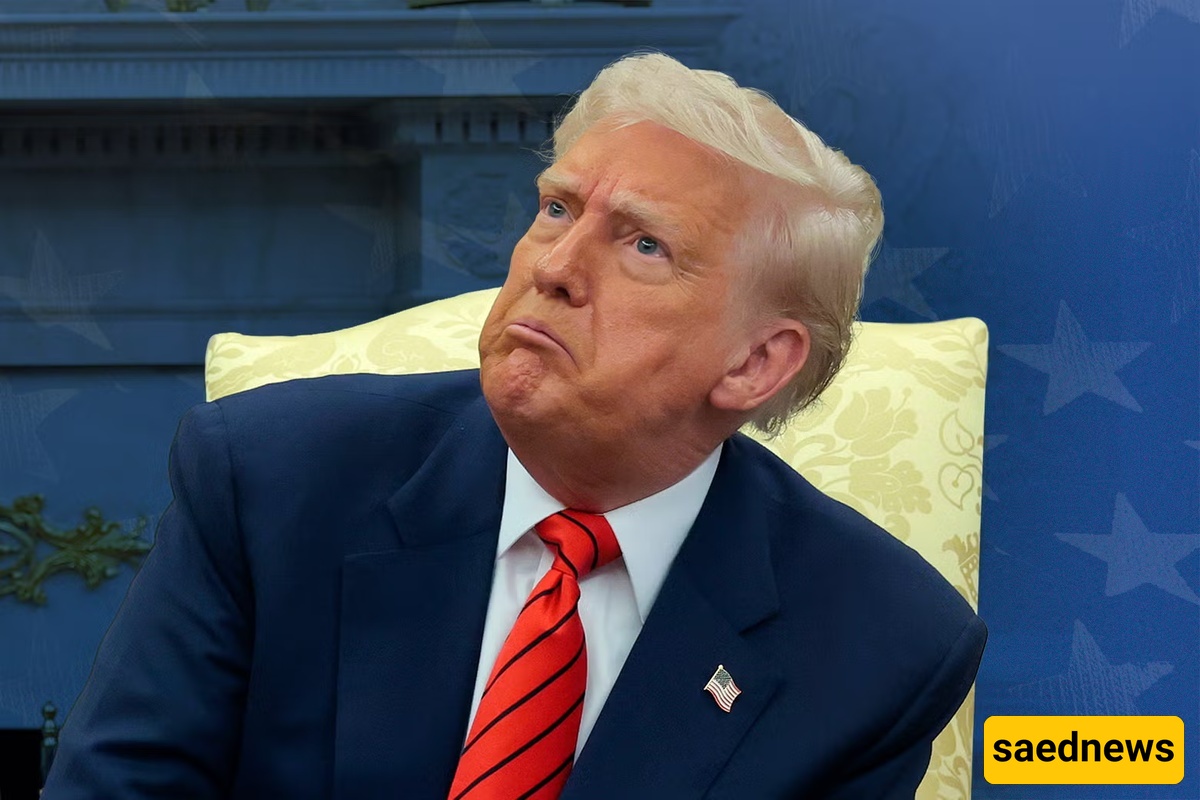
According to Saed News Political Desk, U.S. President Donald Trump unexpectedly announced on social media that the naval blockade of the Strait of Hormuz had been lifted and maritime traffic had resumed. He also stated that he had entered the White House Situation Room to make a final decision regarding a potential agreement with Iran. Although Iran had not officially commented at the time of reporting, and the proposed “commitment-for-commitment” framework was still under review in Tehran, Trump’s remarks appeared to indicate a partial retreat from Washington’s original wartime objectives and a willingness to accept some Iranian demands, including a softer stance on enriched uranium. Observers viewed the announcement, which coincided with a drop in oil prices to around $90 per barrel, as a sign that the U.S. military strategy had failed to achieve its intended results.
Despite indications of a U.S. policy shift, two of Iran’s principal demands reportedly remain unresolved: the establishment of a new security framework for the Strait of Hormuz and the immediate release of $12 billion in frozen Iranian assets. At the same time, reports suggest that the negotiations include substantial economic incentives. The New York Times has reportedly referred to discussions about a $300 billion international investment fund for Iran—an idea initially proposed by Trump’s advisers and viewed as a redefined version of the war compensation sought by Tehran. Nevertheless, Trump is said to be hesitating over final approval of the agreement due to pressure from hardline members of his political camp and concerns about appearing overly conciliatory toward Iran.
One of the most significant obstacles to a final agreement is reportedly the role of Israeli Prime Minister Benjamin Netanyahu and the Israeli government. Tel Aviv is said to be deeply concerned about a deal focused primarily on a temporary ceasefire and the reopening of the Strait of Hormuz, fearing that such an arrangement would leave the broader confrontation with Iran unresolved. As a result, Netanyahu is reportedly seeking to disrupt diplomatic progress by intensifying military operations in Lebanon. Some analysts argue that Trump’s approach to the issue has been influenced more by Israeli strategic considerations than by U.S. economic interests, such as lowering gasoline prices. According to these assessments, the delay in reaching a final decision may be intended to provide Israel with additional time to pursue its regional military objectives.