SAEDNEWS: Why Is Surah Al-Fatiha Recited in Prayer, and Why Can No Other Surah Replace It?

According to Saednews, a narration from Imam Ali al-Ridha (AS) Says, if someone asks why Muslims are instructed to recite the Quran during prayer, the answer is that the Quran should not be abandoned or forgotten. Rather, through its recitation and listening during prayer, it remains present in society and is protected from being forgotten.
If someone asks why Surah Al-Fatiha must be recited in every prayer recitation instead of another chapter, the answer is that no other chapter of the Quran encompasses the essential principles of goodness and wisdom as comprehensively as Surah Al-Fatiha.

The meanings of its verses are explained as follows:
- “Master of the Day of Judgment” (Maliki Yawm al-Din): This verse affirms the Resurrection, the raising of the dead, the accountability of human beings, and their reward or punishment. It also acknowledges Allah’s sovereignty over the Hereafter, just as He holds sovereignty over this world.
- “You alone we worship” (Iyyaka Na'budu): Through these words, the servant expresses devotion and a desire to draw closer to Allah. The verse also emphasizes sincerity in worship, directing all acts of devotion exclusively to the Creator.
- “And You alone we ask for help” (Iyyaka Nasta'in): The servant asks Allah to grant greater success in worship and to continue bestowing His blessings, support, and assistance.
- “Guide us to the Straight Path” (Ihdina al-Sirat al-Mustaqim): The servant asks Allah for guidance, holds firmly to the path of divine direction, and seeks a deeper understanding of Allah, His greatness, and His majesty.
- “The path of those upon whom You have bestowed Your blessings” (Sirat al-Ladhina An'amta Alayhim): This verse reinforces the servant’s desire for guidance. It also reminds the worshipper of the blessings Allah bestowed upon His chosen servants and expresses the desire to receive similar blessings.
- “Not those who have incurred Your anger” (Ghayri al-Maghdubi Alayhim): Through these words, the servant seeks refuge in Allah from becoming one of those who oppose the truth, reject faith, or treat their Lord and His commands with disregard.
- “Nor those who have gone astray” (Wa La al-Dallin): The servant asks Allah for protection against straying from His straight path and mistakenly believing that one’s actions are righteous while lacking true knowledge and guidance.
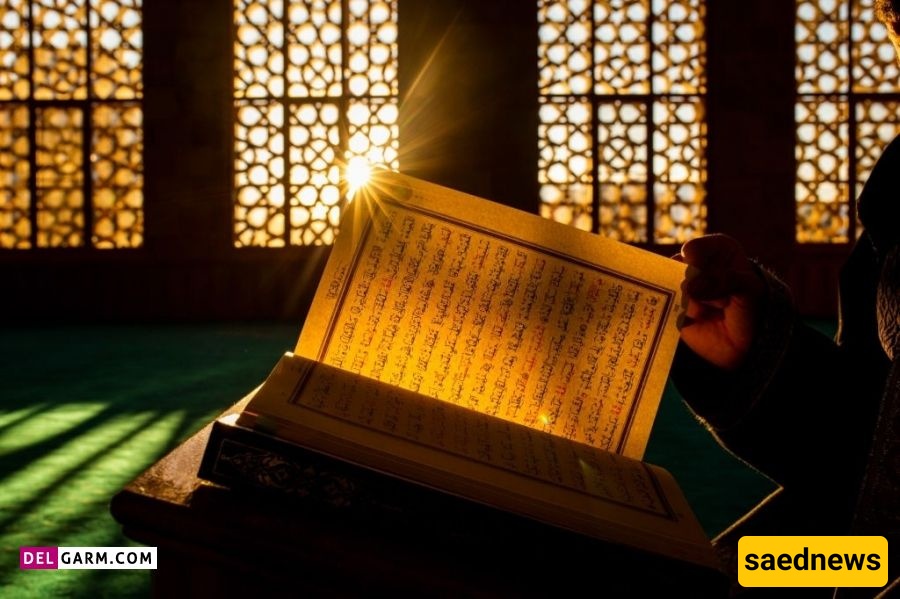
Surah Al-Fatiha has a distinctive characteristic: while the other chapters primarily communicate divine teachings and revelations, Al-Fatiha also gives the worshipper words through which to address Allah directly.
When reciting it, the believer feels closer to Allah, engages in intimate supplication, and expresses both devotion and personal needs. This gives the chapter a profound spiritual and educational effect.
Imam Ja'far al-Sadiq (AS) is reported to have said that Iblis was deeply distressed on two occasions:
When the Prophet Muhammad (PBUH) was commissioned as a prophet.
When Surah Al-Fatiha was revealed.
Surah Al-Fatiha consists of two complementary parts: praise and glorification of Allah, and the supplications and requests of His servants.
According to a narration from the Prophet Muhammad (PBUH), Allah says:
“I have divided Surah Al-Fatiha in prayer between Myself and My servant: half belongs to Me, and half belongs to My servant.”
Since human beings are entirely dependent on Allah, while Allah is absolutely self-sufficient, the worshipper should first turn toward Allah, acknowledge His greatness, and praise Him before presenting personal needs.
The servant humbles himself before Allah and declares, in effect, that all praise and worship belong exclusively to Him.
The importance of Surah Al-Fatiha is also highlighted in the Quran, in Surah Al-Hijr, verse 87:
“And We have certainly given you the seven oft-repeated verses and the Great Quran.”
This verse is understood in Islamic tradition as referring to the special status of Surah Al-Fatiha, which is also known as the Seven Oft-Repeated Verses.
For these reasons, Surah Al-Fatiha holds a central place in Islamic prayer.
According to narrations from the Ahl al-Bayt (AS), reciting Surah Al-Fatiha is an essential requirement of prayer.
Imam Muhammad al-Baqir (AS) was asked about someone who had not recited the Opening Chapter of the Quran during prayer. He replied:
“His prayer is not valid unless he recites it.”
In another narration, he is reported to have said:
“Every prayer in which the Opening Chapter of the Quran is not recited is deficient.”
Imam Ali (AS) is reported to have instructed worshippers to recite Surah Al-Fatiha after the opening takbir, followed by another chapter where permitted.
Imam Ali al-Ridha (AS) is also reported to have explained that Al-Fatiha is recited in prayer rather than another chapter because no other chapter is as comprehensive.
Therefore, according to these narrations, another chapter cannot replace Al-Fatiha in the required position in prayer.
Surah Al-Ikhlas, which begins with Qul Huwa Allahu Ahad (“Say: He is Allah, the One”), is one of the shorter chapters of the Quran. Islamic narrations encourage its regular recitation after obligatory prayers.
Imam Ja'far al-Sadiq (AS) is reported to have said:
“Whoever believes in Allah and the Last Day should not abandon the recitation of Surah Al-Ikhlas after every obligatory prayer.”
According to the narration, Allah gathers the goodness of this world and the Hereafter for the person who recites it and forgives that person’s parents and those descended from them.
Another narration states that whoever recites Surah Al-Ikhlas ten times after an obligatory prayer will be granted spouses from among the houris of Paradise.
Sayyid Ibn Tawus also narrates from the Prophet Muhammad (PBUH) that whoever recites Surah Al-Ikhlas after every prayer will receive divine mercy, tranquility, and Allah’s loving attention. Allah will forgive their sins, fulfill their needs, and keep them under His protection.