SAEDNEWS: The prayer performed on the first night of Safar is one of the recommended practices observed by Shia Muslims on this blessed night. In this guide, we explain how to perform the prayer for the first day of Safar, along with the recommended acts and prayers for the first night of Safar.
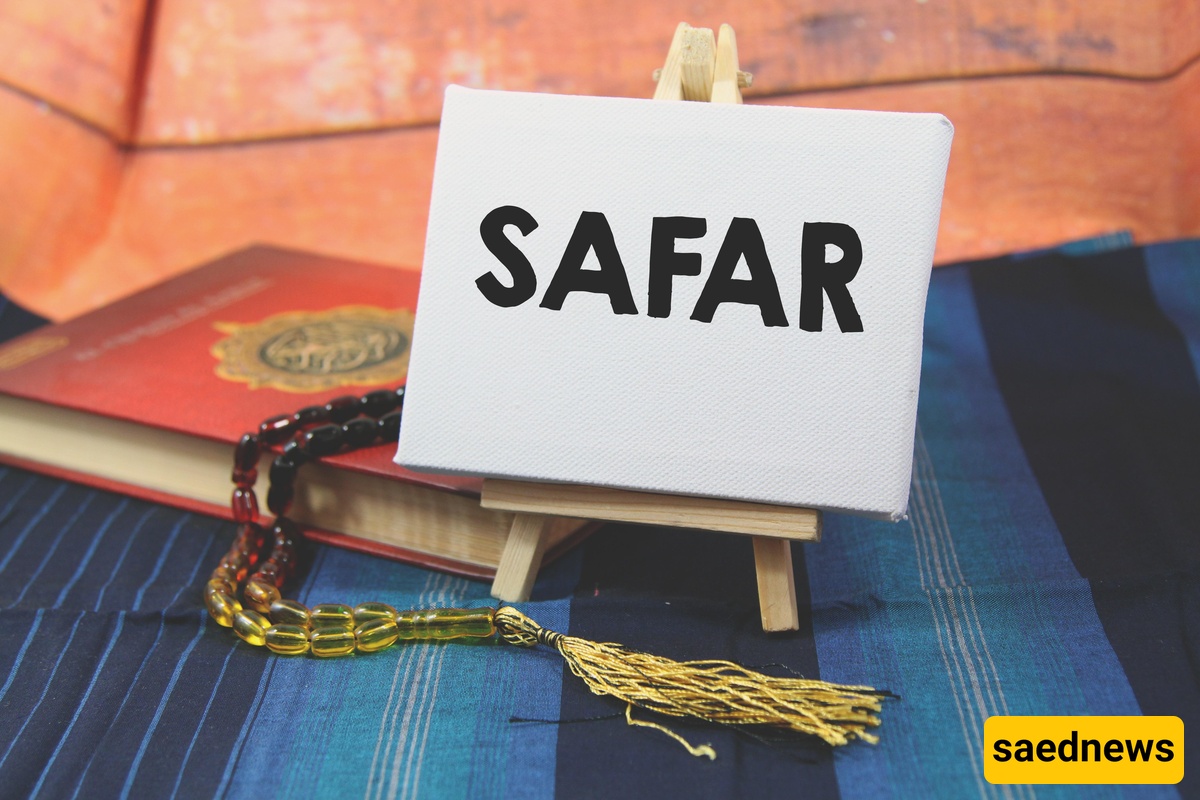
According to Saednews, Safar is the second month of the Islamic lunar calendar. Various recommended acts are associated with its beginning, including prayer, fasting, and recitation of the Qur’an. Among Shia Muslims, Safar is regarded as a month of mourning because several important events in Islamic history are traditionally associated with it.
At the beginning of Safar, the family of Imam Husayn (peace be upon him) and the survivors of the Battle of Karbala were brought to Damascus as captives. They endured severe emotional and psychological hardship as well as humiliation and mistreatment. According to Shia tradition, one of Imam Husayn’s young daughters, Ruqayya (peace be upon her), died in Damascus as a result of these hardships. The twentieth day of Safar is also observed as Arbaeen, marking the 40th day after the martyrdom of Imam Husayn and his companions at Karbala.
According to Shia scholars and some Sunni scholars, the 28th of Safar marks the painful passing of the Prophet Muhammad (peace and blessings be upon him and his family) and the martyrdom of his grandson, Imam Hasan al-Mujtaba (peace be upon him). The martyrdom of Imam Ali al-Rida (peace be upon him) is traditionally commemorated toward the end of Safar. For this reason, Shia Muslims observe Safar as a month of mourning, much like Muharram. In many religious gatherings, Muharram and Safar are observed consecutively with mourning ceremonies and commemorations.
A two-rak‘ah prayer is traditionally recommended on the first night of Safar. In the first rak‘ah, after reciting Surah al-Fatihah, Surah al-Fath is recited. In the second rak‘ah, after Surah al-Fatihah, Surah al-Ikhlas is recited.
After the prayer, it is recommended to recite:
Salawat upon Muhammad and his family 100 times.
A curse upon the family of Abu Sufyan 100 times.
“Astaghfirullaha Rabbi wa atubu ilayh” 100 times.
These acts are traditionally described as carrying great spiritual reward.
Safar is associated with numerous historical events. Some commonly mentioned dates include:
1 Safar: Performing the recommended prayer for the beginning of the month and giving charity in the way of God.
2 Safar: According to one narration, the captives were brought before Yazid. According to another narration, the martyrdom of Zayd ibn Ali ibn al-Husayn occurred on this date.
3 Safar: According to one narration, the birth of Imam Muhammad al-Baqir in 57 AH.
5 Safar: The traditional commemoration of the martyrdom of Ruqayya, daughter of Imam Husayn, in 61 AH.
6 Safar: The issuance of a letter from Imam al-Mahdi to Husayn ibn Ruh.
7 Safar: The birth of Imam Musa al-Kazim in 128 AH; according to a narration recorded in Bihar al-Anwar, the martyrdom of Imam Hasan al-Mujtaba; and the death of Ayatollah Marashi Najafi in 1411 AH.
8 Safar: The death of Salman al-Farsi, also known as Salman al-Muhammadi, in 35 AH.
9 Safar: The martyrdom of Ammar ibn Yasir at the Battle of Siffin in 37 AH and the beginning of the Battle of Nahrawan in 38 AH.
12 Safar: The death of Aaron (Harun), the brother of Prophet Moses.
13 Safar: The appointment of arbitrators at Siffin and the maneuver attributed to Amr ibn al-As.
18 Safar: The martyrdom of Uways al-Qarani at the Battle of Siffin in 37 AH.
20 Safar: Arbaeen, the 40th-day commemoration of Imam Husayn’s martyrdom.
22 Safar: The issuance of a letter from Imam al-Mahdi to Shaykh al-Mufid in 420 AH.
23 Safar: The traditional account of the people of Prophet Salih killing his she-camel, and the story of Prophet Yunus being swallowed by a fish.
24 Safar: The worsening of the illness of the Prophet Muhammad.
26 Safar: The Prophet’s order for Usama’s army to prepare for a campaign against the Romans, according to al-Waqidi’s account, in 11 AH; this date is also associated with the end of the Umayyad dynasty.
28 Safar: The passing of the Prophet Muhammad on Monday, 28 Safar, 11 AH, and the martyrdom of Imam Hasan al-Mujtaba in 50 AH.
29 or 30 Safar: The martyrdom of Imam Ali al-Rida in 203 AH.
Some practices recommended at the beginning of every lunar month are also observed at the beginning of Safar.
When the crescent moon is sighted, a supplication is traditionally recited. At minimum, one may say:
“Allahu Akbar” three times, followed by “La ilaha illallah” three times, and then:
“Praise belongs to God, who has taken away such-and-such a month and brought such-and-such a month.”
The 43rd supplication of Sahifa al-Sajjadiyya is regarded as one of the best supplications to recite when seeing the new moon.

Reciting Surah al-Fatihah seven times is among the practices mentioned for the first night of Safar.
Fasting for three days each month is among the practices that have been emphasized in Islamic devotional tradition. Allamah Majlisi, in Zad al-Ma'ad, states that according to the commonly accepted view, these three days are:
The first Thursday of the month
The last Thursday of the month
The first Wednesday of the middle ten days of the month
On the first day of the month, a two-rak‘ah prayer is traditionally recommended. In the first rak‘ah, after Surah al-Fatihah, Surah al-Ikhlas is recited 30 times. In the second rak‘ah, after Surah al-Fatihah, Surah al-Qadr is recited 30 times.
After completing the prayer, giving charity in the way of God is recommended. According to the cited tradition, whoever performs this practice seeks protection and well-being from God throughout the month.