SAEDNEWS: The Strangest Houses in the World, Unusual Houses, Bizarre Homes, Sutyagin House, Ferdinand’s Palace, Stone House, Nautilus House, Seashell House, Shoe House, Snail House, Upside-Down House, Spaceship House, Unique Homes
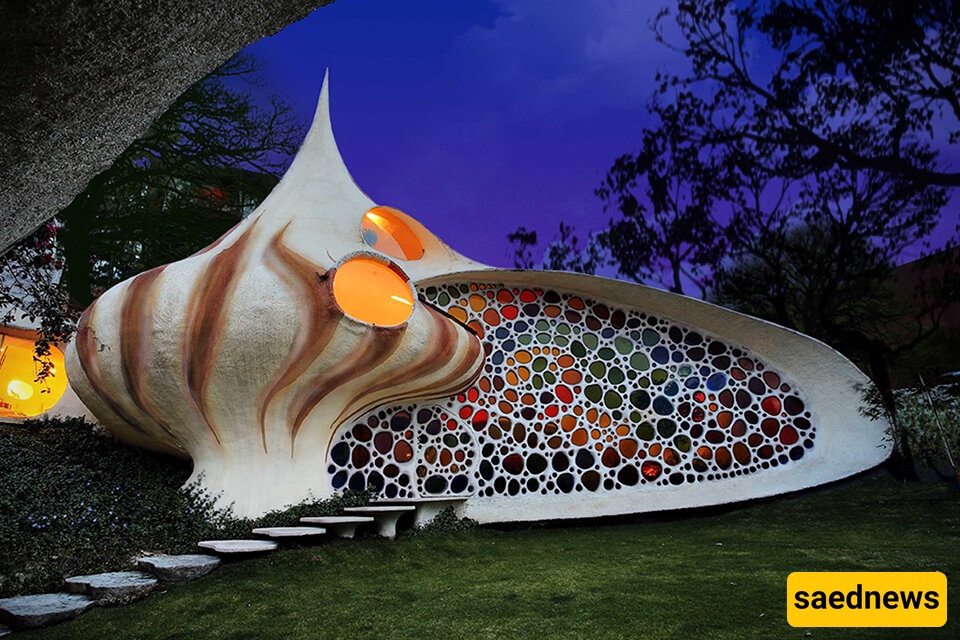
According to Saednews, Designing a home with a distinctive appearance unlike anything that came before has always been a challenge embraced by great architects around the world. Many houses that have attracted public attention and later become famous feature architecture that blends harmoniously with nature, often described as “organic” or “biophilic” architecture.
Architects and designers of these homes have attempted to create buildings unlike any others. Some of these unusual houses have made their owners famous and even become major sources of income. Here are some fascinating examples of extraordinary homes from around the world.
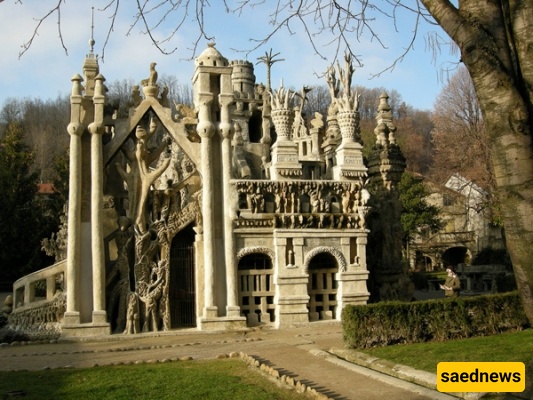
Ferdinand Cheval, the creator of this remarkable work of art, was an ordinary postman. One day, after discovering an unusually shaped carved stone, he was inspired to build something of his own. Cheval eventually began collecting stones and rocks and carving them himself.
Although he had no formal knowledge of architecture, he worked passionately for 31 years until he completed the palace. During the 1930s, the building attracted the attention of artists such as Pablo Picasso and André Breton.
Cheval wanted to be buried inside his beautiful palace after his death, but the French government refused to grant him permission. He was eventually buried outside the town. In 1969, the palace was officially recognized as an important symbol of French history and culture.
In 1992, Nikolai Sutyagin decided to renovate his old two-story house and add three more floors. But after completing them, he was not satisfied and continued adding additional levels until construction eventually stopped at the 13th floor. He carried out the entire project himself, from designing the plans to building the structure.
Interestingly, the house was constructed without specialized equipment for dealing with strong winds and storms, yet it survived the region’s freezing climate for many years. The house had no elevator, so anyone wanting to reach the upper floors had to use a ladder.
Although its creator became famous, he spent all his money on the project and lived with his family in poverty on the ground floor.
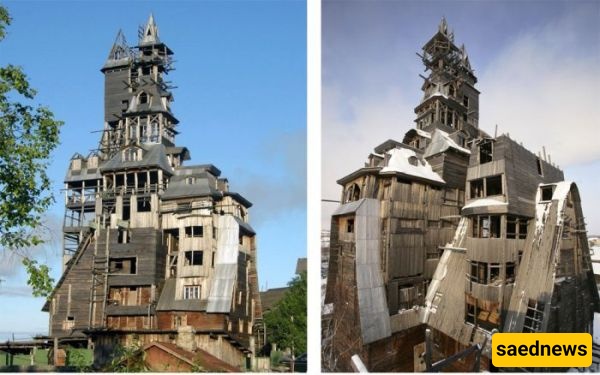
The building was described at a conference on wooden architecture in northern countries in Norway as an “extraordinary structure.”
However, in 2008, the Russian authorities declared the construction illegal and demolished four floors of the house. In 2012, the remaining structure was destroyed by fire, turning its creator’s ambitious dream into ashes.
This house is a striking combination of architecture and nature. Its appearance reminds many people of the famous cartoon The Flintstones. Two enormous boulders positioned on either side of the house give it an extraordinary appearance.
The designer and architect of the house was Victor Rodrigues, who was inspired by The Flintstones when creating the home in 1974. Although the building looks prehistoric, it is perfectly suitable for living. The stone house contains a fireplace, wooden staircases, and a swimming pool carved into the rock.
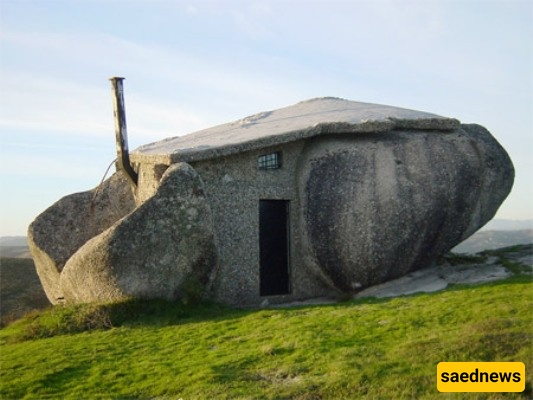
After the house was completed, tourists began flocking to see it. As a result, the Rodrigues family was unable to enjoy living there for long and eventually had to leave their beautiful home.
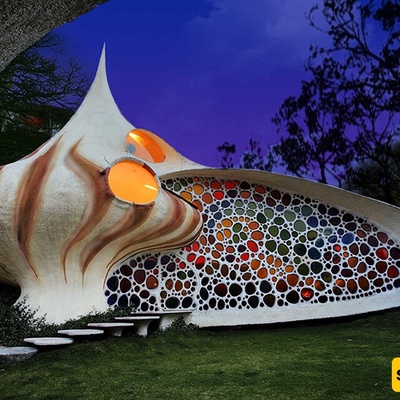
This unusual house was built by the famous Mexican artist Octavio Ocampo on Isla Mujeres, off the coast of Cancún, Mexico. The shell-shaped home has two bedrooms with large beds and two separate bathrooms.
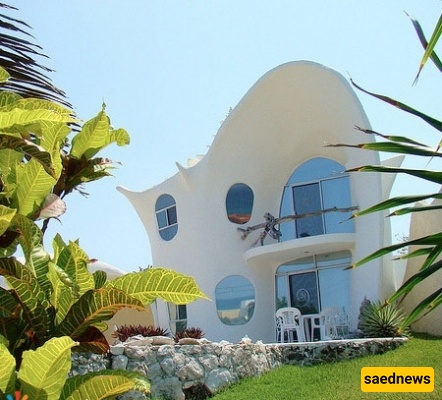
The house is available for rent, and many wealthy couples choose to stay there for their honeymoon.
Mexico City is also home to a remarkable shell-shaped residence known as the Nautilus House. It was designed by the renowned Mexican architect Javier Senosiain.
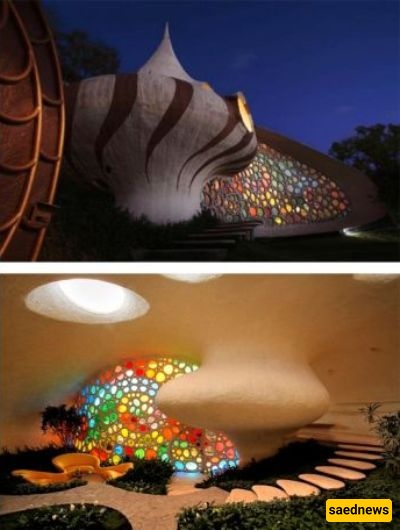
The house follows the principles of “organic architecture,” an architectural approach that seeks to create harmony between human living spaces and their surrounding environment.
This unusual house was built in Galveston, Texas, in 1950. It is said to have been used as a shelter, although the property has remained largely mysterious for years. Locals reportedly rarely see its owner, and occasionally a caretaker is hired to check on the unusual building.
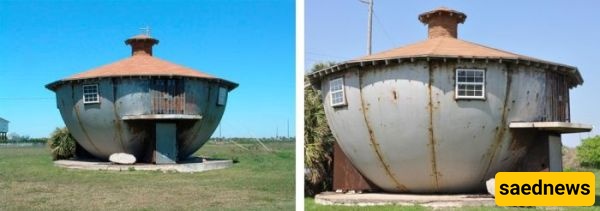
According to local accounts, the house survived some of the major storms that struck the United States and remained standing despite the severe weather.
This house was built by a Polish businessman named Daniel Czapiewski over a period of eight months in a small village. It quickly became a major tourist attraction, drawing visitors from around the world.
After the house became famous, several artists and designers created similar upside-down buildings, including one in Moscow.
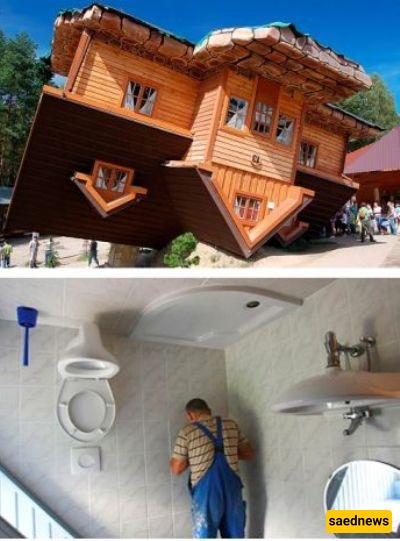
One of the most interesting aspects of the house is that visitors often experience dizziness and headaches because the furniture and interior objects are also installed upside down. Even the car in the garage appears to be positioned upside down.
The idea for this unusual home was inspired by science-fiction stories and the Star Wars universe. Located about eight kilometers from Chattanooga, Tennessee, the house was built in 1972.
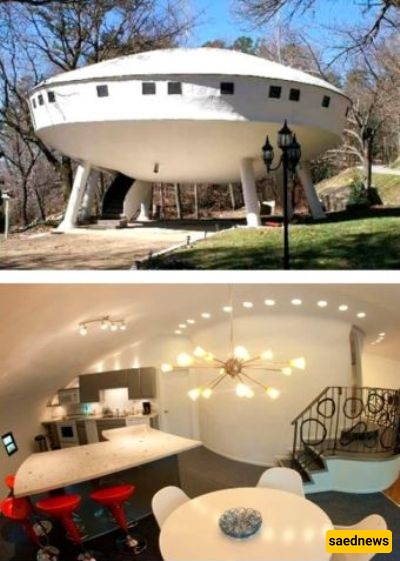
The property was renovated several years ago and is now available for people interested in renting an unusual vacation home.
The house covers approximately 2,000 square meters and contains three bedrooms and two bathrooms. The Tennessee River also passes nearby.
When Professor Terry Brown, an architecture and interior-design instructor at the University of Cincinnati, purchased this house, he spent ten years transforming it into its unusual shape.
He worked on the project with his students, and the house eventually became almost like a second home to him. Although the building was originally designed as a residence, it later became the professor’s workplace.
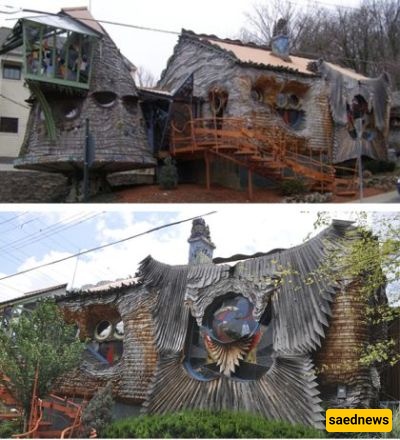
The house was put up for sale in 2006, and Brown died two years later. A variety of materials were used throughout the building, including wood, stained glass, ceramics, and different types of metal.
This colorful and cheerful house was designed by a Bulgarian architect named Simeon in Sofia, the capital of Bulgaria. It took ten years to construct the giant smiling snail.
The building has no sharp corners and was made using lightweight materials. Its overall weight is reportedly only about one-quarter that of water.
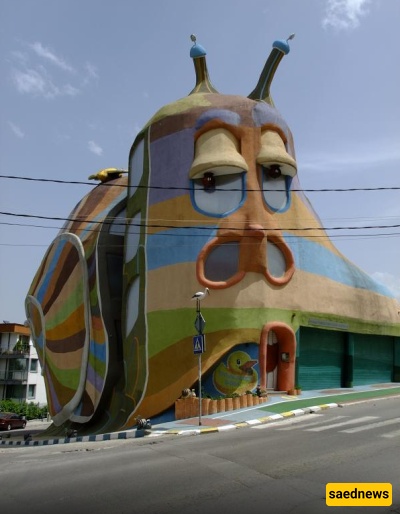
The five-story snail has attracted tourists since its completion in 2009. There have also been plans to transform the unusual building into a school for gifted students.
This house was formed naturally, with architects making only minor modifications to the structure. The funnel-shaped opening in the house was created during a devastating storm in 2005, when the building effectively became like a massive fortress enclosed within another structure.
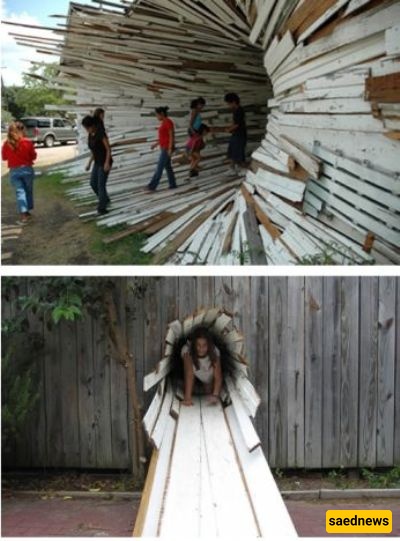
Following the storm, the house was partially restored and preserved as a memorial to the disaster and the people who lost their lives in the storm.
This mobile home was designed by 12 enthusiasts of the science-fiction-inspired steampunk genre.
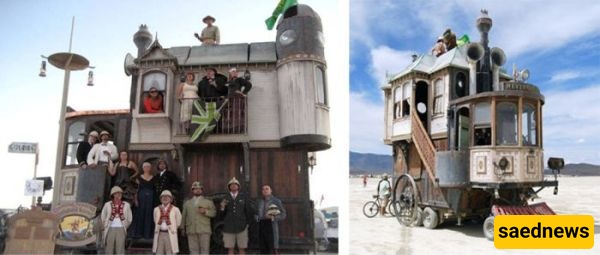
The train-shaped house took four months to build and can be moved using diesel engines.
This unusual home was designed by the company Marchi Mobile. The luxurious mobile residence includes a bedroom, bathroom, balcony, and features such as eight 40-inch televisions.

The house was produced in white and gold, and according to reports, its price was around $3 million.
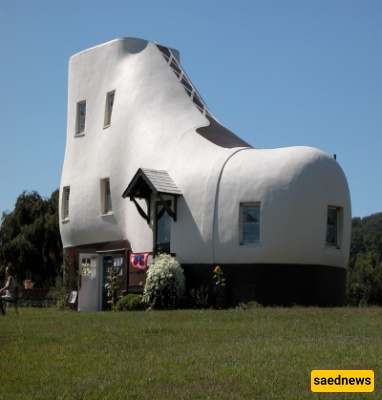
Colonel Mahlon Haines built the famous Shoe House in 1984 and used it as a form of advertising for his business. The kind-hearted colonel invited an elderly woman whom nobody knew to live in the house at his expense, treating her like a queen.
The unusual house contains three bedrooms, a kitchen, and two bathrooms. It was later renovated and converted into a museum dedicated to Colonel Haines.
These extraordinary homes demonstrate how architecture can move beyond conventional ideas of what a house should look like. From enormous stone structures and upside-down buildings to snail-shaped and spaceship-inspired residences, each one represents a unique combination of creativity, imagination, and unconventional design.