SAEDNEWS: During prayer, there are times when certain situations may disturb the body’s sense of calm and stillness. What is the Islamic ruling on moving the body while reciting the prescribed prayers and supplications?
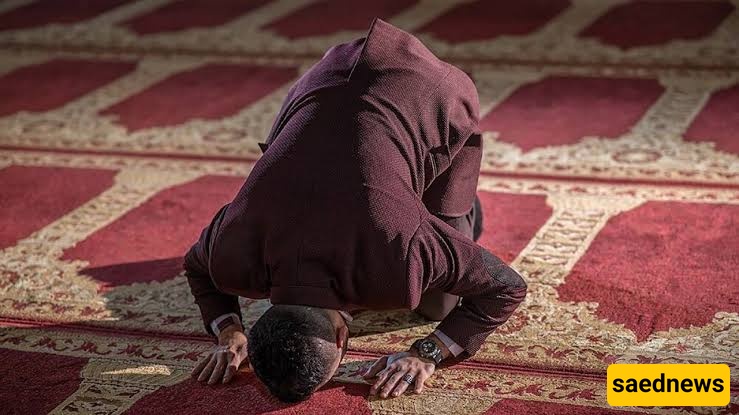
According to Saednews, Having ṭumaʾnīnah (tranquility) means maintaining physical calmness and stillness. During prayer, the body must remain sufficiently still so that the form and appearance of the prayer are not disrupted. Muslims have many questions regarding this matter, and Islamic scholars and religious authorities have provided answers to them.
For performing prayer, both the place where the worshipper is praying should be stable and calm (except in cases of necessity), and the worshipper's own body should remain still. Minor movements of the head or hands that are not ordinarily considered to disturb this stillness are permissible. However, if an intentional or unintentional movement of the head causes the worshipper to turn away from the qiblah (for example, turning significantly to the right or left), the prayer becomes invalid.
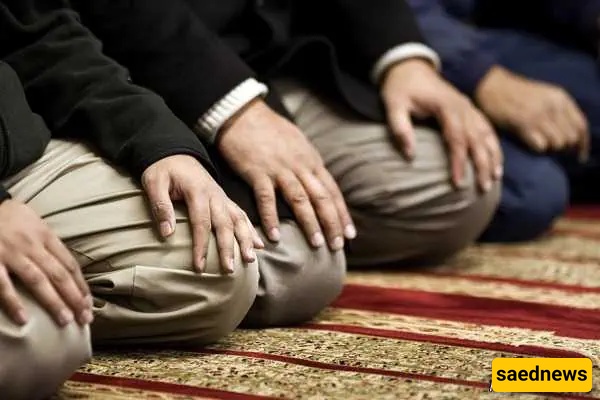
Religious rulings concerning prayer and the things that invalidate it.
This article examines several questions concerning the rulings of prayer.
Question: If the prescribed recitations of prayer are said while the body is moving, does this invalidate the prayer?
The religious authorities state that when saying the obligatory recitations during prayer, the body must remain still. Moreover, according to obligatory precaution, the body should also remain calm while saying recommended recitations.
(Imam Khomeini, Tawdīḥ al-Masāʾil, vol. 1, p. 538, ruling 965.)
If someone deliberately recites an obligatory prayer recitation while moving, the prayer is invalid. If a recommended recitation is made while the body is moving—for example, saying the takbīr while moving into bowing (rukūʿ) or prostration (sujūd)—then, if it is said merely with the general intention of remembering God, the prayer is valid.
However, if it is said with the intention of performing the specific recommended recitation prescribed at that point in the prayer, most religious authorities state, as an obligatory precaution, that the prayer should be repeated. Imam Khomeini gives a ruling requiring the prayer to be repeated in this situation, while some jurists consider the prayer valid even in this case.
(See Imam Khomeini, Tawdīḥ al-Masāʾil, vol. 1, p. 538, ruling 966; opinions attributed to Ayatollahs Khui, Sistani, and Tabrizi.)
Question: During parts of the prayer in which stillness is required, do movements of the head or hands invalidate the prayer?
For performing prayer, the place of the worshipper should be stable (except in cases of necessity), and the worshipper's body should also remain calm and still. Minor movements of the head or hands that do not ordinarily disturb this state of stillness are not problematic.
However, it should be noted that if an intentional or unintentional movement of the head causes the worshipper to turn away from the direction of the qiblah, the prayer becomes invalid.
The following rulings are relevant:
Ruling 967: Moving the hands and fingers while reciting the Ḥamd does not invalidate the prayer, although it is recommended, as a precaution, not to move them.
Ruling 968: If, while reciting the Ḥamd and the other surah, or while reciting the tasbīḥāt, the worshipper unintentionally moves enough to lose the state of stillness, then, as an obligatory precaution, after the body becomes still again, the portion recited while moving should be repeated.
Question: If, during prayer, we take a step to open the door of the house using the intercom, does this invalidate the prayer?
Religious authorities state regarding movement during prayer that if the action does not constitute excessive movement (fiʿl kathīr), it is permissible and does not invalidate the prayer. Therefore, if opening the door requires substantial movement—for example, walking several meters—the prayer becomes invalid. However, if the intercom or door-release button is nearby and the door can be opened with a small movement that is not ordinarily considered “walking,” there is no problem.
The responses of several senior religious authorities are as follows:
Ayatollah Khamenei:
In the situation described, the prayer is invalid.
Ayatollah Makarem Shirazi:
If the movement is considered walking and disrupts the form and appearance of the prayer, the prayer is invalid.
Ayatollah Nouri Hamedani:
If the situation described involves excessive movement, it causes the prayer to be interrupted and invalidated.
Ayatollah Safi Golpaygani:
If the movement is considered excessive—for example, moving several meters—the prayer is invalid. However, if the door-release device is close enough that the door can be opened with a single step, there is no problem.
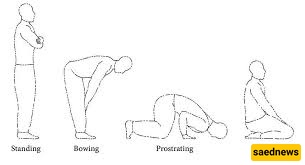
There are twelve things that invalidate the prayer, commonly referred to as the mubṭilāt al-ṣalāh (invalidators of prayer):
One of the conditions required for the validity of prayer ceases to exist during the prayer.
Something occurs during prayer that invalidates the worshipper's wuḍūʾ (ablution) or ghusl (ritual bath).
Placing one hand over the other during prayer.
Saying “Āmīn” after reciting Surah al-Fātiḥah (al-Ḥamd).
Turning away from the qiblah during prayer.
Saying a word or statement during prayer.
Laughing aloud, including laughter accompanied by vocalization or similar expressions.
Deliberately crying aloud over worldly matters.
Performing an action that disrupts the form and appearance of prayer.
Eating or drinking.
Doubting the number of prayer units (rakʿahs) in a two- or three-unit prayer, or doubting the first two units of a four-unit prayer.
Omitting or adding a pillar (rukn) of the prayer, or deliberately omitting or adding something that is not a pillar.