SAEDNEWS: Explore Mukhtar al-Thaqafi’s family, his uprising, and the pivotal moments of his quest to avenge Imam Husayn.
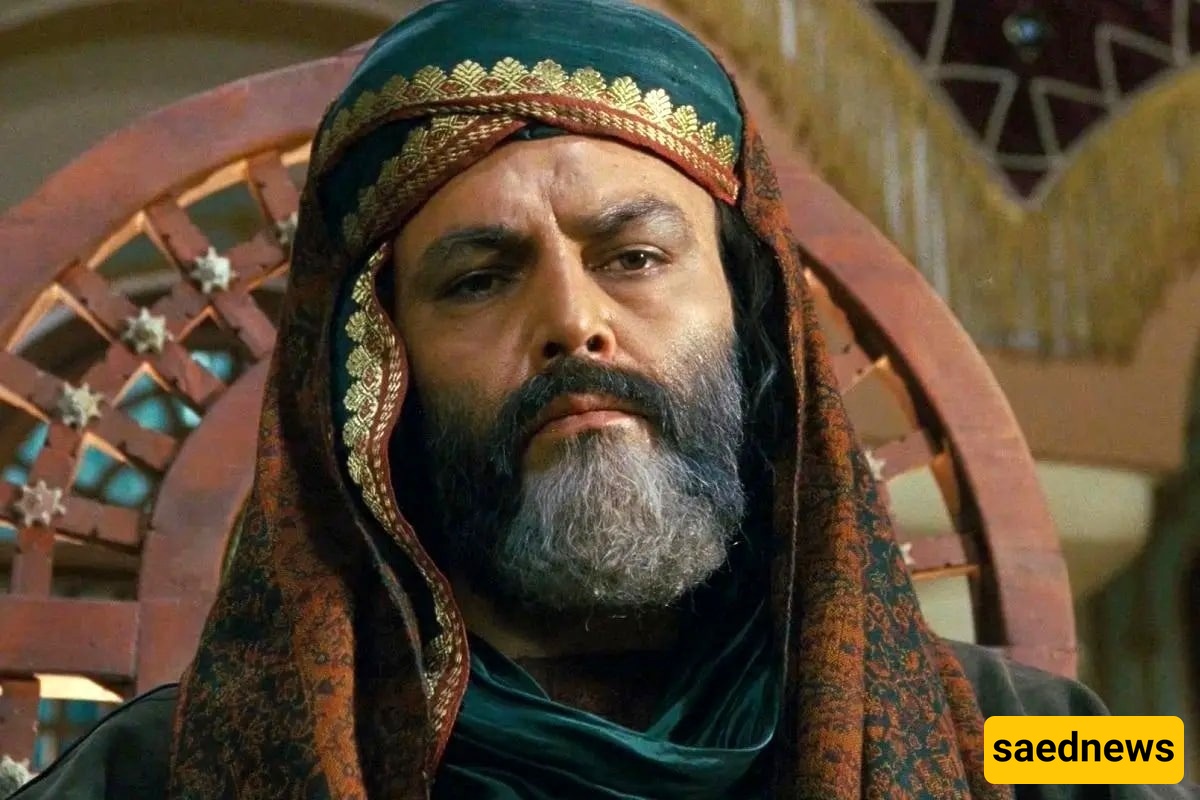
According to Saednews, Mukhtar ibn Abi Ubayd al-Thaqafi, son of Abi Ubayd ibn Masud ibn Amr ibn Awf ibn Uqdah ibn Qays ibn Munabbih ibn Bakr ibn Hawazin al-Thaqafi, was one of the prominent military commanders of the early Islamic period. His father, Abu Ubayd, was killed during the wars against Persia. (Ibn al-Athir, Usd al-Ghabah, vol. 5, p. 205.)
Mukhtar's mother was Dawmah, the daughter of Wahb ibn Umar, who was known as “Dawmah al-Hasna.” She was regarded as a highly chaste and virtuous woman, and no one was known to have criticized her character. (Al-Baladhuri, Ansab al-Ashraf, vol. 6, p. 375.)
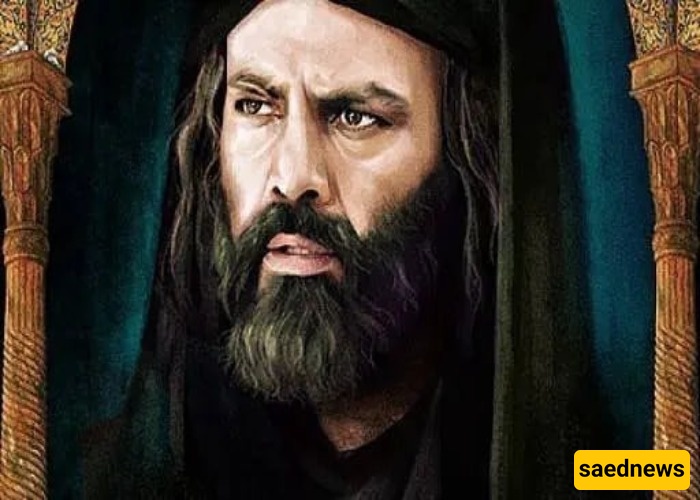
Mukhtar belonged to the Thaqif tribe and was originally from Ta'if. According to some historical accounts, he was born and raised in Medina during the first year after the Hijrah. (Majlisi, Bihar al-Anwar, vol. 45, p. 350.)
After his father's death, Mukhtar was placed under the care of his uncle Sa'd. When Imam Ali became caliph and appointed Sa'd ibn Masud al-Thaqafi, Mukhtar's uncle, as governor of al-Mada'in, Mukhtar accompanied him there. (Ibrahim ibn Muhammad al-Thaqafi al-Kufi, Al-Gharat, introduction, p. 35.)
After the martyrdom of Imam Ali, Mukhtar went to Basra and lived there for some time. (Ibn Hajar al-Asqalani, Al-Isabah fi Tamyiz al-Sahabah, vol. 6, p. 277.)

Mukhtar's kunya was Abu Ishaq, while his famous title was Kaysan, a name associated with intelligence, cleverness, and shrewdness.
According to a report attributed to Asbagh ibn Nubatah, when Mukhtar was still a child, Imam Ali placed him on his lap and called him “Kayyis,” meaning intelligent or perceptive. (Al-Kashshi, Rijal al-Kashshi, 1409 AH, p. 127.)
Historical sources mention four wives of Mukhtar:
Umm Thabit, daughter of Samurah ibn Jundub
Amrah, daughter of Nu'man ibn Bashir
Umm Zayd al-Sughra, daughter of Sa'id ibn Zayd ibn Amr
Umm Walid, daughter of Umayr ibn Rabah
Mukhtar is reported to have had several children, including Muhammad, Ishaq, Umm Salamah, Abu al-Hakam, Jabr, Umayyah, Bilal, and Umar.
There are differing historical assessments of Mukhtar's character and political career. However, a narration attributed to Imam Muhammad al-Baqir speaks favorably of him. According to this report, the Imam said that Mukhtar should not be insulted because he killed those responsible for the killing of members of the Prophet's family, sought revenge for their blood, and provided financial assistance to them during difficult times. (Ibn Dawud al-Hilli, Rijal Abi Dawud, p. 227.)
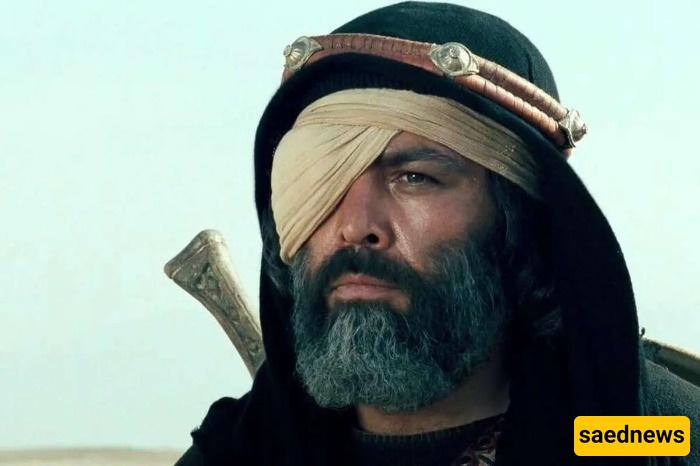
When Muslim ibn Aqil arrived in Kufa, he initially went directly to Mukhtar's house. Mukhtar welcomed him and openly declared his support for his mission. (Al-Irshad, p. 205; al-Tabari, Tarikh al-Tabari, vol. 5, p. 355.)
After Ubayd Allah ibn Ziyad entered Kufa under a deceptive disguise and the political situation deteriorated, Muslim ibn Aqil moved to the house of Hani ibn Urwah. Mukhtar went toward the area of Khatarniyyah and the outskirts of Kufa to gather supporters and obtain pledges of allegiance for Muslim.
When Muslim ibn Aqil and Hani ibn Urwah were arrested, Mukhtar was not in Kufa. After hearing the news of their capture, he returned to Kufa with a group of his supporters.
Mukhtar was subsequently arrested. Ibn Ziyad reportedly struck him forcefully in the face with his cane, injuring one of his eyes, and then imprisoned him. Mukhtar remained in prison until Imam Husayn was martyred at Karbala. (Ansab al-Ashraf, vol. 6, pp. 376–377.)
After the tragedy of Karbala, Mukhtar was released through the intervention of Abdullah ibn Umar with Yazid. Abdullah's wife, Safiyyah bint Abi Ubayd, was Mukhtar's sister.
Following his release, Mukhtar was given three days to leave Kufa. He was warned that if he remained, his life would be in danger. (Al-Muntazam, vol. 6, p. 29.)
When Yazid's forces moved to besiege Mecca and confront Abdullah ibn al-Zubayr, Mukhtar initially went to support Abdullah. However, after Abdullah claimed the caliphate, Mukhtar separated from him and traveled toward Kufa to prepare for his own political movement. (Creation and History, translated edition, vol. 2, p. 910.)
When leading Shi'a figures returned from Medina to Kufa, Mukhtar declared that they should support him in fighting the killers of the Prophet's family and seeking vengeance for the blood of Imam Husayn. (Al-Tabari, Tarikh, vol. 6, p. 15; Ibn al-Athir, Al-Kamil, vol. 4, p. 215.)
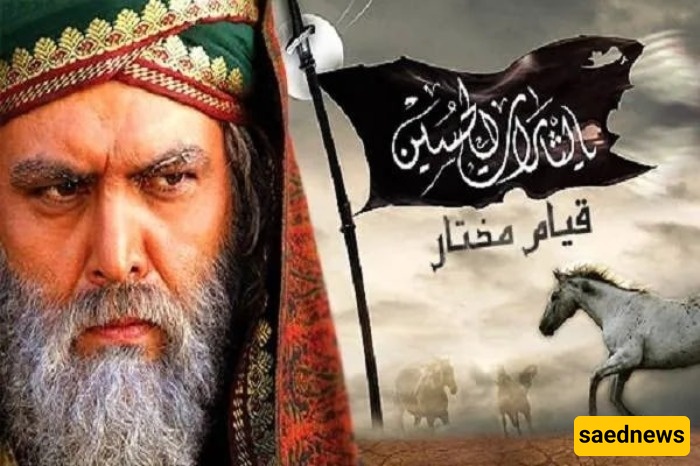
Representatives of the Iraqi Shi'a later met Muhammad ibn al-Hanafiyyah and Imam Ali ibn al-Husayn (Imam Zayn al-Abidin) in the Hijaz. They told them that Mukhtar was calling the people to avenge their suffering. According to the reported account, Imam Zayn al-Abidin and Muhammad ibn al-Hanafiyyah expressed support for seeking justice and stated that helping such an effort was appropriate. (Majlisi, Bihar al-Anwar, vol. 45, p. 365.)
Mukhtar launched his uprising on 14 Rabi al-Awwal in 66 AH, reportedly using the slogan:
“Ya li-tharat al-Husayn!” — “O avengers of Husayn!”
The Shi'a of Kufa joined his movement. Mukhtar and his forces subsequently killed several prominent figures associated with the events of Karbala, including Shimr ibn Dhi al-Jawshan, Khawli ibn Yazid, and Umar ibn Sa'd.
Ibrahim ibn Malik al-Ashtar served as the commander of Mukhtar's army. He later led the forces that defeated and killed Ubayd Allah ibn Ziyad near Mosul. (Usd al-Ghabah, vol. 4, p. 347.)
Mukhtar's campaign also resulted in the deaths of many people accused of having participated directly or indirectly in the battle against Imam Husayn. At the same time, around ten thousand people from Kufa reportedly fled to Basra. Mukhtar ordered the destruction of many houses belonging to those who had fled. These actions contributed to a decline in support for him among some Arab factions.
Some historical reports describe Imam Zayn al-Abidin as having taken a negative position toward Mukhtar. However, scholars such as Ayatollah al-Khoei and Mamqani regarded Mukhtar's uprising as having taken place with the permission or approval of Imam Zayn al-Abidin.
One report states that a group of prominent people from Kufa asked Imam Zayn al-Abidin about Mukhtar's uprising. The Imam referred them to Muhammad ibn al-Hanafiyyah and asked him to make the decision concerning the matter.
According to this account, supporting someone who rose to defend the Prophet's family was considered worthy of support. (Majlisi, Bihar al-Anwar, vol. 45, p. 365.)

After Ubayd Allah ibn Ziyad was killed, Mukhtar sent his head to Imam Zayn al-Abidin. Some sources state that when the Imam saw the head, he performed a prostration of gratitude. It is also reported that members of Banu Hashim then put aside the mourning clothes they had worn since the martyrdom of Imam Husayn. (Qummi, Tatimmat al-Muntaha, 1397 AH, pp. 85–86.)
The forces of Mus'ab ibn al-Zubayr marched from Basra toward Kufa with a large army to defeat Mukhtar. Mukhtar reportedly assembled an army of approximately 60,000 soldiers under the command of Ibn Shamit.
Before the Battle of Madhar, Ibn Shamit was persuaded by Ibn Wahb, the commander of the army's left wing, to order the Iranian soldiers to dismount and fight on foot. Ibn Wahb argued that if the battle became difficult, the Iranian troops might flee, and therefore they should fight without their horses.
The Iranian soldiers were highly skilled horsemen. Once they were forced to fight on foot, Mus'ab's forces gained the advantage, and Mukhtar's army was defeated.
After the defeat at Madhar, Mukhtar's forces were also defeated at Harura. Mukhtar was then forced to retreat to the Kufa palace.
Mukhtar ruled Kufa for approximately 18 months. During his rule, he fought three major political forces: the Marwanids in Syria, the Zubayrids in the Hijaz, and the aristocratic factions of Kufa.
Eventually, on 14 Ramadan in 67 AH, Mukhtar was killed by the forces of Mus'ab ibn al-Zubayr. Some historical sources state that he was 67 years old at the time of his death. (Usd al-Ghabah, vol. 4, p. 347; Al-Ma'rifah wa al-Tarikh, vol. 3, p. 330.)
Mus'ab ibn al-Zubayr ordered that Mukhtar's hand be cut off and hung from the wall of the Kufa Mosque. Later, when al-Hajjaj ibn Yusuf gained control of Kufa, he reportedly ordered the hand to be buried because both he and Mukhtar belonged to the Thaqif tribe. (Al-Kamil, vol. 4, p. 275.)
After Mukhtar's death, thousands of his supporters who had been surrounded in the palace surrendered. Mus'ab nevertheless ordered their mass execution. The incident was reportedly so severe that Abdullah ibn Umar, upon seeing Mus'ab, told him that even if those people had been his father's sheep, he should not have treated them in such a manner. (Ansab al-Ashraf, vol. 6, p. 445.)
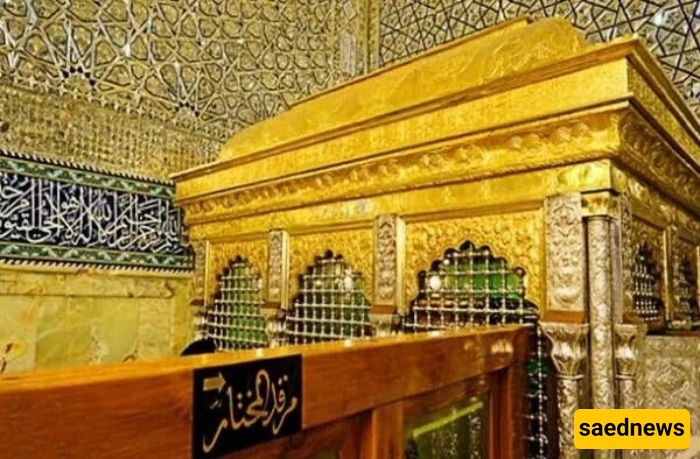
According to later accounts, Mukhtar's body was buried near the walls of the governor's palace, close to the Kufa Mosque, after his death at the hands of Mus'ab ibn al-Zubayr.
The location of his grave remained hidden for many years. Later, Ayatollah Sayyid Mahdi Bahr al-Ulum investigated the historical features, prayer niches, and surrounding structures of the Kufa Mosque.
Because the mosque's floor was lower than the surrounding land and surface water could enter it, he ordered the mosque to be filled with clean soil. New prayer niches were subsequently constructed over the locations of the earlier ones.
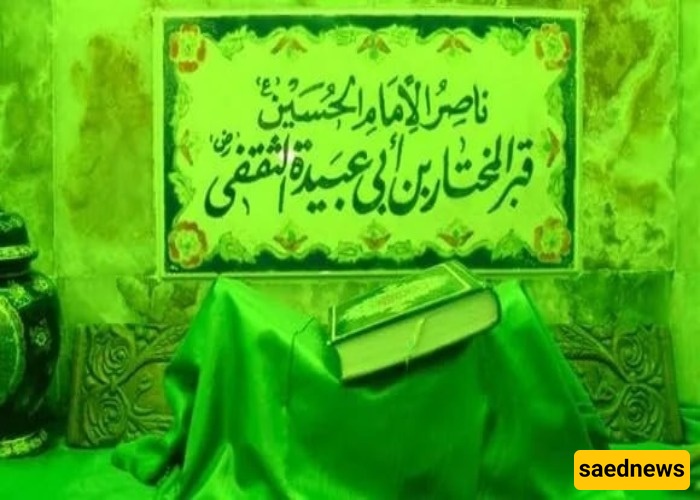
During these investigations, a concealed grave was reportedly discovered at the end of an underground passage leading outward from the mosque toward the governor's palace. A stone bearing the name and title of Mukhtar was allegedly found over the grave.
After the discovery, Mohsen al-Hajj Aboud Shalash undertook the construction of a larger shrine for Mukhtar and connected it to the southern side of the shrine of Muslim ibn Aqil. An iron grille was placed around the grave, and the passageway at the corner of the Kufa Mosque was sealed.
Allamah Amini, citing the book Mazar al-Shahid, also transmitted a visitation prayer for Mukhtar. This has been presented as evidence that his grave had long been regarded with interest by Shi'a Muslims and others who admired his struggle for justice. Ibn Battuta also reportedly mentioned the site in his travel account. (Ibn Battuta, Rihla, p. 232.)
There are different historical accounts concerning the death of Mus'ab ibn al-Zubayr, the man responsible for Mukhtar's death.
According to one account, after Mukhtar was killed, al-Hajjaj ibn Yusuf was sent by Abd al-Malik ibn Marwan to Iraq to fight Mus'ab. Ibrahim ibn Malik al-Ashtar was killed during this campaign, and Mus'ab's army was defeated.
Mus'ab's supporters eventually abandoned him. While he was alone in his tent, soldiers of Abd al-Malik attacked and killed him. His head was then taken to Abd al-Malik ibn Marwan. (Ibn al-Athir, Tarikh, vol. 12, p. 231.)
Another account, recorded by al-Tabari, states that Zaidah ibn Qudamah, a cousin of Mukhtar, personally avenged him. Five years after Mukhtar's death, Zaidah joined Abd al-Malik's army in the campaign against Mus'ab.
During the battle, Mus'ab was struck by an arrow and severely wounded. Zaidah reportedly saw him and killed him with a spear, shouting:
“Ya li-tharat al-Mukhtar!” — “O avengers of Mukhtar!”
After Mus'ab was killed by Zaidah ibn Qudamah, a man named Ubayd Allah ibn Ziyad ibn Zubyan reportedly dismounted, severed Mus'ab's head from his body, and took it to Abd al-Malik ibn Marwan.
The historical accounts concerning Mukhtar therefore present a complex picture of a controversial but influential figure whose movement was closely associated with the demand for vengeance for the martyrdom of Imam Husayn and the punishment of those accused of responsibility for the tragedy of Karbala.