SAEDNEWS: Cheshmeh Doozi or Sekmeh Doozi is one of the traditional Iranian crafts in which threads of the fabric are pulled to create a lace-like appearance. Join Saed News to learn more about this art.
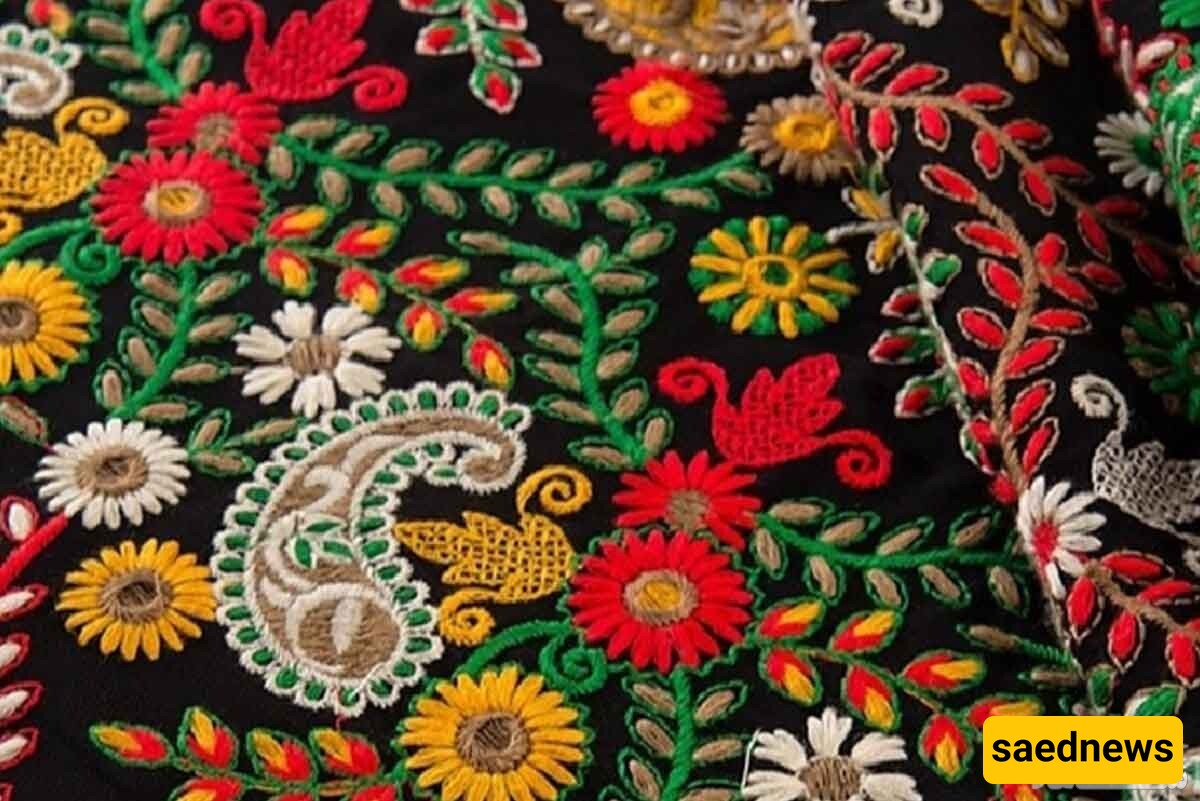
According to SAEDNEWS, In Cheshmeh Doozi, the simplicity of the design is of great importance. The patterns are typically created by following a guide and counting the threads of linen fabric. The beauty of the design on the fabric depends not only on the pattern but also on the neatness and delicacy of the work.
To apply this type of needlework, a thread is pulled in a grid pattern from the fabric, and then the grid is filled in a style similar to Jour or other traditional patterns. Cheshmeh Doozi can also be done alongside broderie (embroidery) and crochet. In Isfahan, many people use block-printed (Ghalamkar) motifs, and sometimes paisley or similar designs are crocheted into the Cheshmeh Doozi pattern.
Darvish Doozi is quite similar to Cheshmeh Doozi, with the main difference being that it uses fewer pulled threads.
The history of this stitch and art form can be attributed to the Iranians. Since ancient times, this type of embroidery has been practiced in Isfahan by skilled artisans and enthusiasts. Overall, this type of stitching has a very long history in Iran. Needlework began before the Islamic era and flourished significantly during the Islamic period.
In the past, women used to wear rubands (face veils) for modesty, and they decorated these with this style of embroidery, giving them an ornate appearance.
Common Designs in Sekmeh Doozi:
Sekmeh Doozi features many motifs such as Toranj, Sar Toranj or Nim Toranj (floral medallions), various floral patterns, Shamseh (sunbursts), stars, and paisley patterns.
If the number of pulled threads matches the remaining ones, uniform and symmetrical openings are created, which are referred to as Cheshmeh Doozi. However, there are other similar forms of Sekmeh Doozi, including:
Tulle (Net) Embroidery: When the remaining threads outnumber the pulled ones, a mesh-like structure is created, called Tulle Doozi.
Network Embroidery: In this style, a part or all of the fabric’s warp and/or weft is pulled, and a common method called Jour Doozi is used.
Ashrafi Doozi: This style aims to create a flower motif called Ashrafi. Crossed threads are passed through the large openings, and four petals are connected using specific stitches.
Other Common Embroidery Techniques: These include star stitching, chain stitch, French knot, buttonhole stitch, stem stitch, satin stitch, Ashrafi Doozi, network embroidery, and tulle embroidery, all of which are often used alongside Sekmeh Doozi.
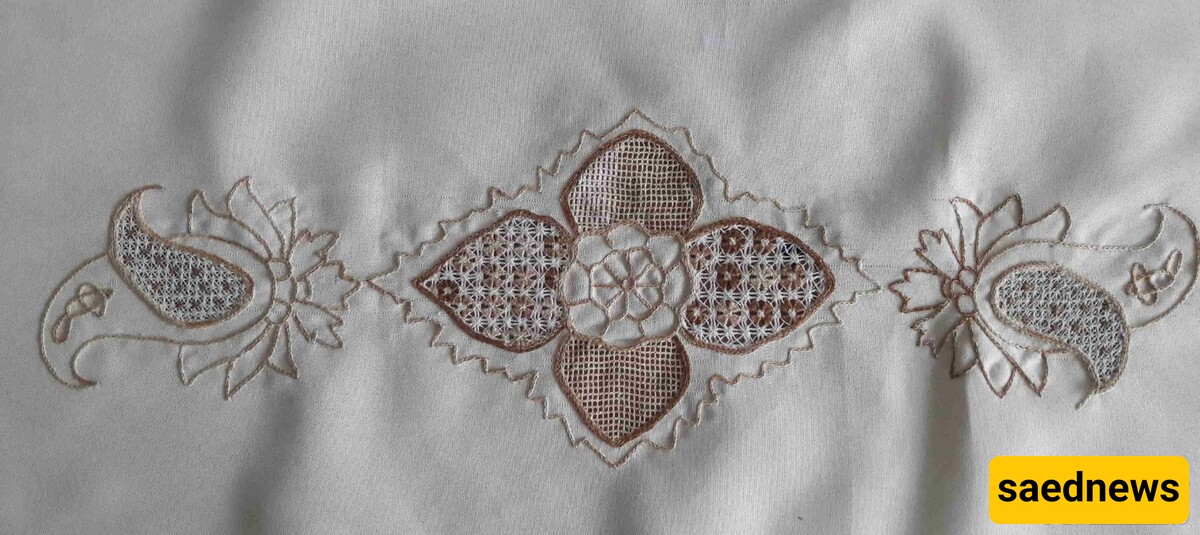
Table covers
Heater covers (Roo Korsi)
Curtain edges
Quran covers
Bedspreads
Napkins
Placemats
Cushions
Face veils (Ruband)
Sleeve embellishments
Garment hems
Fabric: The base material is fabric. Iranian linen is preferred—plain, not patterned—with evenly thick, perpendicular warp and weft threads. Velvet, satin, and twill fabrics are not suitable.
Thread: The second essential item is thread. This could be twisted silk, DMC, or Ameh thread. When the fabric’s threads are pulled, the cut edges are crocheted. Sekmeh Doozi thread and Ameh thread are used in crochet too.
Embroidery Hoop: Used to stretch and secure the fabric and remove wrinkles.
Chair: Since Sekmeh Doozi requires great attention and is time-consuming, it’s important to use a proper chair to avoid physical discomfort.
Stand or Frame: A tool to hold the embroidery hoop.
Other Tools: Needle, crochet hook, thimble, razor, and small scissors are also necessary.
This embroidery is carried out by following a pattern and counting the linen threads. First, the design is transferred to the fabric. Then, specific sections are selected where threads are to be pulled. Once threads are pulled, the surrounding areas are reinforced with buttonhole stitch, chain stitch, or crochet.
Simplicity in design is crucial. Sometimes, a thread is pulled in a grid form and the squares are filled diagonally, similar to Jour work.
Cheshmeh Doozi can be combined with broderie and crochet. In Isfahan, Ghalamkar (block-printed) motifs are commonly used, and sometimes paisley designs are added via crochet. After this embroidery, the fabric gains a mesh-like or netted texture.
This art demands precision and patience. A single mistake in pulling threads or stitching can impact the beauty of the work.