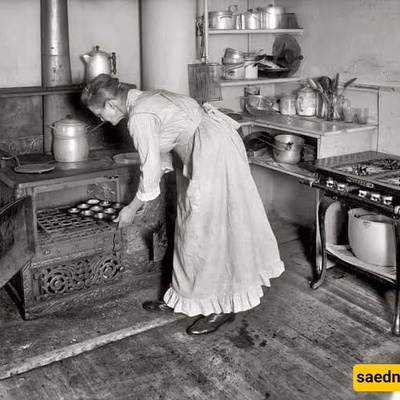
SAEDNEWS: This article reveals lesser-known facts about the history of gas, along with images and details about the construction of the earliest gas stoves.
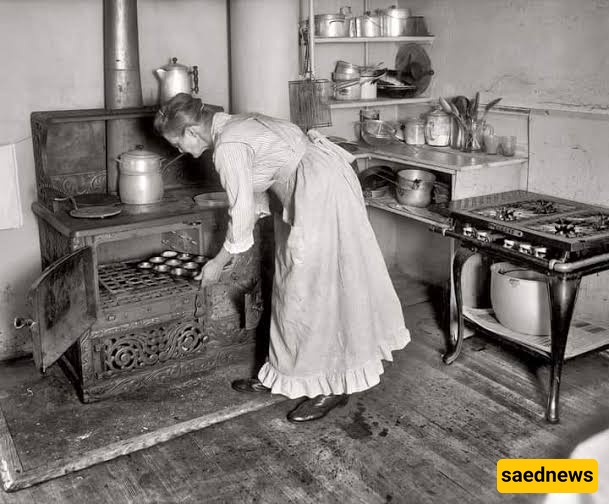
According to Saednews, Around 30,000 years ago, the earliest culture of modern humans emerged in the Near East. For convenience, these people are often referred to as Cro-Magnons, after their most well-known representative. They possessed such advanced stone and bone tools that their technology had little in common with that of the Neanderthals.
In terms of their use of fire, these early humans can broadly be associated with the Reindeer Age, although very little evidence has survived from this period. Hundreds of hearths have been discovered from these times, but unfortunately, the lack of precision in many archaeological excavations has made it difficult to determine their exact construction and structure.
The examination of tens of thousands of broken flint fragments has revealed no clear evidence that they were used for producing fire. Making a lighter would have required access to a piece of metal or, at the very least, a piece of pyrite. Although pyrite has occasionally been found in prehistoric dwellings, there is little indication that it was used for making fire-starting tools.

The construction of the earliest hearths was generally very simple. In some cases, they consisted merely of a ring of stones. There is no evidence that cooking pots were placed over these fires, since pottery and metalworking had not yet developed during this period.
It appears that heated stones may have been used to warm water. Archaeologists have also discovered hearths equipped with air vents. One such hearth was found in Ukraine, inside a dwelling built on a sand dune. Two small channels cut into the sand allowed fresh air to enter the hearth and keep the fire burning.
It is also believed that the hearths of the Reindeer Age were fueled partly with animal bones and were probably used for cooking. However, direct evidence supporting this conclusion is difficult to establish.
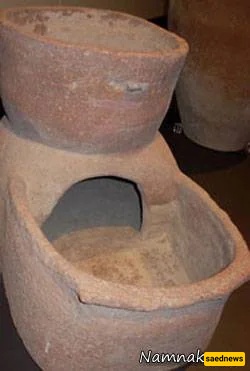
Dwellings built on sand dunes in Ukraine and Central Europe have revealed more details about prehistoric hearth construction than the caves of Western Europe. In many Western European caves, the movement of sand and gravel has destroyed or obscured much of the original evidence concerning the design of the hearths.
In Ukraine, archaeologists have discovered numerous hearths surrounded by pits large enough to accommodate cooking vessels.
The Magdalenians appear to have placed several large stones together and heated them in a fire. The accumulated heat was then transferred and used for cooking food. Examples of this type of hearth have been found remarkably well preserved in the rock shelters of Moutier, France, and in the caves of Saint-Marcel.