SAEDNEWS: Do you know what sets men’s and women’s perfumes apart? In this article, we explore four key differences, including naming and labeling, fragrance, packaging, and perfume concentration. You’ll also discover why, despite common stereotypes, choosing a perfume is ultimately a matter of personal taste.
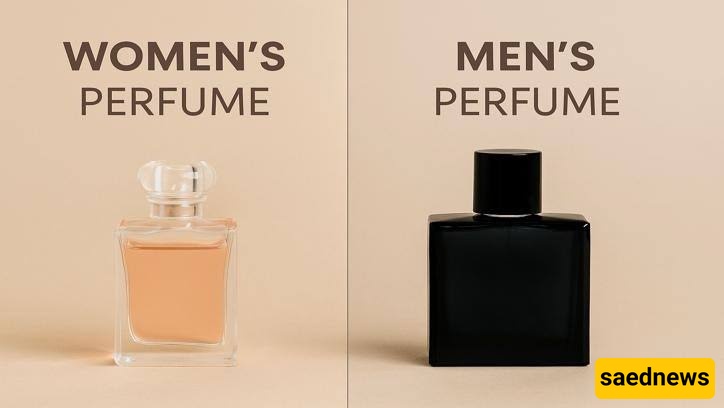
Accoridngt o Saednews, In this section, we will introduce four of the most important differences between women’s and men’s perfumes. These differences can help you identify whether a fragrance is designed for men or women and make a more suitable choice.
The name and label of a perfume can be one of the easiest ways to distinguish between men’s and women’s fragrances. Men’s perfumes often use terms such as For Men, For Him, Men, or Homme, while women’s fragrances may be labeled For Women, For Her, Women, Female, or Femme.
The fragrance notes commonly chosen by women and men can differ considerably. For this reason, men’s and women’s perfumes often contain different combinations of ingredients.
Women’s perfumes frequently feature fruity, sweet, floral, and pleasant notes, such as jasmine, rose, vanilla, and similar accords. These scents are often associated with expressing emotions and creating an attractive, elegant impression.
Men’s perfumes, on the other hand, commonly feature woody and deeper notes, including cedarwood, vetiver, musk, leather, and spicy oriental accords.
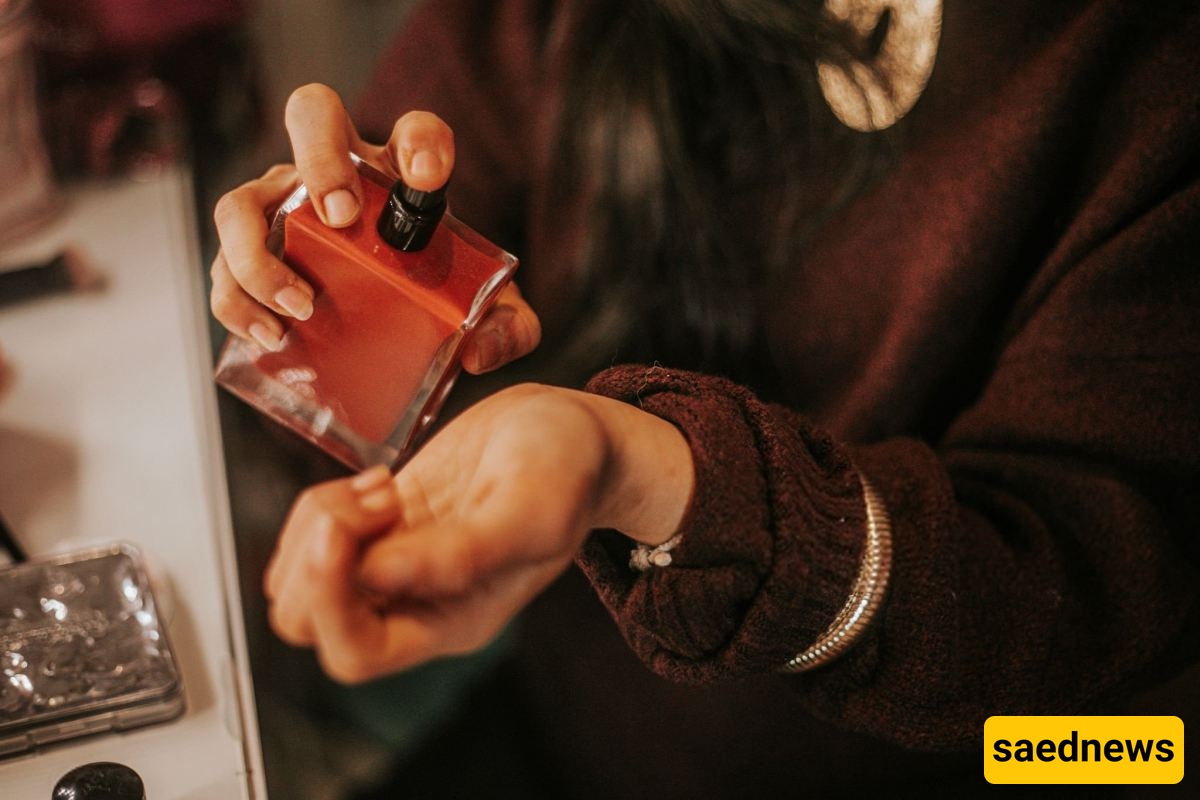
The difference between men’s and women’s perfumes can also be seen in their packaging. Fragrance brands often use different design approaches for each category, so the bottle and box can sometimes provide a quick indication of whether a perfume is marketed toward men or women.
Men’s perfumes often come in square or rectangular bottles with darker colors such as navy blue, black, gray, or similar shades. Women’s perfumes tend to have more varied shapes, including curved designs, and often use brighter or pastel colors.
The concentration of a fragrance can also provide some clues about its type. Women’s perfumes are often available as Eau de Parfum (EDP), while men’s fragrances can be found as both Eau de Parfum and Eau de Cologne, each offering different levels of concentration and longevity.
However, concentration alone is not a reliable way to determine whether a perfume is intended for men or women.
If the gender category of a perfume is important to you when shopping, the following methods can help you identify whether a fragrance is marketed for men or women.
The name and label are usually the first and most reliable indicators. Men’s fragrances may be labeled Eau de Parfum For Men, while women’s fragrances may use Eau de Parfum For Women.
These labels are generally determined by the manufacturer when the fragrance is formulated and marketed, making them one of the simplest ways to identify its intended audience.
If you see the French word Femme on a perfume, it generally indicates that the fragrance is marketed toward women. Homme usually indicates a men’s fragrance.
Keep in mind that some perfumes are unisex, meaning they are designed for both men and women. In such cases, the packaging may not specify a particular gender.
One of the easiest ways to distinguish between traditionally feminine and masculine fragrances is to examine their notes.
As mentioned earlier, women’s perfumes often feature floral and fruity notes with sweet or warm characteristics, while men’s fragrances frequently emphasize woody, spicy, earthy, or darker accords.
However, many fragrance notes are shared between men’s and women’s perfumes. Therefore, it is not always possible to determine the intended gender of a fragrance based solely on its notes.
Perfumes are available in different concentrations, including Eau de Toilette, Eau de Parfum, Eau de Cologne, and others.
There is a common assumption that Eau de Cologne is primarily associated with men’s fragrances. However, this is not a strict rule.
It is also important to remember that Eau de Parfum refers to the concentration of the fragrance rather than its gender. An Eau de Parfum can be designed for men, women, or both.
The design and packaging can also make it easier to identify whether a fragrance is traditionally marketed toward men or women.
If the information on the label is unclear, take a look at the bottle and box. Men’s perfumes often feature simple structures, straight lines, and darker colors, while women’s perfumes frequently use curved shapes, brighter colors, and more decorative details.
Today, there are no real restrictions when it comes to choosing a perfume. Your fragrance does not have to follow every traditional characteristic associated with men’s or women’s perfumes.
One of the most important factors when wearing a fragrance is how it interacts with your individual skin chemistry and how the scent develops over time. Regardless of the label on the bottle, you can try a men’s or women’s fragrance and see whether you enjoy how it smells after wearing it for several hours.
There is nothing wrong with a woman wearing a fragrance marketed toward men or a man wearing one marketed toward women. Choosing a perfume is ultimately a matter of personal preference, and traditional marketing categories do not have to determine your choice.
Many men do not enjoy strong or heavy masculine fragrances, while some women may not prefer sweet or fruity perfumes.
Some fragrances originally marketed toward one gender have also become popular among people of the opposite gender.
Tom Ford Black Orchid Eau de Parfum was introduced in 2006 as a women’s fragrance. It quickly became one of the brand’s best-known and most popular perfumes.
Interestingly, Black Orchid developed a strong following among men as well, with many men choosing to wear the fragrance themselves.
Its combination of truffle, orchid, dark chocolate, patchouli, and vanilla creates a distinctive character that can appeal to both women and men. As a result, many men continue to wear it as an everyday fragrance.
Chanel Allure Homme Sport is a men’s fragrance launched in 2004, but its fresh and versatile character can also appeal to women.
The fragrance opens with citrus notes such as orange, followed by notes of pepper and cedar. Its base combines white musk, vanilla, and tonka bean, creating a balanced and versatile scent profile.
No. Unisex perfumes are fragrances created with both women and men in mind. They are designed without relying heavily on traditionally gender-specific fragrance characteristics.
These perfumes often use citrus and aromatic fruity notes that can appeal to a wide range of people. Unisex and sporty fragrances are also often lighter and can be a good choice for people who do not enjoy heavy or intense scents.
Common notes and accords found in unisex fragrances include patchouli, moss, oak, vetiver, spicy accords, sweet notes, and woody scents.
Ultimately, the best perfume is not necessarily the one labeled specifically for men or women. The right fragrance is the one that smells good on your skin and matches your personality, preferences, and lifestyle.