SAEDNEWS: Gianni Infantino has received a powerful public endorsement from Donald Trump at a moment when criticism of the FIFA president is intensifying, creating a striking divide between Trump’s position and that of U.S. Soccer.
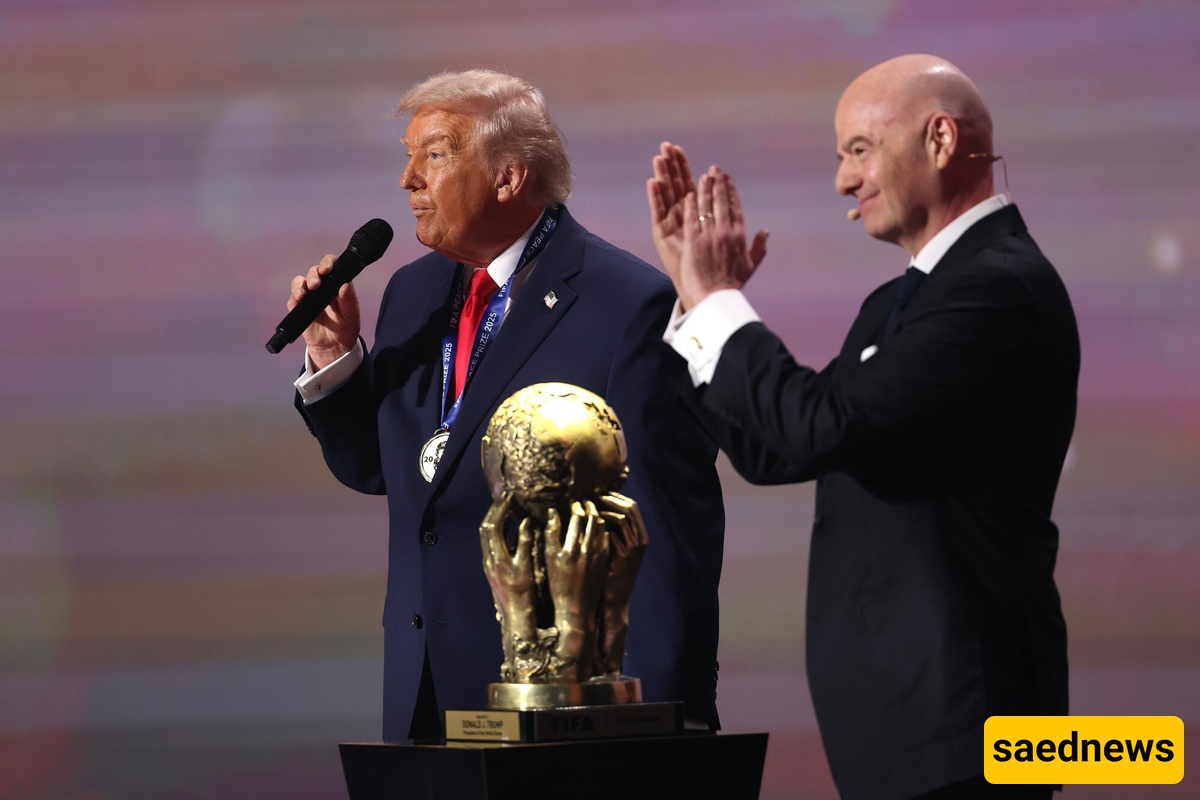
According to SaedNews: Gianni Infantino’s future at the top of world football has become the subject of an increasingly public power struggle, and Donald Trump has now made his position unmistakably clear: he wants the FIFA president to stay.
Trump publicly defended Infantino in a post on Truth Social, warning FIFA that replacing him would be a serious mistake. The intervention came as Infantino faces growing criticism over his leadership and prepares to seek another term as FIFA president.
The timing of Trump’s statement makes the endorsement particularly notable. Infantino is under pressure after failing to advance a proposal to sell part of the World Cup’s equity to private investors. At the same time, criticism from several football organizations has intensified, putting his leadership under an unusually bright spotlight.
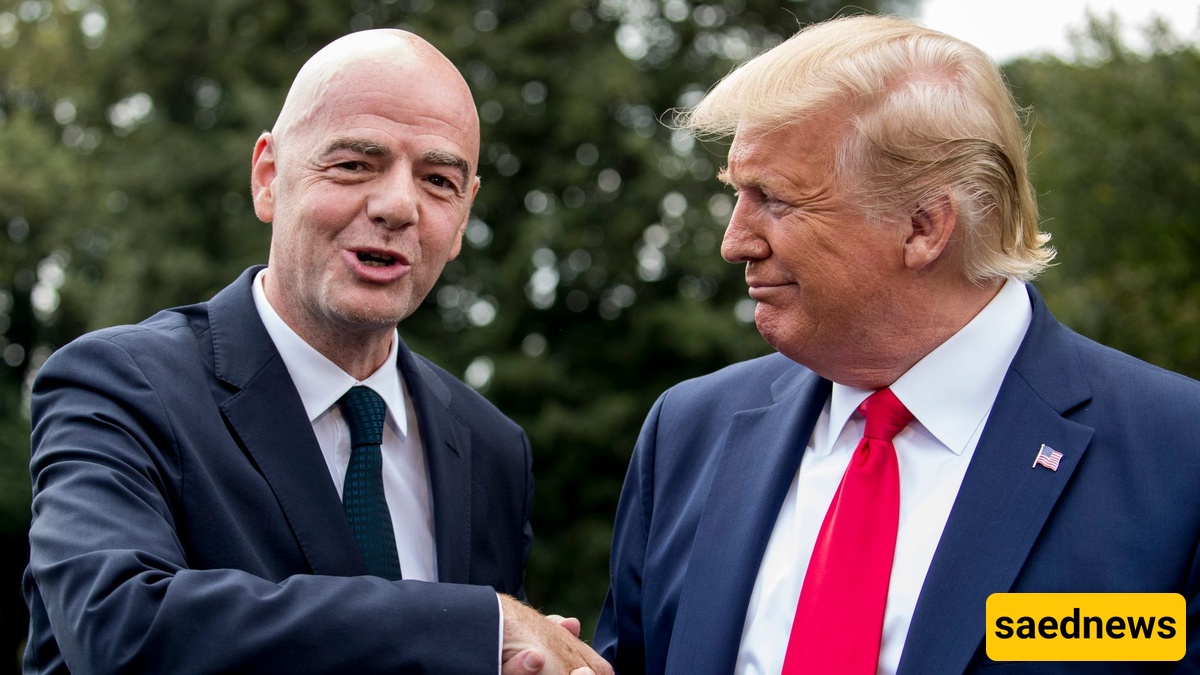
Trump, however, offered no ambiguity in his assessment.
He said FIFA would make a “big mistake” even considering replacing Infantino and described the FIFA chief as an exceptional leader. Trump also praised the World Cup under Infantino’s leadership, claiming that it had been the most successful in the tournament’s history and arguing that FIFA would not be as successful or profitable if Infantino left.
The public endorsement stands in sharp contrast to the position taken by the U.S. Soccer Federation.
U.S. Soccer, together with the Canadian Soccer Association and other football federations from Central America and the Caribbean, has issued criticism of Infantino. Their position has placed the American football establishment at odds with the U.S. president over the future of FIFA’s leadership.
The divide is particularly striking because the dispute involves institutions preparing for the 2026 World Cup cycle and a FIFA president whose political and sporting relationships have become increasingly important.
Infantino is expected to test his chances of remaining in office in the upcoming FIFA presidential election in March. That makes the current wave of criticism more than a passing controversy: it could directly affect the political calculations surrounding his re-election bid.
Infantino has also faced allegations involving ethical issues and misconduct, accusations he has rejected. FIFA itself has stood behind its president, describing the criticism as part of what it characterized as a coordinated and continuing effort by certain individuals to weaken the organization.
The controversy intensified further when the Asian Football Confederation, UEFA and CONCACAF jointly issued an open letter addressed to the wider football community.
The letter strongly criticized Infantino’s management of FIFA and was viewed as a sign that influential football organizations are becoming increasingly dissatisfied with his leadership. If national federations ultimately align with their respective confederations and a broader coalition forms, Infantino could face a considerably more difficult path to re-election.
That is where Trump’s intervention takes on additional significance.
His statement does not erase the criticism coming from football organizations, but it gives Infantino a highly visible political endorsement at a crucial moment. Trump has effectively placed himself on the side of the FIFA president just as the debate over Infantino’s future is becoming more intense.
The situation is also unusual because the disagreement is not simply between FIFA and outside political figures. The U.S. Soccer Federation itself has taken a position critical of Infantino, while Trump has publicly argued that FIFA should retain him.
Other major football bodies, meanwhile, have expressed support for Infantino. The Confederation of African Football and South America’s governing football body, CONMEBOL, are described as sharing Trump’s position in backing the FIFA president.
The result is a widening split within the football world over the direction of FIFA and the person who should lead it.
At the center of the dispute is Infantino himself. He has spent years consolidating his position at the head of world football, but the current controversy places his leadership under renewed scrutiny just months before an election that could determine whether he remains in power.
His supporters point to FIFA’s commercial success and the organization’s performance under his leadership. His critics, meanwhile, are raising questions about management, ethics and the direction of the organization.
Trump’s intervention adds another layer to an already complicated contest. By declaring that replacing Infantino would be a mistake, the U.S. president has transformed what might otherwise have remained largely an internal football dispute into a much more visible political and institutional confrontation.
For Infantino, the immediate challenge is to turn public support into sufficient backing inside football’s governing structures. A presidential election ultimately depends on the positions of FIFA’s member associations, and the emerging alliances among confederations and national federations could prove decisive.
The coming months may therefore reveal whether the criticism surrounding Infantino develops into a genuine threat to his re-election or remains a temporary political storm.
For now, one thing is clear: as Infantino prepares for the next FIFA presidential election, he has received one of the most prominent endorsements possible from Trump—but that support comes at a moment when several influential football organizations are demanding a different direction.
The clash between those positions could make the race for FIFA’s presidency one of the most closely watched leadership contests in world football.