SAEDNEWS: When traveling to China, we recommend visiting Beijing’s Summer Palace, a magnificent retreat that once served as a summer getaway for Chinese emperors. Today, this historic palace is proudly listed as a UNESCO World Heritage Site.
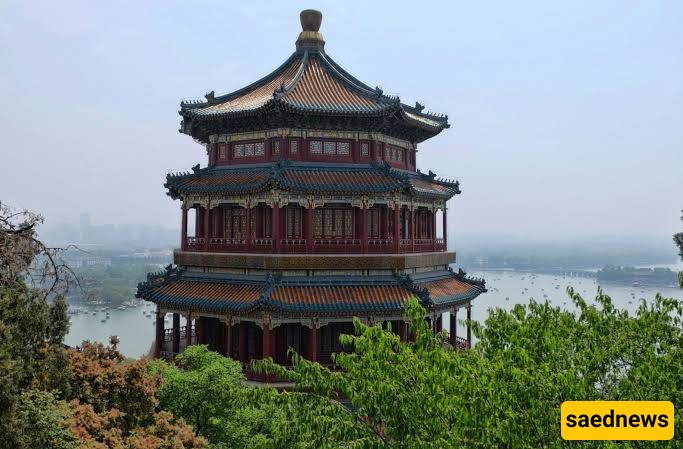
According to Saednews, Beijing is a lively and bustling city that we often recognize from photographs showing crowded streets, busy neighborhoods, and plenty of noise and activity. As the capital of China, the city has undergone rapid modernization while still preserving much of its ancient character. Beijing is an excellent and unique destination for travelers who value both historical attractions and modern facilities and amenities.
The Summer Palace is located about 15 kilometers from the center of Beijing and is largely surrounded by Longevity Hill and Kunming Lake. Join us on a journey through Beijing to learn more about this remarkable palace and the attractions found within its grounds.
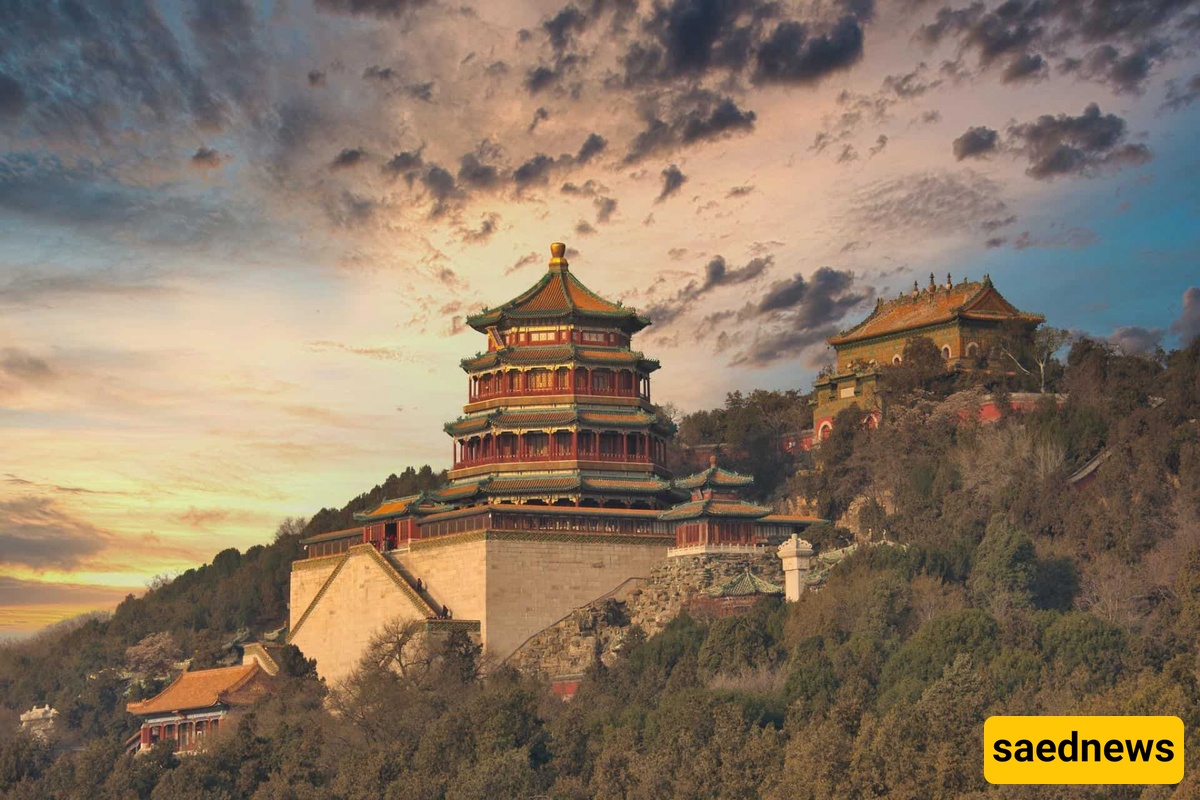
Beijing’s Summer Palace is a vast complex of lakes, gardens, and palaces located in the Chinese capital. It is considered an outstanding example of an imperial garden from the Qing Dynasty.
More than three-quarters of the palace grounds are covered by water, with the complex mainly centered around Longevity Hill and Kunming Lake. The Summer Palace was added to the UNESCO World Heritage List in December 1998. Its natural landscape, surrounding hills, and beautiful views across the water have created an exceptionally scenic and memorable destination.
As mentioned, Beijing’s Summer Palace, also known as Yuanmingyuan, meaning the “Gardens of Perfect Brightness,” was originally built in 1707 as a royal gift from the Kangxi Emperor to his fourth son, Yinzhen, who later became the Yongzheng Emperor. After Yongzheng ascended the throne, the Old Summer Palace was continuously expanded over the following years.
The complex consisted of three major gardens—Yuanmingyuan, Changchunyuan, and Qichunyuan—with a total area of approximately 2.9 square kilometers, making it nearly eight times larger than Vatican City. Chinese emperors used the Old Summer Palace as a second residence and workplace and, at times, spent even more time there than in the Forbidden City.
Over the years, the historic complex underwent extensive development. It incorporated many elements of traditional Chinese garden design and brought together Eastern and Western artistic influences in an unprecedented way. In 1861, Victor Hugo compared the Old Summer Palace to the Parthenon and described it as a place resembling “a thousand and one dreams from a thousand and one nights,” expressing great admiration for its architecture and design.
Despite the extraordinary beauty and sophistication invested in its construction, and despite the admiration expressed by Hugo and others, the fate of this historic site was ultimately one of destruction. Today, only ruins remain, somewhat reminiscent of Persepolis.
In 1860, during the Second Opium War, a combined British and French army entered the Old Summer Palace. They looted everything they could take and destroyed what they could not carry away.
Following the attack, the palace was burned on the orders of James Bruce, 8th Earl of Elgin, the British High Commissioner in China, with the intention of completely destroying it. According to many historians, the fire lasted for three days, while the ashes of the magnificent complex filled the sky.
Nevertheless, remnants of the palace survived, as the fire was unable to destroy everything. The Old Summer Palace continued to suffer from looting by bandits and was further damaged following the intervention of the Eight-Nation Alliance in Beijing, decades of poor government management, and the Cultural Revolution. These events gradually contributed to the destruction of much of the historic complex.
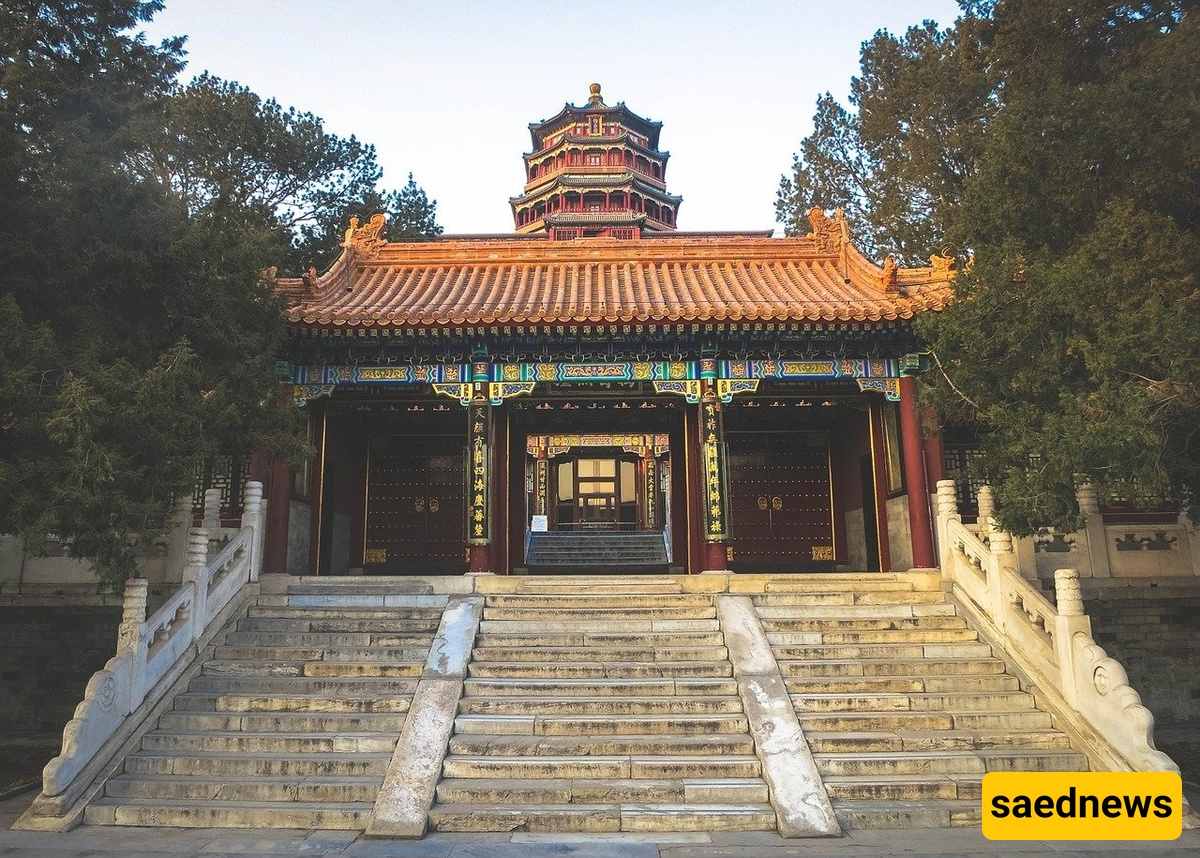
The Eastern Palace Area: This section serves as one of the main entrances to the palace. Two bronze lion statues dating from the reign of the Qianlong Emperor stand on either side of the gate.
Hall of Benevolence: Court meetings and official affairs were conducted in this area. During the reign of the Qianlong Emperor, it was known as the “Hall of Good Governance.”
Hall of Jade Billows: Located west of the Hall of Benevolence, this hall served as a residence for members of the Qing imperial family.
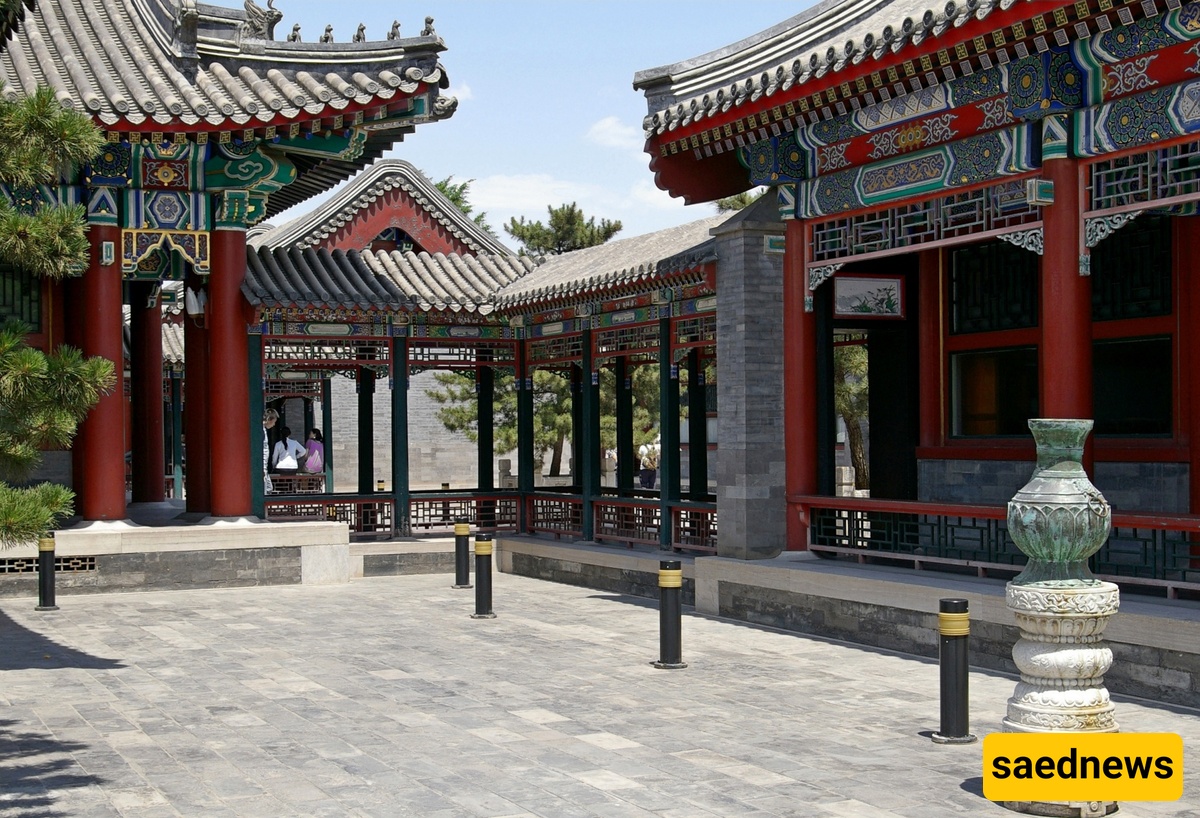
Long Corridor: This famous covered walkway is located within the Summer Palace and was constructed in the mid-18th century. It stretches for approximately 700 meters. Along the corridor are around 1,400 paintings, allowing visitors to enjoy the artwork while walking through the grounds without realizing how quickly the time and distance pass.
The 96-Meter Stone Boat: The Summer Palace contains a famous stone boat measuring approximately 96 meters. The original wooden boat was destroyed by fire in 1860 during the destruction of the palace. A marble version was later constructed in its place.
Fragrant Hill
Longevity Hill
Jade-Eye Hill
Garden of Tranquility and Brilliance
Garden of Tranquility and Pleasure
Garden of Perfect Brightness
Garden of Eternal Spring
Garden of Clear and Transparent Ripples
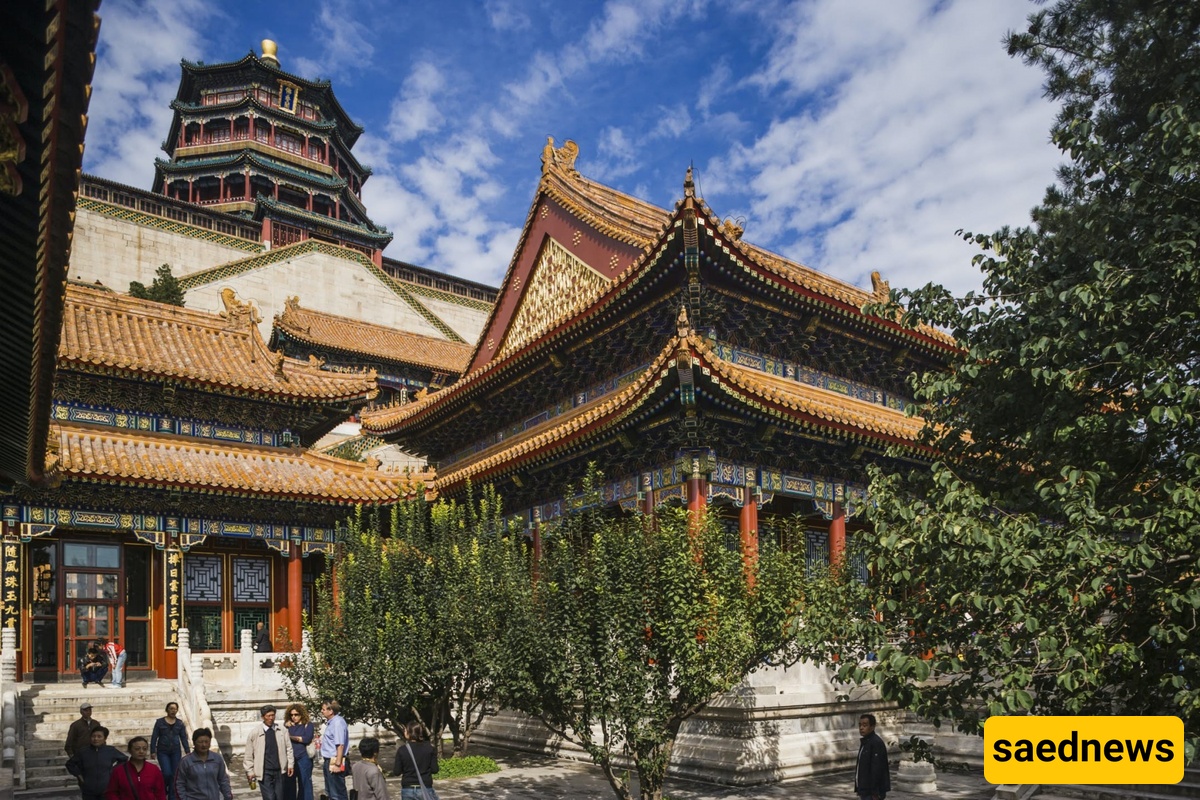
After the Cultural Revolution, the Chinese government established an organization dedicated to the preservation and restoration of Yuanmingyuan. It took many years to clear the ruins from nature and return scattered stones to their original locations.
China continues to restore and preserve this historic site wherever possible. However, some sections suffered such extensive destruction that reconstruction is not possible. These areas will therefore remain as ruins, preserving the remains in their existing condition as a reminder of the palace’s remarkable past.