SAEDNEWS: The Nile is the longest river in the world. It flows north from East Africa to the Mediterranean Sea. Although it is very long, it carries less water than many rivers because it flows through the Sahara Desert. About 97% of Egypt's people live along the Nile Valley.
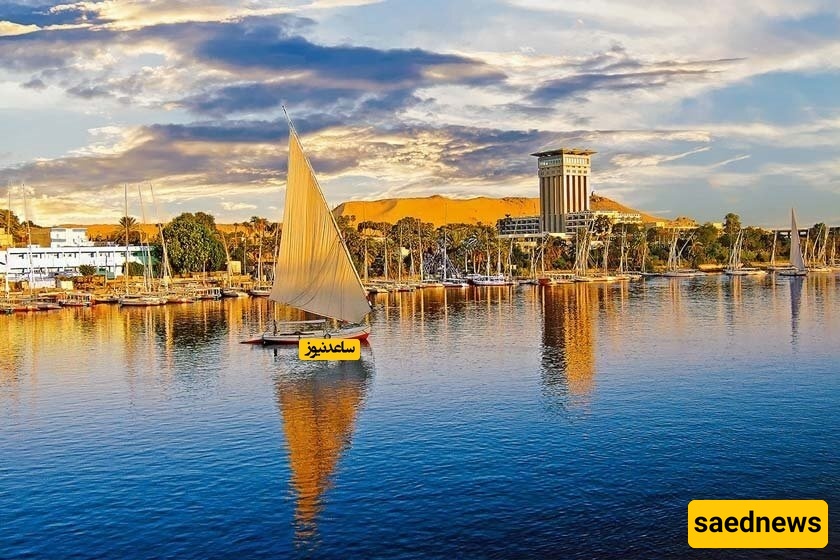
According to Saednews, The Nile River is one of the most remarkable natural wonders on Earth. Stretching approximately 6,650 kilometers (4,132 miles), it is widely recognized as the world's longest river. Flowing through northeastern Africa, the Nile has shaped civilizations, supported diverse wildlife, and remains the primary source of life for millions of people, especially in Egypt.
The Nile flows through Uganda, Sudan, and Egypt, passing major cities such as Khartoum, the capital of Sudan, and Cairo, the capital of Egypt, before emptying into the Mediterranean Sea. For thousands of years, it has been the lifeline of these largely arid countries, providing fresh water, fertile farmland, transportation, and economic opportunities.
The river originates in the highlands of central and eastern Africa. Along its journey northward, numerous tributaries join the Nile, making it one of the continent's most significant river systems.
The Nile is formed by the meeting of two major rivers at Khartoum:
The White Nile, which originates from Lake Victoria.
The Blue Nile, which begins at Lake Tana in Ethiopia.
After merging, they continue north as the Nile River until reaching Egypt.
Before entering the Mediterranean Sea, the Nile divides into two major branches, creating the fertile Nile Delta. The western branch is known as Rosetta, while the eastern branch is called Damietta.
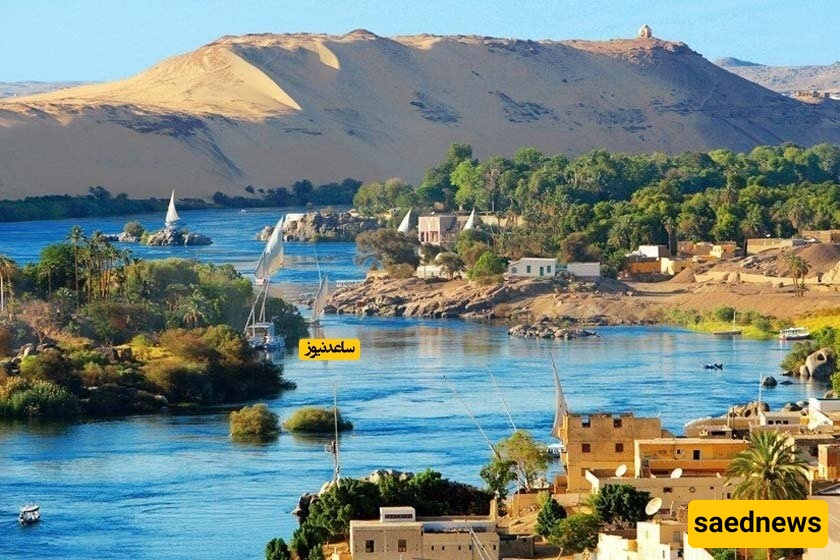
Like many of the world's earliest civilizations, Ancient Egypt developed along a major river. Just as Mesopotamia flourished beside the Tigris and Euphrates Rivers and the Indus Civilization grew along the Indus River, Egyptian civilization emerged on the banks of the Nile thousands of years before Christ.
The annual flooding of the Nile deposited rich layers of fertile silt across the surrounding lands, making agriculture possible in an otherwise desert environment. These fertile fields supported the growth of one of history's greatest civilizations, leaving behind extraordinary monuments, temples, and pyramids that continue to amaze the world today.
The Nile's seasonal floods had a profound influence on science and mathematics. Every spring, floodwaters covered farmland, washing away property boundaries.
When the waters receded, Egyptian farmers had to measure and redraw the borders of their fields. This practical need led to the development of early surveying techniques and laid the foundation for practical geometry, making Ancient Egypt one of the pioneers of mathematical science.
The Nile is home to an impressive variety of wildlife.
One of its most famous inhabitants is the Nile crocodile, among the largest crocodile species in Africa, capable of growing over 6 meters (20 feet) in length. The river also supports numerous fish species, aquatic reptiles, snakes, and amphibians.
Another iconic resident is the hippopotamus, which spends much of its life in the river. In addition, elephants, African buffalo, antelope, and many other wild animals depend on the Nile as a vital source of drinking water.
Because Africa possesses one of the richest ecosystems on Earth, many of its native species face increasing threats from habitat loss and environmental change.
According to Islamic tradition and the Qur'anic account, Prophet Moses (Musa) led the Children of Israel out of Egypt after Pharaoh rejected his message despite witnessing numerous miracles.
When Moses and his followers reached the great waters, with Pharaoh's army pursuing them from behind, God commanded Moses to strike the water with his staff. The waters parted, allowing the Israelites to cross safely. When Pharaoh and his soldiers followed, the waters returned and they were drowned.
This event remains one of the most significant stories in Islamic and biblical history.
The Nile is more than just a river—it is the economic and environmental backbone of northeastern Africa.
Its waters support:
Agriculture
Drinking water supplies
Transportation
Fishing
Trade
Hydroelectric development
Without the Nile, much of Egypt would be an uninhabitable desert.
Egypt's history has been inseparable from the Nile. The fertile Nile Valley, generally between 15 and 25 kilometers (9–16 miles) wide, became the center of Egyptian life and culture.
The river served as a natural highway, enabling trade, communication, and transportation between communities. Merchants from civilizations such as the Sumerians, Greeks, Phoenicians, and Persians all benefited from trade connected to the Nile.
The rich alluvial soils deposited by the river allowed Egyptians to cultivate wheat, barley, vegetables, and other crops, supporting one of the earliest organized agricultural societies.
Unlike many early human communities, the ancient Egyptians quickly developed structured settlements, agriculture, urban planning, government, and a sophisticated culture along the riverbanks.
By the fourth millennium BCE, Egypt had become one of the world's most advanced civilizations, attracting attention from neighboring regions and laying the foundations for remarkable achievements in architecture, engineering, writing, medicine, and mathematics.
Where the Nile enters the Mediterranean Sea, it forms the Nile Delta, one of the world's most fertile agricultural regions.
The delta has long been Egypt's agricultural heartland, producing grains, fruits, vegetables, and other crops that sustain millions of people today.
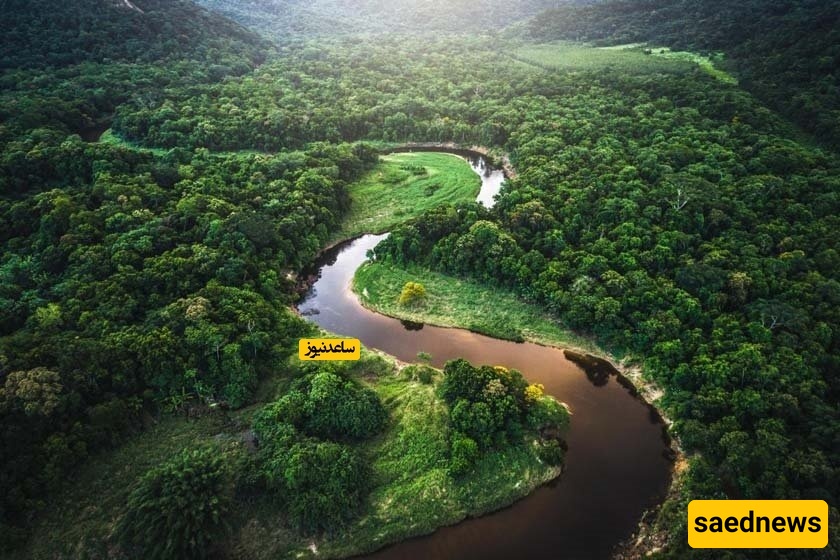
Egypt remains one of Africa's leading tourist destinations. Every year, millions of visitors travel to experience its remarkable historical landmarks, including the famous Pyramids of Giza, ancient temples, museums, and monuments.
Tourism is a major contributor to Egypt's economy, employing a significant portion of the country's workforce. Alongside these attractions, the Nile itself remains one of Egypt's greatest natural landmarks, offering scenic cruises and an opportunity to explore the country's rich history from the water.
The Nile River is far more than the world's longest river—it is the foundation of Egypt's history, civilization, agriculture, and culture. For thousands of years, it has sustained human life in one of the driest regions on Earth, enabled the rise of one of history's greatest civilizations, and supported an extraordinary variety of wildlife.
From the ancient temples lining its banks to the fertile Nile Delta and the vibrant cities it nourishes today, the Nile continues to be one of the most important rivers in the world and an enduring symbol of life, prosperity, and human achievement.