SAEDNEWS: The Holy Trinity Cathedral of Tbilisi is one of the largest churches in Georgia’s capital. Despite being a modern construction, its impressive architecture and grand scale have made it one of Tbilisi’s most popular landmarks.
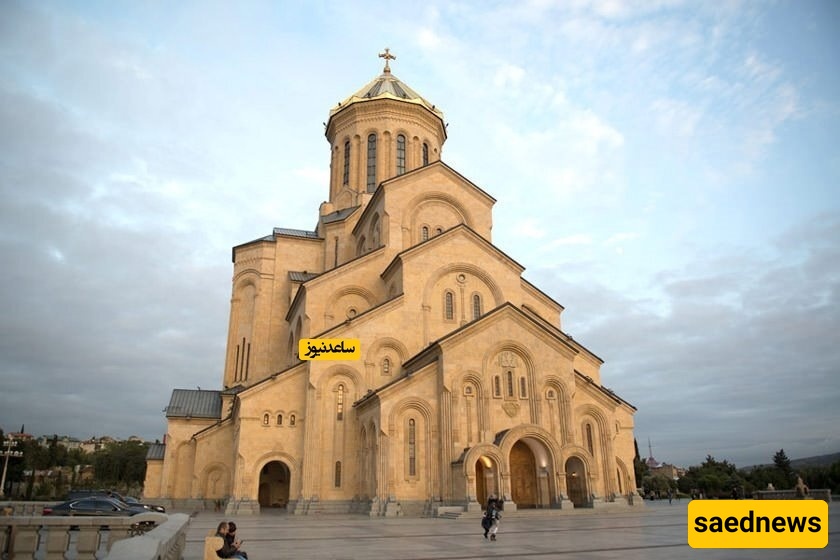
According to Saednews, Holy Trinity Cathedral, widely known as Sameba Cathedral ("Sameba" means Trinity in Georgian), is the principal cathedral of the Georgian Orthodox Church and one of the most recognizable landmarks in Tbilisi, the capital of Georgia. Built to commemorate the 2,000th anniversary of the birth of Jesus Christ and the 1,500th anniversary of the recognition of the Georgian Orthodox Church, the cathedral has become a symbol of modern Georgia's religious and cultural identity.
Holy Trinity Cathedral was constructed between 1995 and 2004 in Tbilisi. Although it is a relatively modern church, it has quickly become one of the city's most important religious sites and a must-visit attraction for travelers.
The cathedral stands on Saint Elijah Hill, overlooking the left bank of the Mtkvari (Kura) River, in central Tbilisi. Most Georgians follow the Orthodox Christian faith, making Sameba an important place of worship and a national symbol.
Several historical events inspired the cathedral's construction, including:
Georgia's independence following the collapse of the Soviet Union.
The 2,000th anniversary of Christianity.
The 1,500th anniversary of the Georgian Orthodox Church.
An architectural competition was organized to select the design. After reviewing nearly one hundred proposals, the design by Archil Mindiashvili was chosen. However, political instability and the Georgian Civil War delayed construction for approximately six years before work finally began.
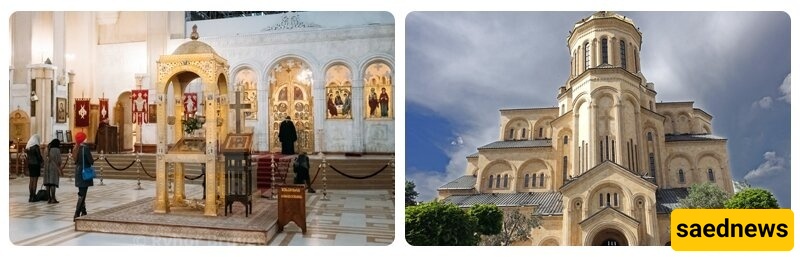
Holy Trinity Cathedral is located in the historic Avlabari district on the left bank of the Mtkvari River. The building showcases traditional Georgian ecclesiastical architecture while incorporating modern engineering and design elements.
Its impressive central dome is crowned by a 7.5-meter golden cross, creating one of the city's most recognizable skylines. Natural materials dominate the interior, where marble flooring, mosaic decorations, and elegant floral displays create a peaceful atmosphere.
The cathedral's remarkable wall paintings were created by a team of artists led by Amiran Goglidze, adding artistic and spiritual beauty to the interior.
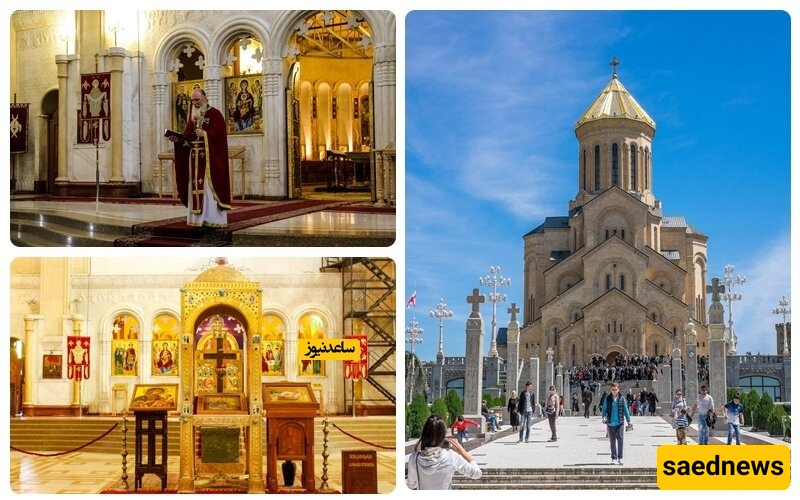
The cathedral sits atop a hill surrounded by spacious gardens filled with trees and landscaped pathways. Visitors can relax on benches while enjoying panoramic views of Tbilisi.
A large entrance gate leads into the complex, and admission is free. Inside the courtyard, colorful rose gardens bloom throughout the grounds, making spring one of the best seasons to visit.
The main cathedral building is approached through rows of massive stone columns, each marked with a carved cross. Wide staircases lead to beautifully carved wooden entrance doors that welcome visitors into the church.
The interior features bright white walls decorated with religious paintings and icons. Candle lighting remains an important Orthodox Christian tradition, and dedicated tables are available for worshippers to light candles in prayer.
At the front of the main hall stands a carefully carved wooden statue of Jesus Christ, visible from nearly every part of the cathedral. Opposite it is a large golden cross that serves as the focal point for prayers and religious ceremonies.
Visitors attending on Sundays or during major religious holidays can observe traditional Orthodox services. The cathedral's mosaic altar depicts scenes from the life of Jesus Christ and serves as the spiritual center of the church.
The lower levels of the cathedral house a museum and conference facilities.
The museum preserves valuable religious manuscripts, paintings, and historical artifacts. It also contains sacred relics brought from important Christian sites, including:
Stones from Mount Zion
Water and stones associated with the Jordan River
Soil from Jerusalem
Relics connected with Saint George's Church in Palestine
The separate bell tower stands near the entrance to the cathedral complex and is considered one of its most beautiful architectural features.
The building contains living quarters for senior clergy, educational spaces for students, and training workshops. Its nine bells were manufactured in Germany and contribute to the cathedral's distinctive sound during religious celebrations.
Holy Trinity Cathedral is located in the Avlabari district, one of Tbilisi's central neighborhoods, and is easily accessible by public transportation.
Take the Tbilisi Metro to Avlabari Station. From there, the cathedral is approximately a 13-minute walk.
Visitors can also use the nearby cable car. After getting off near Lado Meskhishvili Street, it is about a 15-minute walk (approximately 650 meters) to the cathedral.
Several bus stops are located close to the cathedral. Bus routes 91 and 122 provide convenient access to the area.
Holy Trinity Cathedral dominates the skyline of Tbilisi and can be seen from many parts of the city. Completed in 2004, it was built to celebrate two significant milestones in Christian history and has become one of Georgia's greatest architectural achievements.
With a capacity of approximately 15,000 worshippers and a height of 97 meters (318 feet), Sameba is among the largest Orthodox churches in the world and one of the tallest Orthodox cathedrals globally.
Whether you are interested in religious heritage, architecture, photography, or panoramic city views, Holy Trinity Cathedral offers an unforgettable experience. Photography enthusiasts may wish to bring a tripod to capture the cathedral's soaring interior, grand exterior, and sweeping views of Tbilisi.