SAEDNEWS: Ali Sadr Cave in Hamadan, dating back 136 million years, features a crystal-clear lake and is known as the longest water cave in the world suitable for boating. It attracts more than one million visitors every year.
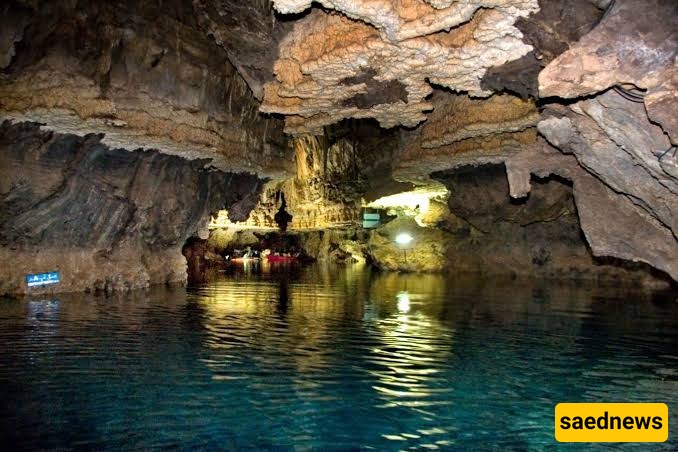
According to Saednews, Ali Sadr Cave in Hamadan is one of Iran’s most remarkable natural attractions and among the most fascinating underground wonders in the world. Located in Hamadan Province near Kabudrahang County, this extraordinary water cave is recognized as one of the longest navigable caves on Earth. Every year, thousands of Iranian and international visitors travel to explore its mysterious underground waterways and spectacular geological formations.
With an estimated age of around 136 million years, Ali Sadr Cave is not only a unique tourism destination but also an important site from geological, biological, and historical perspectives.
This article explores the location, discovery history, geological features, cave formations, wildlife, tourism facilities, economic importance, and conservation needs of this incredible natural landmark.
Ali Sadr Cave is situated approximately 75 kilometers northwest of Hamadan city, near Ali Sadr village in Kabudrahang County. The cave lies within the Zagros mountain range at an elevation of about 1,900 meters above sea level.
Visitors can reach the cave through the paved Hamadan–Kabudrahang road, with the journey from the provincial capital taking around one hour. Its proximity to other famous attractions in Hamadan, including Ganjnameh, the Avicenna Mausoleum, and Hegmataneh Hill, has made it one of the most popular destinations for travelers exploring western Iran.
Although Ali Sadr Cave had been known by local residents for generations, its official discovery dates back to 1963 (1342 in the Iranian calendar). At that time, a group of Hamadan mountaineers led by Mohammad Hossein Rezvani explored large sections of the cave.
During the 1970s, further exploration, development, and preparation for tourism began. In 1977, Ali Sadr Cave was officially registered as one of Iran’s national heritage sites.
Historical evidence suggests that humans may have used the cave during ancient times as well. Archaeological discoveries near the entrance have revealed pottery fragments and stone tools belonging to the Neolithic period. Some researchers also believe that the cave may have served as a shelter or religious site during the Sassanid era.
Ali Sadr Cave was formed within limestone and dolomite rocks from the Cretaceous period. Approximately 136 million years ago, underground water gradually dissolved limestone layers, creating the vast underground chambers and waterways that exist today.
This process, known as karst formation, occurs when rainwater enters cracks in limestone rocks, dissolves calcium carbonate over long periods, and creates underground cavities.
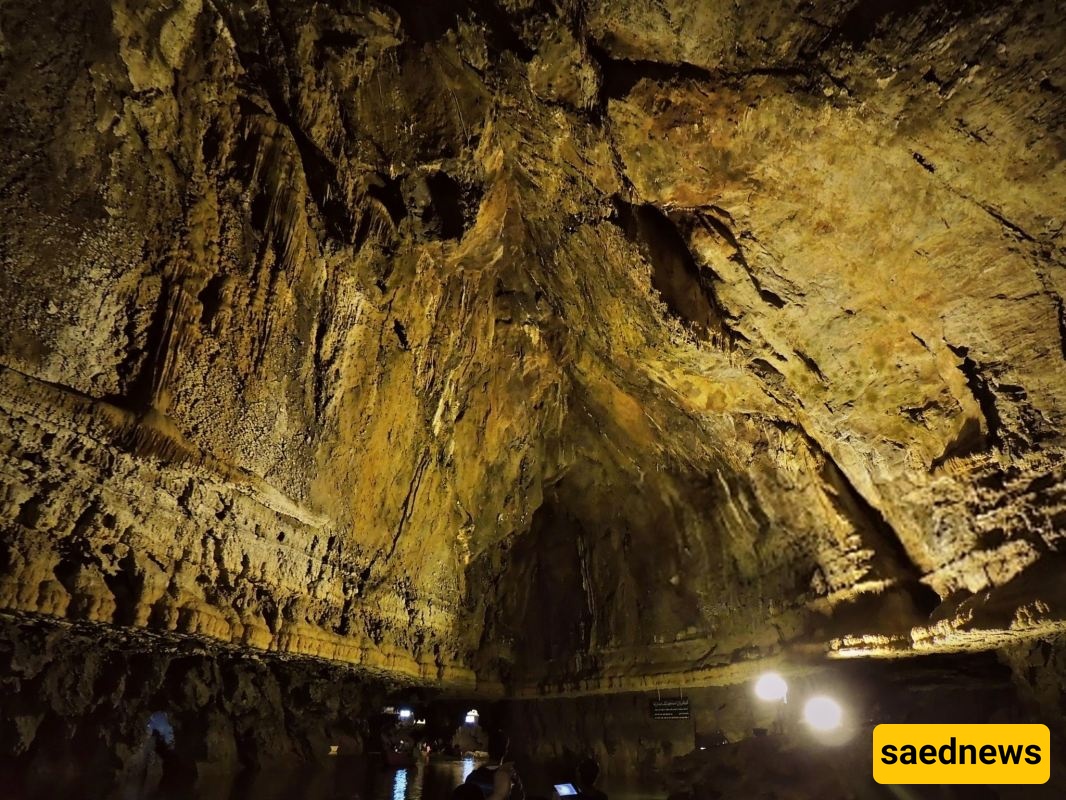
The total length of Ali Sadr Cave is estimated at around 14 kilometers, although approximately 2.5 kilometers have been developed for tourists. In some areas, the cave reaches depths of more than 100 meters, while certain ceilings rise up to 40 meters high.
The internal temperature remains stable throughout the year at around 12°C, with relative humidity close to 70 percent.
One of the cave’s most extraordinary features is its large underground lake. In some sections, the water depth exceeds 10 meters. Due to dissolved minerals, the clear water displays a beautiful blue-green color. The lake is supplied by underground springs and rainfall, and its water level remains almost constant throughout the year.
Ali Sadr Cave contains a wide range of impressive geological formations created over millions of years.
Among the most common formations inside the cave are stalactites and stalagmites.
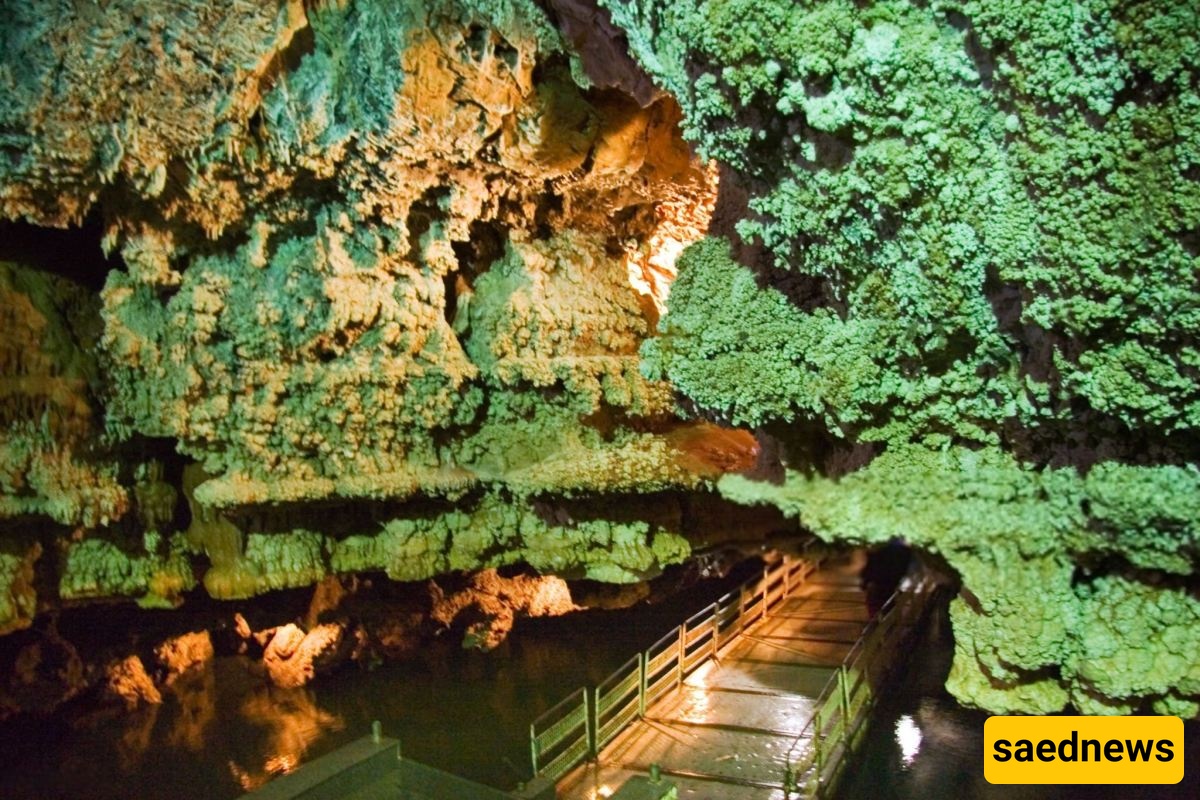
Stalactites hang from the ceiling, while stalagmites rise from the cave floor. They are formed through the gradual deposition of calcium carbonate carried by water droplets. In some areas, these formations have joined together to create impressive limestone columns.
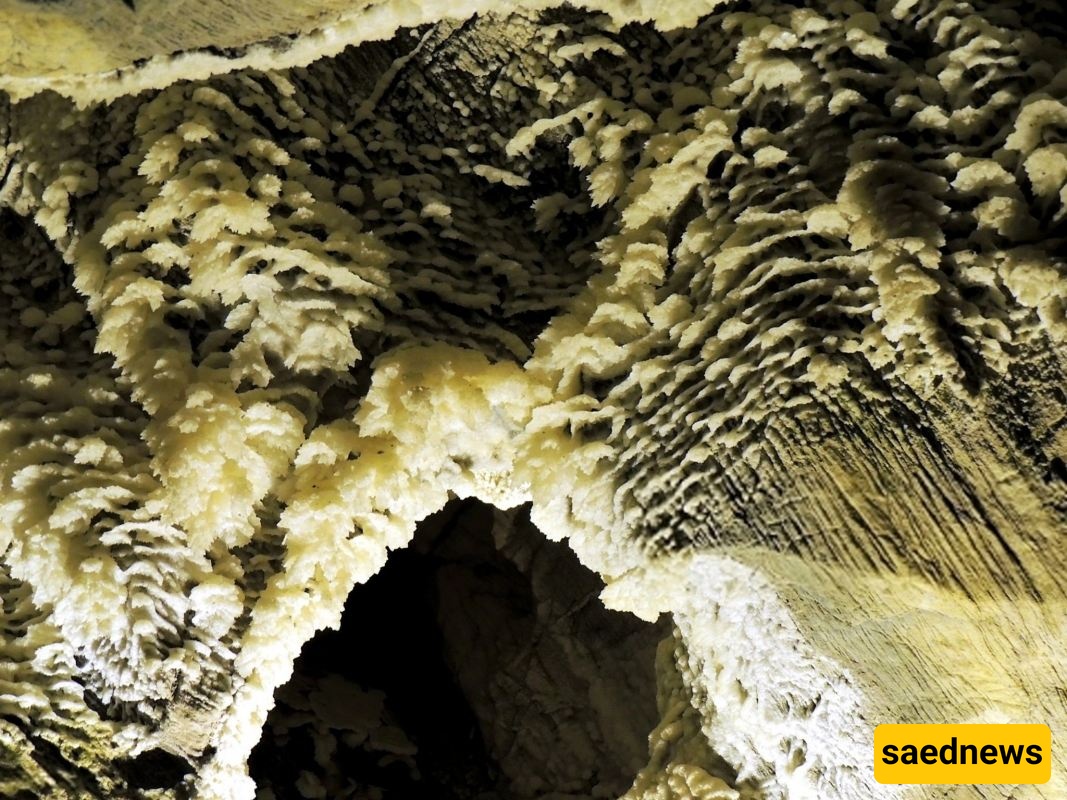
Helictites are rare cave formations that grow in unusual directions, sometimes against the force of gravity. These unique structures are abundant in Ali Sadr Cave and are considered one of its most scientifically interesting features.
The presence of numerous lakes and waterways gives Ali Sadr Cave its exceptional character. The water is so transparent that visitors can often see the cave floor several meters below the surface.
The cave contains several enormous halls and chambers. The largest is known as the Central Hall, which reaches a height of approximately 40 meters and covers an area of about 5,000 square meters. Its impressive size creates a breathtaking underground landscape.
Despite the absence of sunlight, Ali Sadr Cave supports various forms of life adapted to darkness, high humidity, and stable temperatures.
Bats are among the most important inhabitants of the cave. Several species, including horseshoe bats and mouse-eared bats, live inside the cave.
During the day, they remain attached to the ceilings, while at night they leave the cave to feed on insects.
One of the fascinating biological features of Ali Sadr Cave is the presence of blind and colorless cave fish.
After living for generations in complete darkness, these fish have lost their pigmentation and developed reduced eyesight. They survive by feeding on insects and organic materials found in the water.
Various insects and small arthropods, including spiders, millipedes, and tiny crustaceans, inhabit the cave environment. Some of these species are specially adapted to underground life and are unique to this ecosystem.
As one of Iran’s most important natural attractions, Ali Sadr Cave provides several facilities and activities for visitors.
The main attraction of Ali Sadr Cave is boating through its underground lake system. Visitors travel by pedal boats or motorized boats through the waterways while observing the remarkable rock formations.
The boating route covers approximately 2 kilometers and usually takes around 45 minutes.
Certain sections of the cave have been prepared for walking tours. These paths, extending around 500 meters, allow visitors to observe geological formations more closely.
The cave features an advanced lighting system designed to highlight the beauty of stalactites, stalagmites, and underground landscapes. Colored lighting in some areas creates a magical atmosphere.
Near the cave entrance, visitors can find various facilities, including:
Parking areas
Restaurants and cafés
Handicraft shops
Restrooms
Prayer facilities
A small museum near the entrance also provides information about the cave’s history, geology, and natural features.
Ali Sadr Cave is one of the most valuable tourism resources in Hamadan Province. Attracting more than one million visitors annually, it plays an important role in supporting the local economy.
The cave contributes to:
Employment opportunities for local communities
Growth of traditional handicrafts
Increased demand for hotels, restaurants, and transportation services
Development of regional tourism businesses
Beyond its economic impact, Ali Sadr Cave serves as an important symbol for introducing Hamadan Province to domestic and international travelers. Many travel programs include the cave as a key destination, helping expand tourism throughout western Iran.
Protecting Ali Sadr Cave for future generations requires careful management and scientific attention.
Managing visitor numbers, controlling visiting hours, and creating designated pathways are essential steps to prevent damage to the fragile cave environment.
Teaching visitors about the importance of cave conservation and responsible behavior can reduce environmental harm.
Regular scientific studies are necessary to monitor the cave’s condition, protect its ecosystem, and identify potential threats.
Providing sufficient funding for maintenance, modern equipment, and conservation projects can help preserve the cave while improving the visitor experience.
Ali Sadr Cave is a rare combination of geological beauty, underground waterways, ancient history, and ecological importance. Its massive chambers, crystal-clear lakes, and extraordinary rock formations make it one of Iran’s most unforgettable natural attractions.
As one of the world’s most impressive navigable water caves, Ali Sadr represents not only a remarkable destination for travelers but also a valuable natural heritage site that requires careful protection for future generations.