SAEDNEWS: Qalaqiran Mountain stands as a prominent symbol of the city of Ilam in western Iran and is regarded as one of its most significant natural attractions.
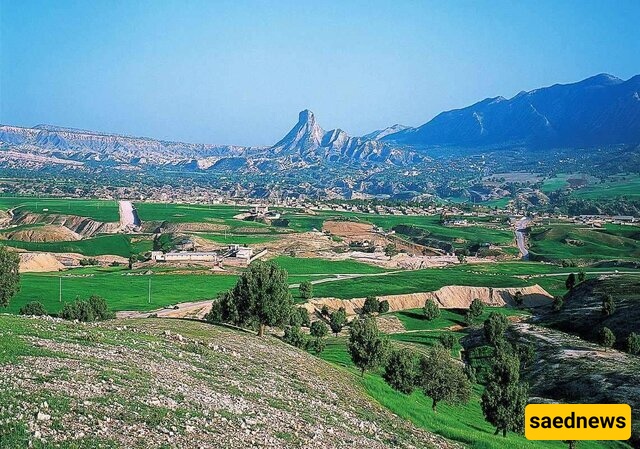
According to Tourism Service of SAEDNEWS, The mountain is surrounded by ancient oak trees, while the neighboring plains turn into vast pastures covered with wildflowers in spring, creating a striking landscape that draws the attention of visitors.
The important tourist attraction was registered on National Heritage List in 2003. The symbol of this mountain has also been used in the logo of the taxi network of Ilam, ISNA reported.
Qalaqiran mountain is located five kilometers west of Ilam city, in Chavar county, and near the Sheshdar Resort. Due to its proximity to the Sheshdar and Manjal resorts, it has a special geographical location. The height of Qalaqiran peak in Ilam is 2,152 meters, where there are remains of a very old castle.
According to the historical documents, the castle, which is considered one of the oldest structures in Iran, dates back to the Parthian period and was probably used for guarding purposes during that period, but it is not only the historical importance of this area that makes it unique. This area also has very unique natural features. The multitude of old trees located on the slopes of this mountain, the surrounding flower-filled plains in the spring, and the pleasant weather of this area in the first half of the year are all things that attract tourists to Qalaqiran in Ilam.
The steep slope of the mountain makes it difficult to reach the peak, but visiting this area in the early seasons of the year and enjoying its natural beauty will be very enjoyable for the tourists. The sedimentary structure of Qalaqiran was created naturally and slowly over the time. The plains, forests, and lush regions of this area were created due to the abundance of water resources such as Sartaaf waterfall.
Qalaqiran of Ilam reaches the Manjal and Sheshdar resorts from the north and a 100-hectare area from the south that has been walled using the stone masonry method. Historical evidence and examination of the materials used show that the walls of the area and the surrounding precincts, which, like Qalaqiran mountain, have also been nationally registered, date back to the Parthian period and were built at the same time as the castle. Farzad Sharifi, head of Ilam Cultural Heritage, Tourism and Handicrafts Department, stated that the local people call the castle ‘qala’ in the local language. There are also remains of a historical castle at the highest point of Qalaqiran mountain, which is why the first part of the name of this mountain is ‘qala’. There are also two versions regarding the second part of its name, ‘Qiran’; Qiran in Dehkhoda dictionary means a small mountain that is separated from the rest of the mountains, and Qiran in the name of this mountain can also have the same meaning. Some also believe that the word Qiran is included in its name because of the natural bitumen river flowing at the bottom of this mountain.
He noted that the mountainous areas of Ilam province and the Qalaqiran mountain area have a very rich and unique flora and fauna due to their location in the foothills of the Zagros mountains.
To date, 32 mammal species and 183 bird species have been identified in these areas, which often live in the no-hunting zone of this area or migrate to this area seasonally.
Sharifi explained: “The vegetation of this area is also very special, and in the spring and summer seasons, the plains of these areas are full of beautiful wild flowers and colorful anemones, which create a wonderful view.”
Also, various plant species such as mountain almond trees, oaks, and some herbal plants are among the prominent species found around Qalaqiran.
He continued that Qalaqiran in Ilam and its surrounding areas are located in the Zagros mountain region, and for this reason it has a cool and mountainous climate.
“The winters of the mountain are very cold, with temperatures as low as minus 15 to 20 degrees Celsius and rainfall reaching more than 600 millimeters per year, but its climate in spring and summer is pleasant. In these seasons, the surrounding plains have a wonderful view of wild flowers.”
Qalaqiran mountain has a very steep slope and there is no suitable route for traveling and climbing to its peak, and there are also no special amenities around it, which is why access to it is mostly possible for professional mountaineers and rock climbers.
Due to the mountainous climate in the region, the best time to travel to Qalaqiran is spring and summer, when the climate of this area is pleasant, moderate and cool, and the wonderful landscape of the surrounding flower-filled plains is also very spectacular and dreamy.
Manjal is one of the cleanest resorts in the region, located a short distance from Sheshdar and Qalaqiran mountain.
The resort hosts tourists every day who come to enjoy the beautiful nature of the region or have a family picnic on a holiday.
Soltanabad is a small village in the Chavar district of Ilam, located between Sheshdar and Manjal. It is interesting to know that only seven families live in the village. There are many natural beauties in the Soltanabad neighborhood, such as roaring springs and clean and lush gardens.
Sheshdar forest area is located five kilometers from Ilam-Kermanshah Road and near Qalaqiran mount. In the past, the area was called Shishdar, and over time its name has changed to Sheshdar. In the local Elamite dialect, Shishdar means forest areas covered with dense trees. Like Qalaqiran, the area dates back thousands of years, and the old, sturdy, and ancient oak trees in this forest also a prove this.