SAEDNEWS: Some simple animals survive without a centralized brain because their bodies use distributed nerve networks to coordinate essential functions.
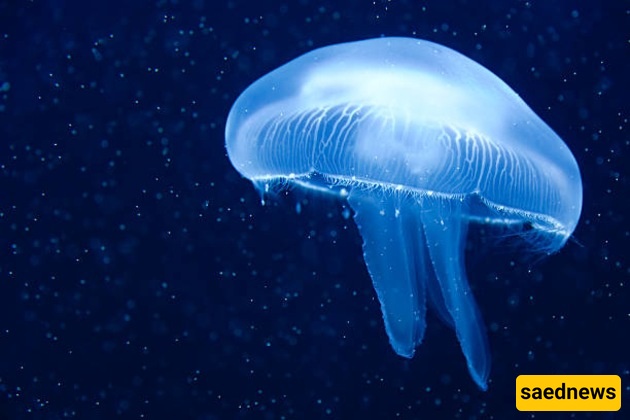
According to SAEDNEWS, jellyfish are among the best-known animals that live without a brain. Unlike mammals and many other animals, jellyfish do not have a centralized brain or spinal cord. Instead, they rely on a diffuse network of nerve cells called a nerve net, which helps coordinate movement and responses to changes in their surroundings.
A jellyfish’s nervous system is much simpler than the brain-based systems found in vertebrates. Its nerve cells are distributed throughout the body rather than concentrated in one central organ. This arrangement allows the animal to respond to basic environmental signals without requiring a brain to process every action.
Jellyfish can detect factors such as:
Light and changes in illumination
Physical contact and water movement
Gravity and body orientation
Chemical signals in the surrounding water
These sensory inputs help coordinate behaviors such as swimming, feeding and responding to potential threats.
Although jellyfish have no brain, some species possess specialized sensory structures called rhopalia. These structures contain sensory cells that help control swimming and maintain orientation. In some jellyfish, they include structures that detect light and gravity.
Their bell also contracts rhythmically, pushing water through the body and allowing the animal to move. Much of this activity can be coordinated through local neural circuits rather than commands from a central brain.
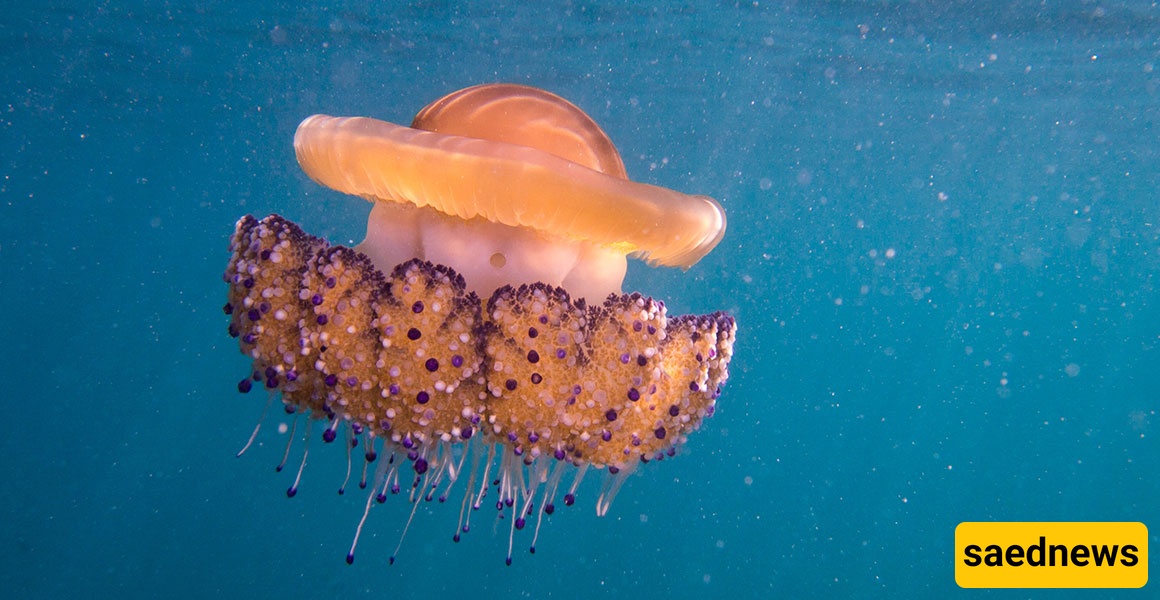
Not at all. The absence of a brain does not mean that jellyfish lack neurons. Their nerve networks perform many basic coordination functions, but they do so in a decentralized way.
This makes jellyfish a striking example of how animal nervous systems can evolve in very different forms. A centralized brain is highly useful for complex behavior, but it is not required for every form of movement, sensing or survival.
Jellyfish therefore do not survive after losing a brain. Rather, they are naturally adapted to life without ever having a centralized brain, relying instead on a simpler distributed nervous system.