SAEDNEWS: Asphalt becomes very hot in warm weather because its dark surface absorbs a large amount of sunlight and converts much of that energy into heat. Its dense structure also stores heat, causing the road surface to remain hot even after the strongest sunlight has passed.

According to SAEDNEWS, asphalt has a naturally dark color, which allows it to absorb much of the sunlight that reaches its surface. Instead of reflecting a large portion of solar energy, the asphalt converts much of it into heat. As sunlight continues throughout the day, the temperature of the surface can rise significantly.
Asphalt gradually accumulates heat when exposed to strong sunlight. Continuous solar radiation means that the surface can receive more energy than it loses during the hottest hours. Consequently, the road becomes increasingly warm from morning through the afternoon.
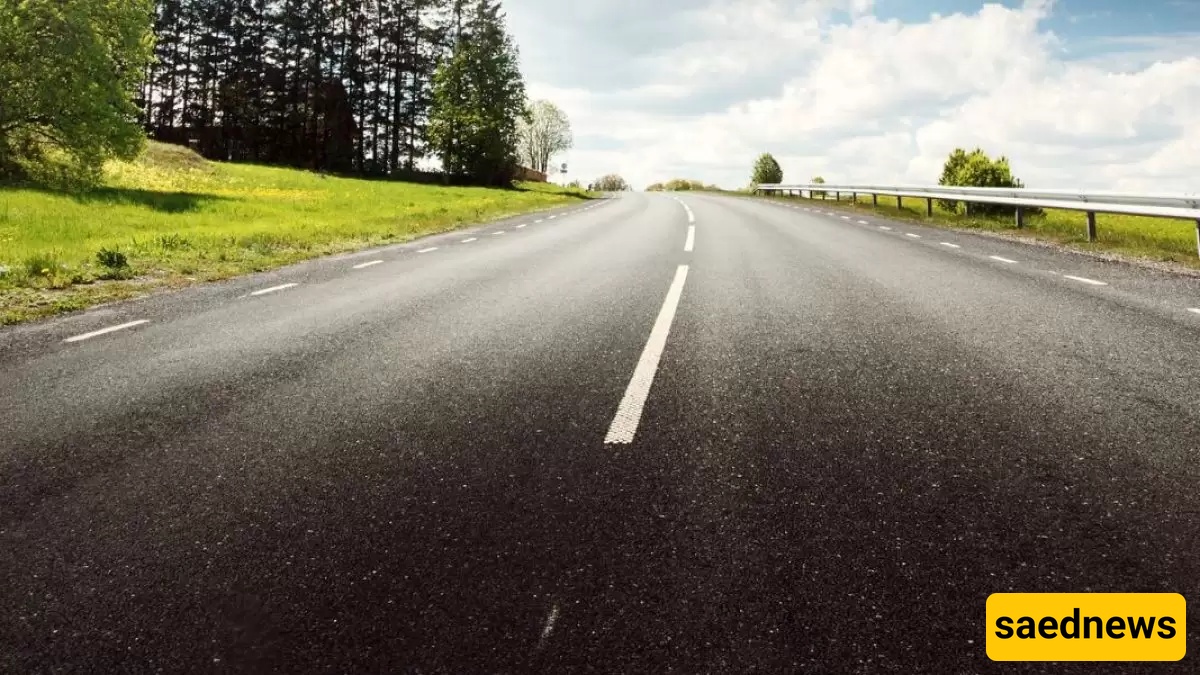
The physical properties of asphalt allow it to retain heat for some time. Even when sunlight becomes weaker, the stored thermal energy continues to warm the surface. This is why roads may still feel extremely hot in the early evening.
Unlike soil or vegetation, asphalt does not contain much moisture that can evaporate and provide cooling. Water evaporation can remove heat from many natural surfaces, but dry asphalt has little ability to use this process. As a result, more of the absorbed solar energy remains as heat.
Air temperature, wind, humidity, shade, and sunlight intensity can all affect asphalt temperature. Areas exposed directly to sunlight generally become much hotter than shaded sections. Dark, open road surfaces can therefore reach temperatures considerably higher than the surrounding air.