SAEDNEWS: The right paper is the foundation for creating a lasting work of art. In this guide, learn how to choose the best paper for your painting based on the type of paint and technique you use.
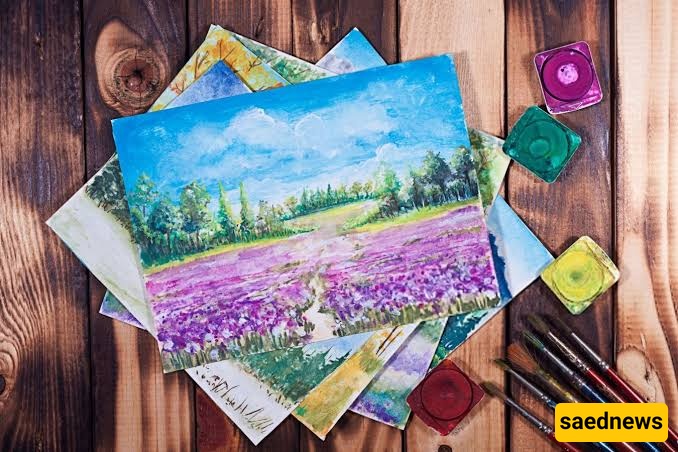
According to Saednews, Choosing the right paper for painting is one of the most important decisions every artist, from beginner to professional, needs to make. Many people assume that the quality of an artwork depends mainly on artistic skill and the type of paint used. However, the paper serves as the foundation of the artwork and plays a crucial role in how the final piece looks and performs.
The wrong paper can make paint appear dull, cause it to spread uncontrollably or become overly absorbed, and even affect the appearance of pigments. High-quality paper, on the other hand, can enhance different painting techniques and help preserve the artwork for years.
In this comprehensive guide, we will explore the most suitable types of paper for different painting techniques and explain the key factors to consider when choosing paper based on the medium you use.
Painting paper is much more than a simple surface. It provides the foundation for the physical and chemical interaction between the paper and the medium. The structure of its fibers, water absorption, surface texture, and acidity all influence the appearance and durability of the finished artwork.
If you choose low-quality paper, even high-quality watercolor or acrylic paints may not perform as expected.
This is why professional artists carefully select their paper before beginning a project. Different techniques require different paper characteristics. For example, watercolor paper needs to withstand repeated applications of water and pigment, while pencil drawing paper should provide a relatively smooth and durable surface that can tolerate erasing.
Understanding the different types of paper and matching them to the appropriate artistic medium is therefore an essential step toward improving your painting skills.
Key Characteristics of Art Paper
Before choosing paper, it is important to understand its main characteristics. The most important factors include weight, texture, acidity, and fiber composition.
Paper weight is measured in grams per square meter (gsm). Lightweight papers below 150 gsm are generally suitable for pencil sketches, ink, and other dry techniques. However, wet media such as watercolor and gouache usually require heavier paper, often around 300 gsm or more, to reduce buckling and warping.
Papers between 200 and 300 gsm can be suitable for a wide range of painting techniques, depending on how much water or paint is being used.
Paper surfaces are generally classified as Hot Press, Cold Press, or Rough.
Hot Press paper has a smooth surface and is excellent for fine details, precise drawing, and colored-pencil work. Cold Press paper has a moderate texture and is one of the most versatile options, particularly for watercolor and certain acrylic techniques. Rough paper has a more pronounced texture and is useful for expressive techniques and paintings that benefit from visible surface variation.
Acidic paper can become yellow and brittle over time. For artwork that is intended to last for many years, choose acid-free, archival-quality paper with a neutral or stable pH.
These papers are often made from cotton, linen, or other high-quality fibers and provide considerably better long-term stability.
Art papers are commonly made from wood pulp, cotton fibers, or a combination of materials.
Cotton paper is highly regarded because of its strength, durability, and ability to handle water and pigment effectively. Papers containing a high percentage of cotton are particularly well suited to professional watercolor and gouache work.
The Best Paper for Watercolor Painting
Watercolor is one of the techniques most affected by paper quality. If you have ever painted with watercolor on ordinary paper, you may have noticed uncontrolled spreading, uneven drying, or damage to the paper surface.
For successful watercolor painting, the paper needs to absorb water in a controlled way while allowing pigments to remain stable after drying.
Watercolor paper should generally be at least around 250 gsm, while 300 gsm is a particularly versatile choice. Cold Press paper is suitable for both beginners and experienced artists because it offers a good balance between water absorption, texture, and control.
If you want extremely fine details and a smoother appearance, Hot Press paper can be a better option. It works particularly well for detailed illustrations, precise lines, and layered techniques.
Important tip: Watercolor papers containing a significant percentage of cotton are particularly useful for techniques that involve repeated wet applications, such as wet-on-wet painting. High-quality cotton paper also tends to withstand corrections and repeated washes better than ordinary paper.
Choosing Paper for Gouache
Gouache has many similarities to watercolor, but its high opacity creates slightly different requirements. Because gouache is thick and matte, paper that absorbs too much moisture can make the paint look overly dry or chalky.
For gouache, medium-textured or smooth watercolor paper is generally a good choice. If you work with diluted gouache, 300 gsm watercolor paper can provide an excellent surface.
For thicker applications and multiple layers, heavier mixed-media or acrylic-compatible paper can also work well. These surfaces are generally more resistant and provide enough texture for gouache to adhere without excessive cracking.
A Guide to Choosing Paper for Acrylic Paint
Although acrylic paint is water-based, it can still place considerable demands on paper. Acrylic dries quickly and can be applied in repeated or relatively thick layers, so the paper needs to be strong, stable, and resistant to moisture.
Heavy watercolor paper can be used for acrylic painting, but specialized acrylic or mixed-media paper in the range of approximately 300–400 gsm can provide better support for heavier applications.
A textured surface can also help artists create more noticeable brushwork and expressive effects.
If you intend to use acrylic paint in a way that resembles oil painting, choose a heavier paper and consider mounting the finished sheet onto a rigid support, such as board, to improve stability and make framing easier.
Choosing Paper for Oil Painting
Many beginners immediately associate oil painting with canvas, but paper can also serve as a useful surface, especially for studies, sketches, and smaller works.
Because oil paint contains oil, ordinary paper can absorb the oil from the paint, potentially causing discoloration and weakening the paper fibers over time.
For oil painting, use paper specifically designed for oils or a heavy, suitable paper that has been properly prepared with an appropriate ground or primer.
A properly prepared surface prevents the oil from penetrating deeply into the paper fibers and allows the paint to remain workable on the surface.
If you want to use watercolor paper for oil painting, it should first be properly sealed and primed with a suitable acrylic ground or gesso. This creates a barrier between the paper and the oil-containing paint.
Choosing Paper for Pencil, Charcoal, and Pastel
Not all artists work with liquid paints. Dry media such as graphite, charcoal, and pastel also require paper with specific characteristics.
Graphite pencils work best on paper that provides a relatively smooth surface with enough tooth to create precise lines and controlled shading.
Sketching and drawing papers are commonly available in weights of around 100–150 gsm and typically have a fine texture.
Smooth and lightly textured papers are generally the most versatile. As the texture becomes more pronounced, pencil shading becomes more grainy and visibly textured.
For technical drawings and highly detailed work, Hot Press paper is often a strong choice.
Charcoal is a dry medium made from carbon-rich material and requires a surface with enough tooth to hold its particles.
For charcoal drawing, a medium-textured paper weighing approximately 160–200 gsm can work well.
Very smooth paper may cause charcoal to slide across the surface, making it difficult to control. On the other hand, extremely rough paper can make shading appear overly broken or uneven.
A medium-textured surface provides a good balance between holding charcoal particles and allowing artists to blend and smudge them.
Both soft pastels and oil pastels require suitable surfaces.
Soft pastel is highly powdery, so it needs a paper with enough tooth to hold pigment securely. Pastel paper often has a textured or slightly velvety surface that allows pigment to adhere while still giving artists the freedom to blend colors.
Pastel papers are often available in a range of colors, which can add depth and influence the overall appearance of the artwork.
For oil pastels, watercolor paper or medium-textured drawing board can also be used, provided the surface is not glossy.
Quick Guide to Choosing Paper by Technique
Painting or Drawing Technique | Recommended Paper | Suggested Weight | Surface Texture | Key Feature |
|---|---|---|---|---|
Watercolor | Cotton watercolor paper | 300 gsm or higher | Cold Press or Rough | Handles repeated water applications |
Gouache | Watercolor or mixed-media paper | 250–300 gsm | Cold Press or Hot Press | Provides good paint control without excessive absorption |
Acrylic | Acrylic or heavy mixed-media paper | 300–400 gsm | Medium to Rough | Resistant to moisture and warping |
Oil paint | Properly prepared oil-painting paper | Around 300 gsm or higher | Smooth or lightly textured | Requires a suitable sealed/primed surface |
Graphite pencil | Professional drawing paper | 100–150 gsm | Hot Press or Smooth | Precise lines and controlled erasing |
Charcoal | Medium-textured drawing paper | 160–200 gsm | Medium texture | Holds charcoal particles effectively |
Soft pastel | Pastel paper or heavily textured surface | 200 gsm or higher | Very Rough/Textured | Provides strong pigment adhesion |
Tips for Preserving Your Artwork
Once you have selected the right paper, proper care is equally important. Paper is sensitive to humidity and temperature fluctuations, which can lead to mold, discoloration, warping, or deterioration.
After completing charcoal, pastel, or certain pencil drawings, an appropriate fixative can help keep loose pigment particles in place. This reduces smudging and protects the surface from accidental contact.
For watercolor and gouache, especially when using lighter-weight paper, securing the sheet to a rigid board can help reduce buckling.
For lightweight paper below 200 gsm, stretching or firmly securing the paper before painting can be particularly helpful. Even heavier 300 gsm watercolor paper may benefit from being secured when a painting involves substantial amounts of water.
Proper Framing and Storage
After completing an artwork, choosing an appropriate frame and storage environment is just as important as selecting the paper.
To reduce the risk of discoloration and deterioration, use acid-free mat board and backing materials. Direct contact between artwork and acidic cardboard can eventually contribute to staining and discoloration.
For charcoal, pastel, watercolor, and other works on paper, protective glazing can help reduce damage from ultraviolet light and environmental exposure.
When framing pastel or charcoal artwork, it is particularly important to keep the artwork from touching the glass. Loose pigment can otherwise adhere to the glazing and damage the surface.
Store paper artworks in a cool, dry environment away from excessive humidity, direct sunlight, and major temperature fluctuations.
High humidity can encourage mold growth and cause paper to soften, warp, or sag.
Final Thoughts
There is no single paper that can be considered the absolute best for every type of artwork. The right choice depends on your medium, technique, artistic style, and budget.
For watercolor, high-quality cotton paper with an appropriate weight is an excellent choice. For graphite and charcoal, choose a surface with the right balance of smoothness and texture. For oil and acrylic painting, heavier paper with appropriate preparation or a specialized surface will generally provide better results.
Good-quality paper does more than make the painting process easier. It can improve the appearance of your artwork, enhance the performance of your chosen medium, and help preserve the finished piece for many years.
The next time you choose art paper, look beyond the price and consider its weight, texture, fiber composition, acidity, and compatibility with your medium. The sheet beneath your artwork is not merely a surface—it is the foundation on which your creative work is built.