SAEDNEWS: Major watchmakers are once again introducing models with smaller case sizes. This trend is not limited to women’s watches; it is also becoming increasingly popular in certain men’s models. In this article, we explore why smaller cases are making a comeback and share key tips for choosing the right watch case size.
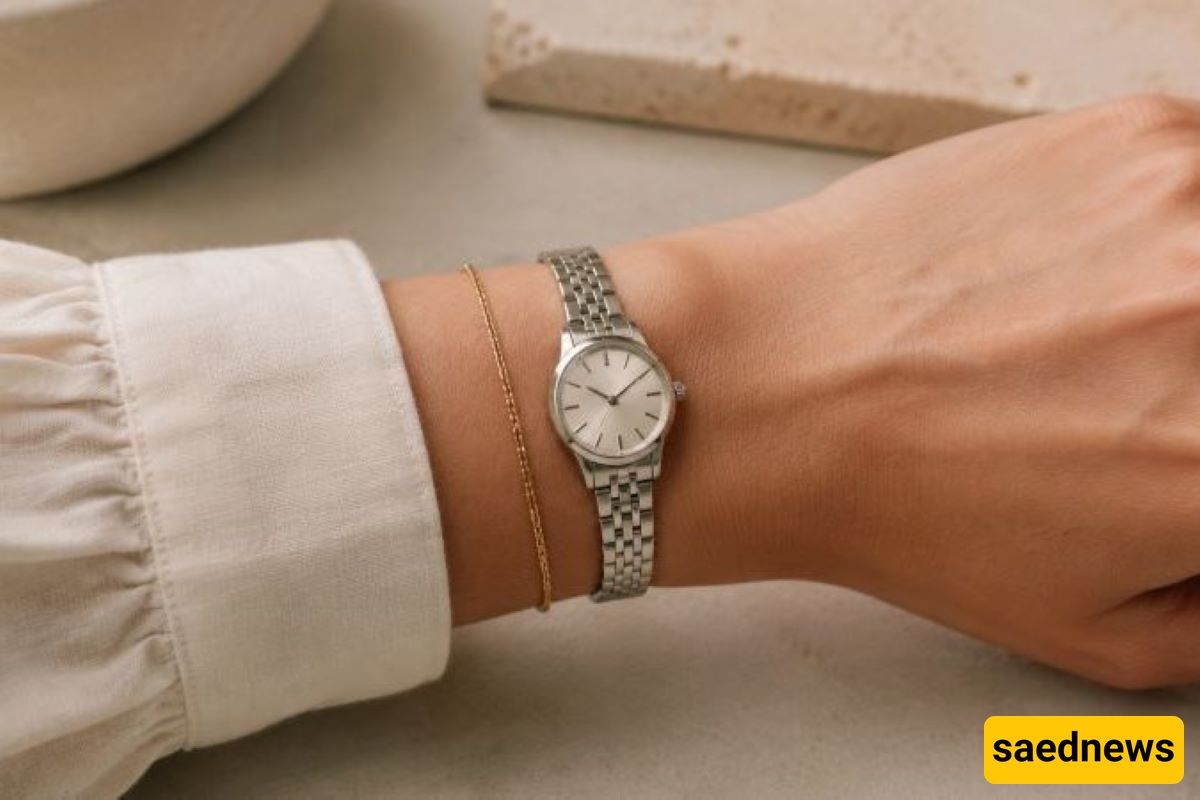
According to Saednews, Small watch cases have made their way back into the collections of major watch brands. Omega has introduced the Aqua Terra with a 30 mm case, while Rolex has unveiled a 28 mm version of the Oyster Perpetual. This shift is not limited to delicate, jewelry-inspired watches; some sporty and mechanical watches are also now arriving in more compact sizes.
The trend was also visible at Watches and Wonders Geneva 2026, where Rolex, Gucci, Chanel, and Hermès introduced new models with smaller cases. British Vogue even identified mini watches as one of the most important trends at the show.
So, why are major brands returning to dimensions that were more commonly seen in vintage watches? The answer is not simply a change in fashion.
Signs of the comeback had been visible for several years. Smaller watches initially appeared in jewelry-inspired collections and on the wrists of celebrities before gradually making their way into the collections of major watchmakers.
In 2025, Omega introduced its first 30 mm Aqua Terra. A year later, Rolex presented new Oyster Perpetual versions in 28 mm and 34 mm sizes. At the same Geneva exhibition, Gucci showcased the 22 mm Bamboo, Hermès presented the 27 mm Cape Cod, and Chanel displayed the Première Ribbon with a case measuring less than 20 mm.
The difference is not merely theoretical. When comparing men's wristwatches, a 38 or 39 mm case will generally look more compact on the wrist than a 42 mm model. However, the shape of the case and the design of the strap or bracelet also affect the watch's final appearance.
The involvement of several different brands suggests that this is no longer limited to a single model, although it is still too early to say that the entire watch market has changed its preferences.
A smaller watch sits more compactly on the wrist and can pair more easily with bracelets. Bracelet-style straps, gemstone hour markers, gold cases, and rectangular designs have also made some of the latest models resemble jewelry.
The Rolex Oyster Perpetual 28 is offered with an 18-karat gold case and bracelet, while its 3, 6, and 9 o'clock markers are made from natural stone. Chanel's Première Ribbon, with a case smaller than 20 mm, looks more like a jewelry piece than a conventional watch. These examples show that a smaller size does not necessarily mean a simpler design.
Part of the trend is also connected to brands revisiting historical designs. Gucci has reworked familiar elements in the Bamboo, while Hermès has brought the recognizable Cape Cod form into modern production.
For mechanical watches, making a case smaller is not simply a matter of changing its appearance. The movement and its components must fit into a more restricted space.
Omega has stated that its Calibre 8750 and 8751 movements were specifically designed for the 30 mm Aqua Terra. This means the watch is not simply a smaller version of a larger model; its movement has also been engineered to suit the dimensions of the case.
Many of the latest mini models are part of women's collections, but the move toward more balanced proportions is not limited to this segment.
In February 2026, Citizen introduced several mechanical models from its Series 8 collection with 39.3 mm cases and pointed to the global popularity of watches measuring under 40 mm.
It is also important to distinguish between a mini watch and a compact watch. Cases measuring 22 or 28 mm are genuinely very small, while 38 or 39 mm cases are considered compact mainly when compared with larger modern watches.
The return of smaller models does not mean that large watches are disappearing. Dive watches, chronographs, digital watches, and some sports models may require larger displays for readability or additional information. Some people simply prefer the presence of a larger case.
There are also no widely available, independent statistics in Iran showing the sales share of smaller watches. Therefore, it would be misleading to assume from global market trends that Iranian buyers are broadly moving away from larger cases.
What is clear for now is that the range of available sizes is expanding, giving buyers more options.
Case diameter is one of the most important measurements in a watch's specifications, but it does not, by itself, tell you how the watch will sit on the wrist.
The case shape, lug-to-lug distance, case thickness, and strap width can all make a significant difference. For example, round and rectangular watches with similar widths can appear very different when worn.
A watch with a small case can even look larger than its listed diameter if it has long lugs or a thick case. For this reason, numerical comparisons are best combined with seeing the watch on the wrist.
Before choosing a watch, consider the following:
Make sure the case and lugs do not extend too far beyond either side of your wrist.
Check whether the case thickness suits your intended use and clothing.
Make sure the hands and hour markers remain easy to read on a smaller dial.
Consider whether the weight and strap material are comfortable for everyday wear.
If possible, try the watch on your wrist before buying it.
Terms such as “mini” or “slim” are not precise measurements, so always check the actual dimensions of each model.
Small watch cases are not a new phenomenon in watchmaking. This time, however, brands are bringing back familiar proportions while combining them with contemporary colors, materials, and manufacturing techniques.
Not every watch is going to become smaller, but the models released in 2025 and 2026 show that a watch does not always need a large case to make an impression.
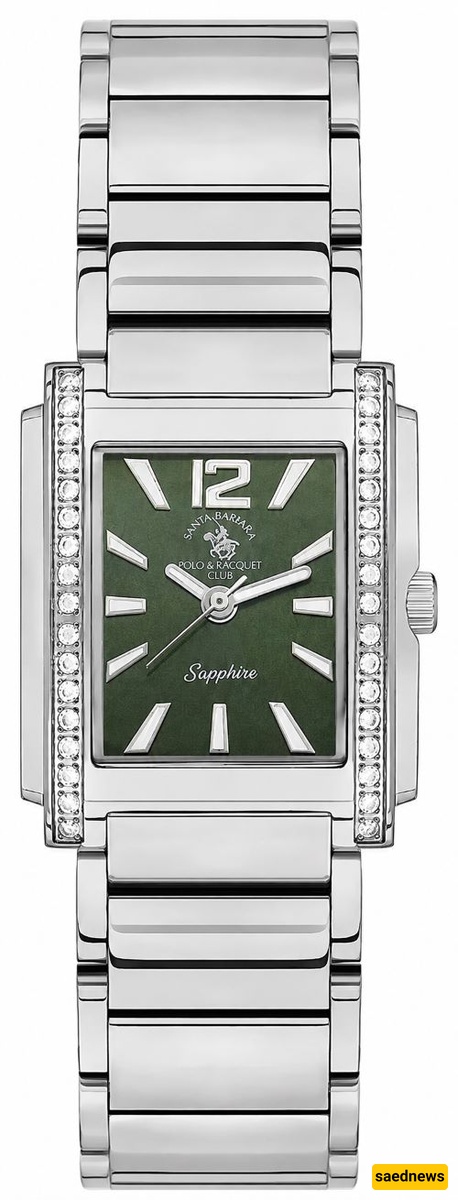
A real-world example can be seen in the Santa Barbara watch with its 30.8 mm case, which offers a useful reference for understanding how this size looks and feels in everyday wear.