SAEDNEWS: This section explores the definition of stress, its common symptoms, and the impact of stress in schools, while also presenting effective strategies to help students cope with this significant challenge.

According to Saednews, Dr. Hans Selye, one of the pioneers in stress research, defined stress as the body’s non-specific response to any demand placed upon it.
This response can appear in many different forms, including muscle tension, sudden anxiety, increased heart rate, high blood pressure, shallow breathing, dizziness, or even a feeling of increased energy and alertness.
From a positive perspective, stress can act as a driving force that encourages people to take action. According to Selye’s definition, stress can occur in response to both positive and negative events.

Achieving the educational goals of schools requires attention to students’ mental health and psychological well-being.
Numerous studies have shown that students’ mental health is closely connected to their academic performance. Students experiencing psychological difficulties or poor mental well-being are often more likely to experience academic setbacks.
For this reason, it is important to identify and address the factors that interfere with students’ educational development, emotional well-being, and overall health.
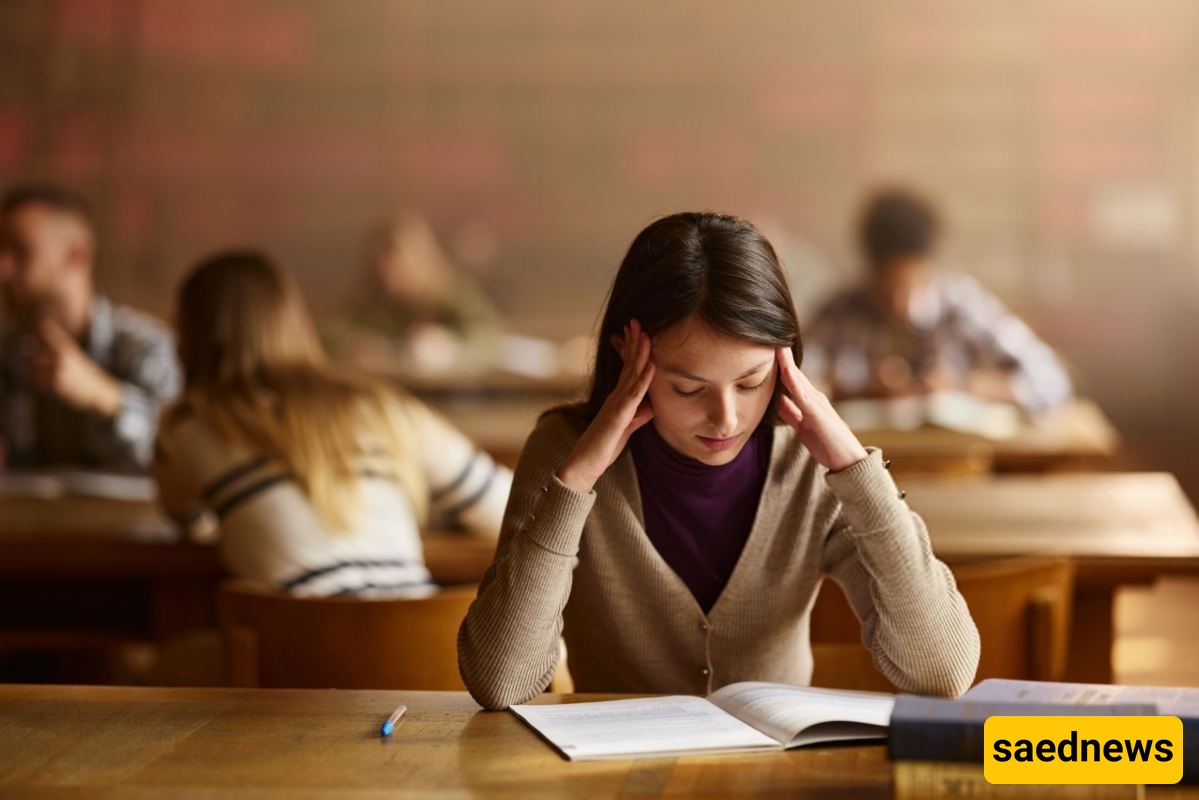
Examinations are among the most significant sources of stress in schools and universities. They can produce various psychological and physiological effects, although the impact of examination stress on younger students has not always received sufficient attention.

The physical environment of a school can also influence students’ mental well-being. Factors such as classroom conditions, lighting, colors, cleanliness, heating and cooling systems, and building safety can all play a role.
Since students spend a significant portion of their day at school, providing a comfortable, safe, and healthy physical environment is essential for reducing unnecessary stress.
Excessive pressure from families to achieve higher grades can disturb a student’s emotional balance.
Educational experts have pointed out that students may struggle when an education system focuses heavily on memorization while examinations continue to emphasize remembering information rather than understanding it.
Family expectations can also become a major source of anxiety. When parents insist on grades that exceed a child’s actual abilities, students may experience increased pressure and emotional distress.
Parents should therefore have realistic expectations and take the time to understand their children’s individual abilities. Otherwise, excessive academic pressure can create unnecessary conflict and anxiety.
Pay close attention to your child’s behavior and reactions to school. Try to identify what situations may be causing stress and how that stress affects them.
Stress may appear as headaches, stomachaches, reluctance to talk, changes in behavior, or unwillingness to attend school.
If your child seems anxious or stressed, sit with them and have a calm conversation. Encourage them to explain what is bothering them.
The problem might involve a particular class, an upcoming examination, difficulties with schoolwork, or concerns about grades and academic performance.
Once the underlying cause is identified, it becomes much easier to find an appropriate solution.
A structured daily routine can help students organize their homework and stay focused. However, an overly demanding schedule can itself become a source of anxiety.
Alongside school, homework, and extracurricular activities, make sure your child has enough free time to enjoy activities they personally like.
Regular leisure time can help reduce stress, promote relaxation, and improve a child’s overall mood.
If your child has many responsibilities outside school, help them organize their tasks according to importance.
Encourage them to complete the most important tasks first. If extracurricular activities are taking up too much time, create a realistic and organized schedule that allows them to manage everything without becoming overwhelmed.

Children need sufficient time to rest and take a break from academic responsibilities. Too much work without adequate recovery can lead to exhaustion and eventually reduce their motivation toward school.
Consider enrolling your child in activities they genuinely enjoy, such as sports, music, art, or other hobbies.
Enjoyable activities can reduce stress while increasing motivation and emotional well-being.
Set aside regular time for your child to interact with family members and friends.
Something as simple as having dinner together each evening can provide an opportunity to talk about school, listen to your child’s concerns, and strengthen family relationships.
Adequate sleep is essential for managing stress and maintaining concentration.
Lack of sleep can contribute to increased stress among students, while following a consistent sleep routine can make it easier for children to cope with daily challenges.
School-age children generally need around 8–10 hours of sleep per night, depending on their age and individual needs.
Negative thinking can significantly increase a child’s stress level and create a cycle of anxiety that becomes difficult to break.
Instead of focusing on how stressful a project or assignment seems, help your child think about practical ways to manage it.
For example, a large assignment can be divided into smaller tasks, with a simple plan created for completing each step. This can make the workload feel more manageable and reduce feelings of overwhelm.
Managing student stress is not about eliminating every source of pressure. A certain amount of stress can motivate students and help them respond to challenges. The goal is to prevent stress from becoming excessive and interfering with learning, health, and everyday life.

Parents and educators can support students by creating realistic expectations, encouraging healthy routines, providing emotional support, allowing sufficient free time, and helping children develop practical problem-solving skills.
With the right balance of academic responsibility, rest, social connection, and encouragement, students can learn to manage stress more effectively and approach school with greater confidence and motivation.