SAEDNEWS: The urge to check your phone can become a surprisingly automatic habit, driven by quick information rewards, boredom, anticipation and repeated environmental cues. Research suggests that the problem is not simply a lack of willpower: repeated checking can train a behavioral loop that becomes easier to trigger over time.
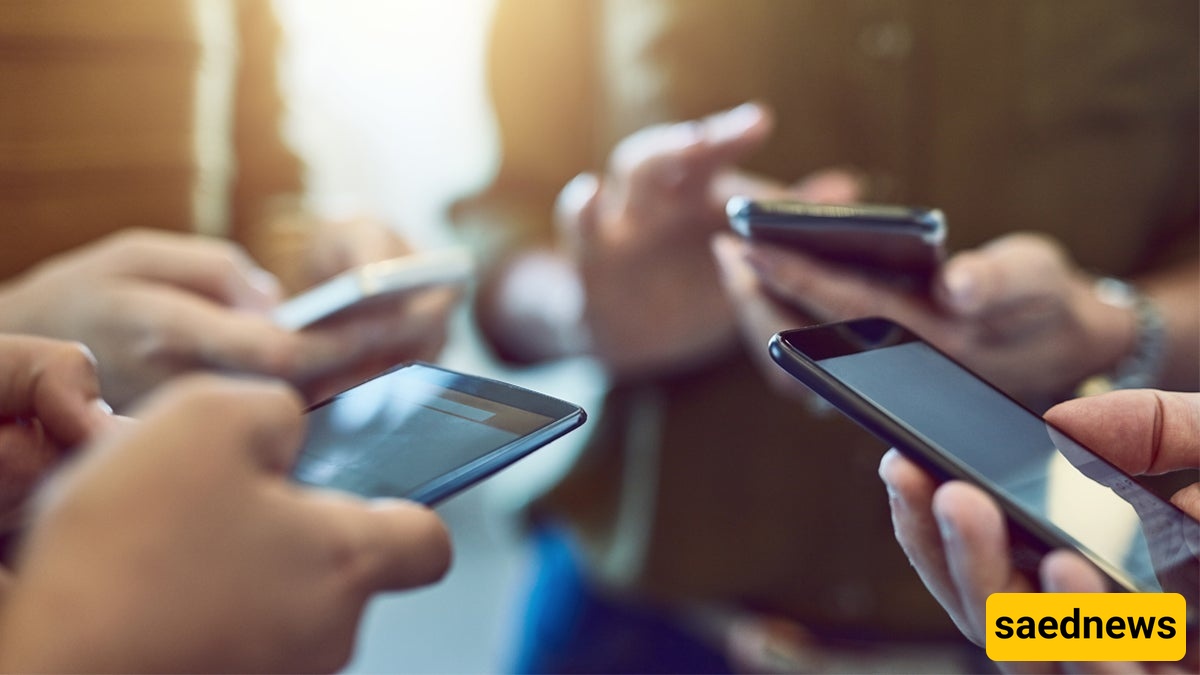
According to SaedNews, there is a reason you can pick up your phone, see absolutely nothing interesting, put it down—and then reach for it again a few minutes later.
The behavior may feel like a conscious decision, but repeated smartphone checking can become something much closer to a habit loop: a cue appears, the brain anticipates that something might be waiting, you check the phone, and occasionally you find a message, update, piece of news or other rewarding information.
That occasional payoff is important. It teaches the brain that checking is worth repeating.
Research on smartphone behavior has identified this pattern as a "checking habit": brief, repetitive inspections of dynamic information that is immediately accessible. A 2012 peer-reviewed study found that these checking behaviors can emerge and become reinforced by quickly available informational rewards.
The most interesting part of phone checking is that you do not need to receive something rewarding every time.
In fact, the uncertainty can be part of what keeps the behavior going.
Imagine opening your messaging app ten times. Eight times, there is nothing particularly important. Once, a close friend has sent an exciting message. Another time, you receive good news, an interesting notification or an unexpected response.
The next time you feel bored, the outcome is uncertain.
Maybe there is something new.
Maybe there isn't.
That "maybe" gives the behavior a reason to repeat.
Psychologists have long studied how behaviors can become persistent when rewards are delivered intermittently rather than every time. In smartphone use, the reward does not have to be dramatic. A new message, a social-media interaction or even an interesting headline can be enough to reinforce the checking routine.
The important point is that the phone does not have to reward you every time for your brain to learn that checking can pay off.
Habits are strongly connected to cues in the environment.
A phone lying beside your laptop can become a reminder. So can hearing a notification, feeling the vibration, seeing the lock screen light up—or simply experiencing a familiar moment of boredom.
Researchers studying smartphone habits have described checking as a repetitive behavior that can be triggered by the accessibility of dynamic information. Their experiments found that informational rewards that were quickly available could reinforce checking behavior.
This helps explain why people sometimes check their phones without having a clear purpose.
You may not be thinking, "I am now going to check my messages."
Instead, the sequence may be almost automatic:
Boredom → reach for phone → unlock → scan → put it down.
Once that sequence has been repeated enough times, the first step can trigger the next one with very little conscious deliberation.
There is another reason the habit can be so persistent: the phone is an extraordinarily convenient way to change how you feel.
Waiting for an appointment?
Check your phone.
Standing in line?
Check your phone.
Feeling awkward in a social situation?
Check your phone.
Avoiding a difficult task?
Check your phone.
A University of Washington research team that interviewed smartphone users across different age groups identified several common triggers for compulsive checking, including unoccupied moments, tedious tasks, socially awkward situations and anticipation of an incoming message or notification.
That means the trigger is not always a notification.
Sometimes the trigger is simply an uncomfortable gap in attention.
Your phone provides an immediate way to fill that gap.
The phrase "I'll just check once" sounds reasonable because the individual action is tiny.
Opening an app might take only a few seconds.
But the psychological cost is not necessarily limited to those few seconds.
The check can reveal a message. The message can lead to a conversation. The conversation can lead to another app. A notification can lead to a social-media feed. A feed can lead to a video.
The original intention—checking one thing—can disappear almost immediately.
This is one reason the difference between checking and using a phone matters.
You may have picked up the phone intending to spend five seconds checking the time. The habit has already opened the door to everything else the device can offer.
The 2012 research by Antti Oulasvirta and colleagues is especially useful because it distinguishes smartphone checking from simply spending a lot of time on a device.
Checking involves short, repetitive inspections of information that changes frequently. The researchers found evidence that these behaviors could become habitual and sometimes lead to additional phone activity. Importantly, participants often experienced repetitive checking as annoying rather than necessarily describing it as an addiction.
That distinction matters.
Not everyone who checks their phone frequently has a clinical addiction or a disorder. Calling every repetitive phone habit an "addiction" can make the science less precise.
A habit can be automatic and difficult to resist without meeting the criteria for an addiction.
It is tempting to blame notifications for everything.
They certainly can act as powerful external cues. But research suggests that the relationship between smartphones and attention is more complicated.
A 2017 study published in the Journal of the Association for Consumer Research found that the mere presence of a person's own smartphone could reduce available cognitive capacity, even when participants were not actively using the device. The researchers found the strongest effects when phones were more salient, such as being visible and nearby, and the effect was greater among people who reported greater dependence on their phones.
In other words, you do not necessarily have to hear a ping to be psychologically aware of the device.
The phone itself can be a highly relevant object.
That does not mean that having a phone nearby automatically makes everyone less intelligent or unable to concentrate. The study measured specific cognitive tasks under experimental conditions, and later research continues to investigate how large and general these effects are.
But it does suggest something useful: the urge to check can begin before the screen lights up.
This may be the most frustrating part.
You check.
There is nothing new.
You close the phone.
Then, somehow, you check again.
If the goal were simply to obtain information, the empty screen should end the behavior.
But habitual behavior does not always depend on the immediate reward. Once a cue-response pattern has been learned, the behavior can continue even when the reward is absent.
The brain is effectively asking a small question:
"Could something be there now?"
Checking provides the answer.
And because the cost of checking is tiny, repeating the question is easy.
Boredom is often underestimated as a driver of phone use.
When nothing demanding is happening, the phone offers an almost frictionless source of stimulation. You do not have to prepare anything, find a book or start a conversation. The entertainment, information and social connection are already in your hand.
This can gradually change what an ordinary pause feels like.
A two-minute wait that once felt normal may begin to feel strangely empty.
The phone then becomes the default response to that emptiness.
Research into smartphone habits has found that checking can be prompted by unoccupied moments as well as tedious activities and anticipated messages.
So sometimes the question is not "Why do I want to know what's on my phone?"
It is:
"What am I trying not to feel for the next 30 seconds?"
Smartphones are useful precisely because they do so many things.
They help people communicate, navigate, work, learn, shop, manage finances and stay connected.
That makes the idea that "phones are bad" far too simplistic.
The more useful distinction is between intentional use and automatic checking.
If you deliberately open your phone to answer an important message, that is different from unlocking it without knowing why.
If you check a map because you are lost, that is different from opening a social feed because you have become uncomfortable with a quiet moment.
The issue is not whether you ever check your phone.
It is whether the cue is deciding for you.
You do not need to make a dramatic digital detox to learn something about your own behavior.
For one day, notice what happens immediately before you reach for your phone.
Was there a notification?
Were you bored?
Did you finish a task?
Did something feel uncomfortable?
Did you see someone else holding a phone?
Did you simply notice the device sitting nearby?
The goal is not to judge yourself. It is to identify the cue.
Once you recognize the cue, you have a chance to interrupt the sequence before the automatic check begins.
One recent review of repetitive behavior and "micro-habits" similarly highlights the value of identifying the small actions surrounding larger routines. For smartphone use, those micro-actions can include reaching for the device, unlocking it and opening notifications.
If your phone is constantly within reach, resisting it repeatedly requires effort.
That is why changing the environment can sometimes be more practical than simply telling yourself not to check.
Put the phone farther away during focused work.
Turn off unnecessary notifications.
Keep the screen out of sight during conversations.
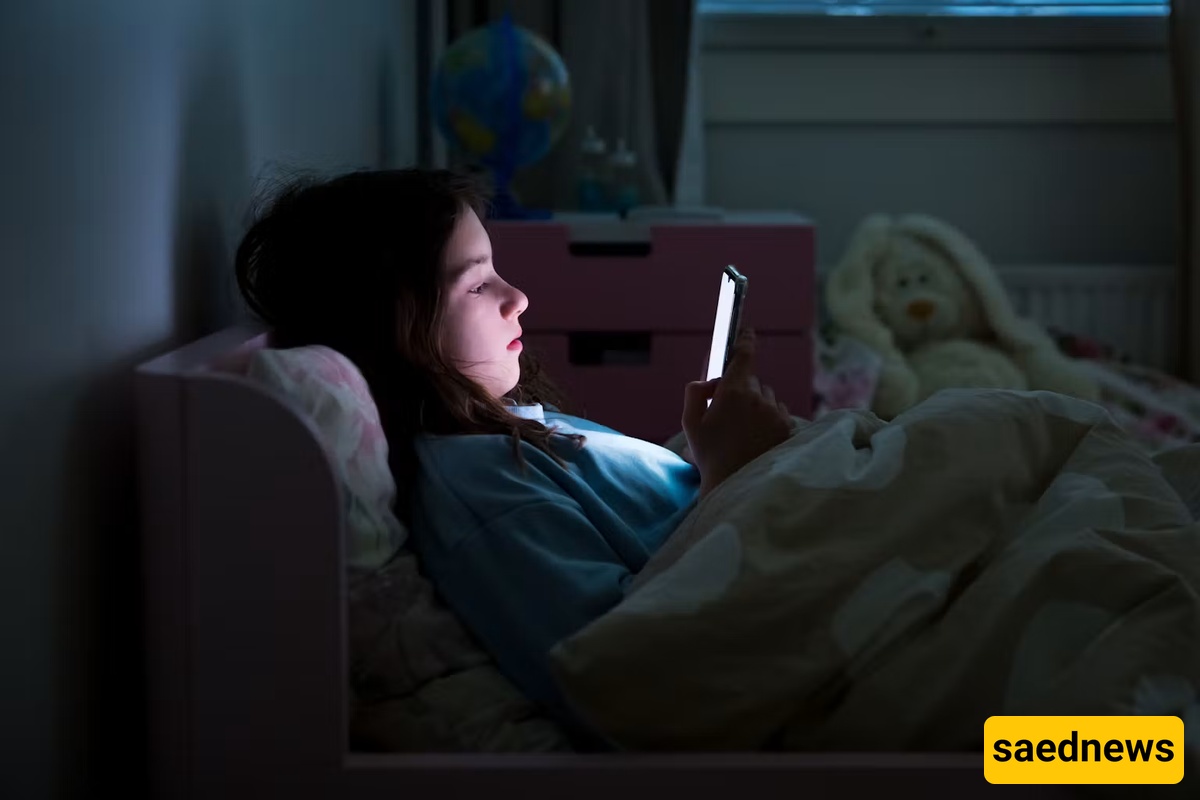
Avoid placing the phone beside your bed if you routinely reach for it at night.
These changes do not require rejecting technology. They simply make the habitual response slightly less automatic.
The 2017 cognitive-capacity study found that participants generally performed better on relevant measures when their phones were less salient, with the best performance observed when the phone was in another room rather than on the desk.
A smartphone is not a slot machine, and checking it is not automatically a sign of addiction.
The more accurate picture is more ordinary—and perhaps more interesting.
Your brain is good at learning behaviors that provide quick access to information, stimulation or social connection. When a behavior is repeatedly paired with an occasional reward, it can become increasingly automatic.
That is why "I'll check it just once" can be surprisingly difficult to keep as a promise.
You are not necessarily fighting a mysterious weakness in willpower.
You may simply be interrupting a habit that has been practiced hundreds or thousands of times.
And sometimes the easiest way to break that loop is not to argue with the urge.
It is to make the next check just a little harder to reach.