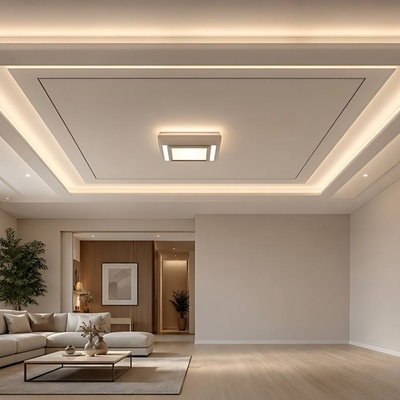
SAEDNEWS: Living Room Ceiling Designs: Ideas to Create a Brighter, More Spacious and Elegant Home
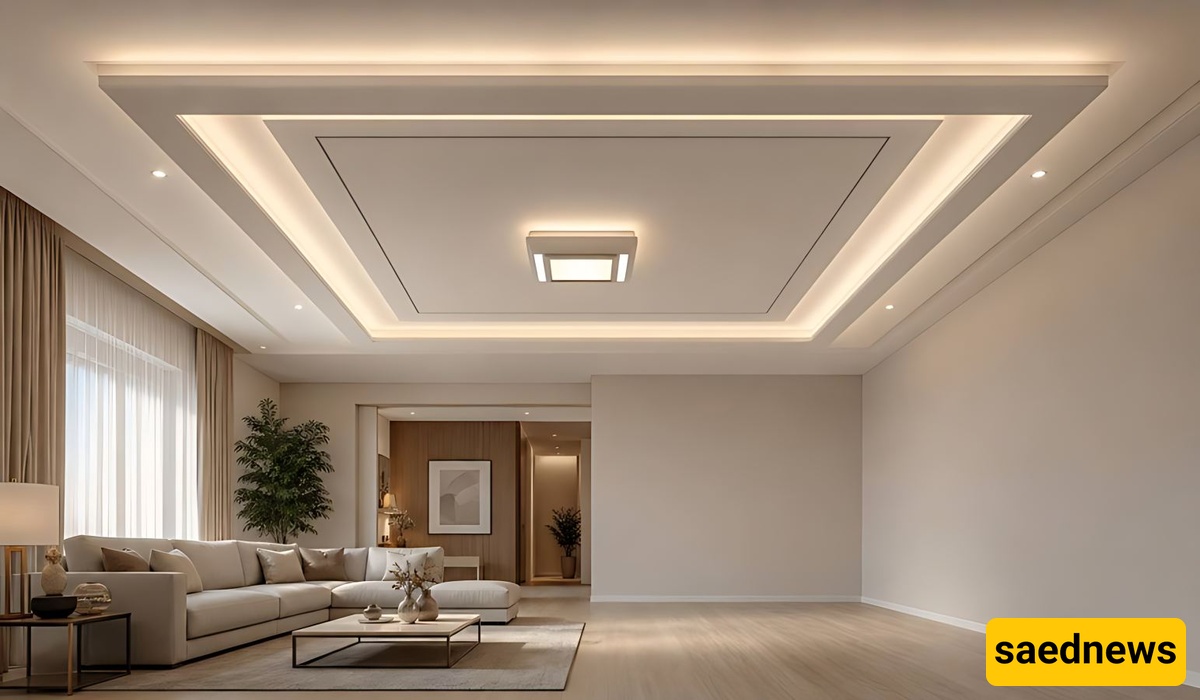
According to Saednews, The living room is the heart of every home and often the first space guests see when they arrive. That is why its interior design deserves special attention. The ceiling is one of the most important decorative elements, as it can make a living room appear more spacious, brighter, and visually appealing.
In recent years, gypsum board (Knauf) false ceilings have become increasingly popular in living room interiors. They offer great design flexibility and make it possible to incorporate sophisticated lighting solutions. However, choosing the right false ceiling design for your living room is not simply a matter of personal taste. Factors such as ceiling height, room dimensions, interior style, budget, and installation requirements should all be considered.
In this guide, we will explore how to choose the ideal false ceiling design for your living room. Whether you are planning a renovation or designing a new ceiling, this article will help you make an informed decision and avoid unnecessary expenses and common mistakes.
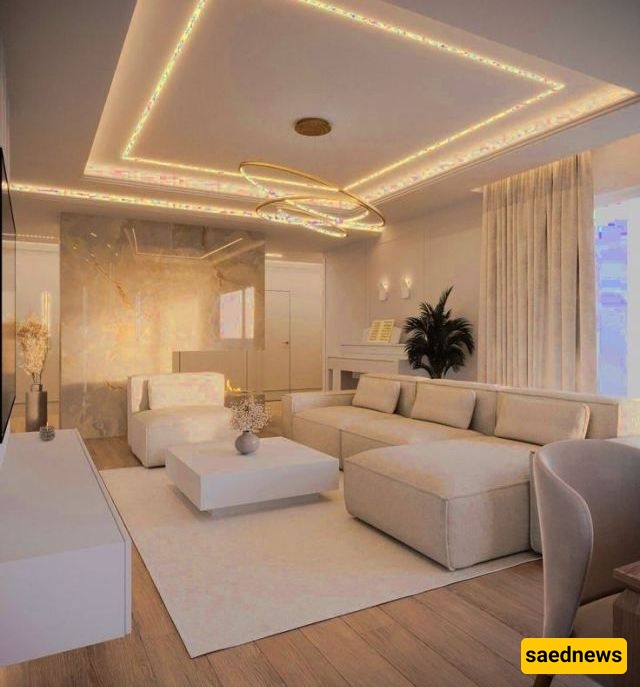
A false ceiling is more than just a decorative covering. It can influence lighting, the overall sense of space, sound insulation, and even energy consumption. An unsuitable ceiling design may make a living room look lower, darker, or overcrowded.
On the other hand, the right false ceiling design can highlight the room's best features while concealing architectural imperfections.
For example, in small living rooms, a simple, seamless false ceiling can make the space appear larger. In spacious and luxurious interiors, a multi-level ceiling with concealed lighting can create a sense of depth and elegance. Therefore, it is important to understand your room's characteristics before choosing a design.
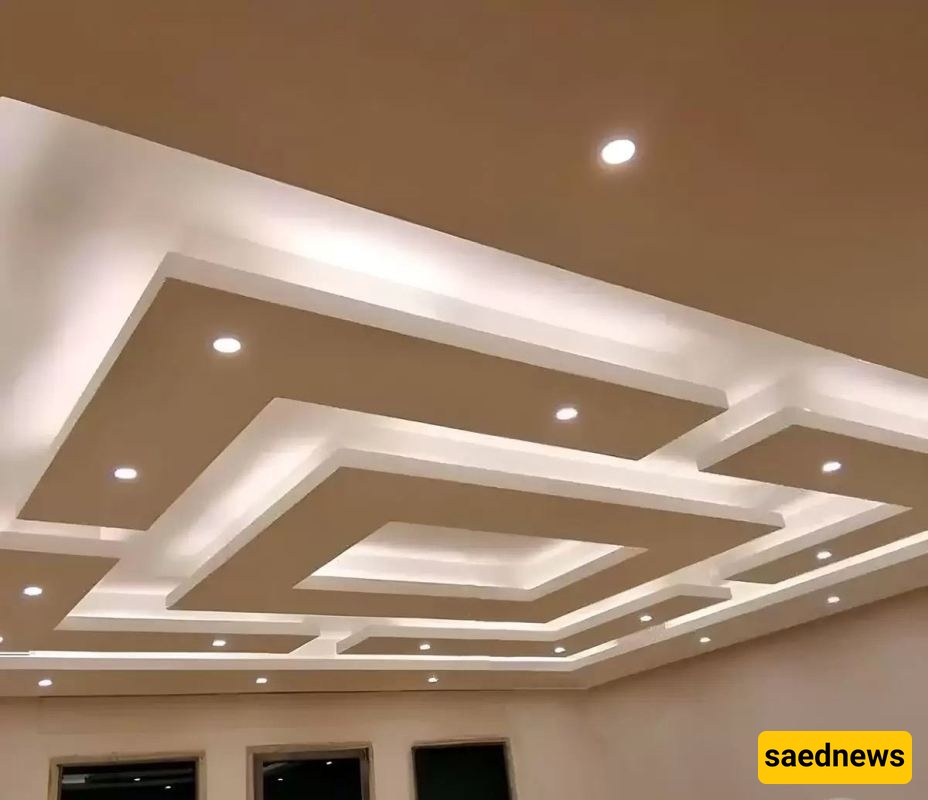
Ceiling height is one of the most important factors when choosing a false ceiling design. If your ceiling is relatively low, installing multiple layers or deep ceiling recesses can make the room feel cramped and even smaller. In such cases, simple, shallow, and seamless designs are a better choice.
For living rooms with high ceilings, you can consider multi-level designs, concealed lighting features, and curved ceiling details. These options add depth and a more luxurious appearance.
As a general guideline, a ceiling height of approximately 2.8 meters or more is preferable for installing a false ceiling with concealed lighting, helping prevent the room from feeling enclosed.
The shape and dimensions of your living room also play an important role.
In rectangular living rooms, linear ceiling designs running parallel to the longer walls can make the space appear more elongated. In square rooms, a central ceiling feature or a symmetrical square design can create better visual balance.
If your living room has columns or irregular walls, a carefully designed false ceiling can help conceal these architectural irregularities. In such situations, consulting an interior designer can help you avoid an unsuitable design.
Your false ceiling should complement the overall interior design of your home.
For modern and minimalist interiors, clean lines, smooth surfaces, and linear lighting are ideal choices.
For classic interiors, decorative ceiling frames, ornamental moldings, and symmetrical patterns are more commonly used.
In neoclassical interiors, combining a simple false ceiling with subtle decorative frames and concealed lighting creates an elegant and sophisticated look.
If your home combines different interior styles, choosing a simpler ceiling design is usually the safest option, as it will blend more easily with the other elements.
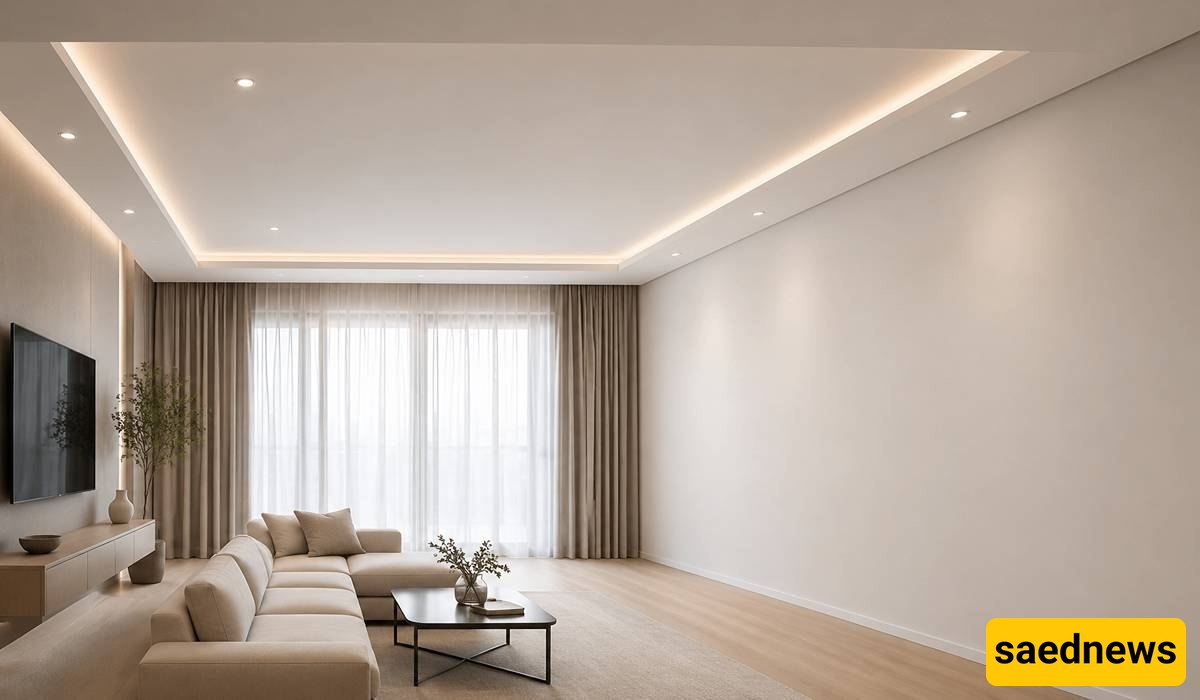
One of the greatest advantages of false ceilings is the ability to incorporate concealed and recessed lighting.
Your ceiling design should be planned alongside your lighting layout. If you want to install indirect lighting, the position and depth of the ceiling recesses should be determined before installation begins.
For living rooms, combining warm white lighting with soft linear LED lights can create a relaxing and welcoming atmosphere.
Recessed spotlights can also be positioned strategically to highlight artwork, decorative objects, or specific areas of the room.
However, avoid excessive or poorly arranged lighting, as it can make the ceiling look cluttered.
If your living room uses an air conditioner, ducted split system, or central ventilation system, the locations of air vents and the routes of pipes and ducts must be considered during the ceiling design process.
Choosing a false ceiling without accounting for these systems may lead to installation problems later.
Air vents should be positioned in a way that maintains visual harmony while allowing proper airflow.
Installation costs are another important consideration when choosing a false ceiling design.
Simple false ceilings are generally more affordable, while multi-level, curved, and complex illuminated designs tend to cost more.
Before starting the project, make sure to calculate the full cost of materials, installation labor, electrical work, and painting.
Gypsum board ceilings can be sensitive to moisture, so suitable materials and professional installation are essential.
Designs with fewer decorative details and simpler surfaces are generally easier to clean and maintain.
If you live in a dusty area, choosing a simple design with minimal detailing can make regular maintenance much easier.
This design is ideal for small living rooms and spaces with low ceilings.
A simple false ceiling creates a clean, uniform appearance, makes the room feel more spacious, and generally costs less than more elaborate designs.
If your interior follows a minimalist style, this is a practical and attractive option.
This is one of the most popular false ceiling styles for living rooms.
By creating recessed sections around the ceiling and installing LED strips, you can achieve soft, indirect lighting that enhances the atmosphere of the space.
This design works particularly well in living rooms with adequate ceiling height and modern or neoclassical interiors.
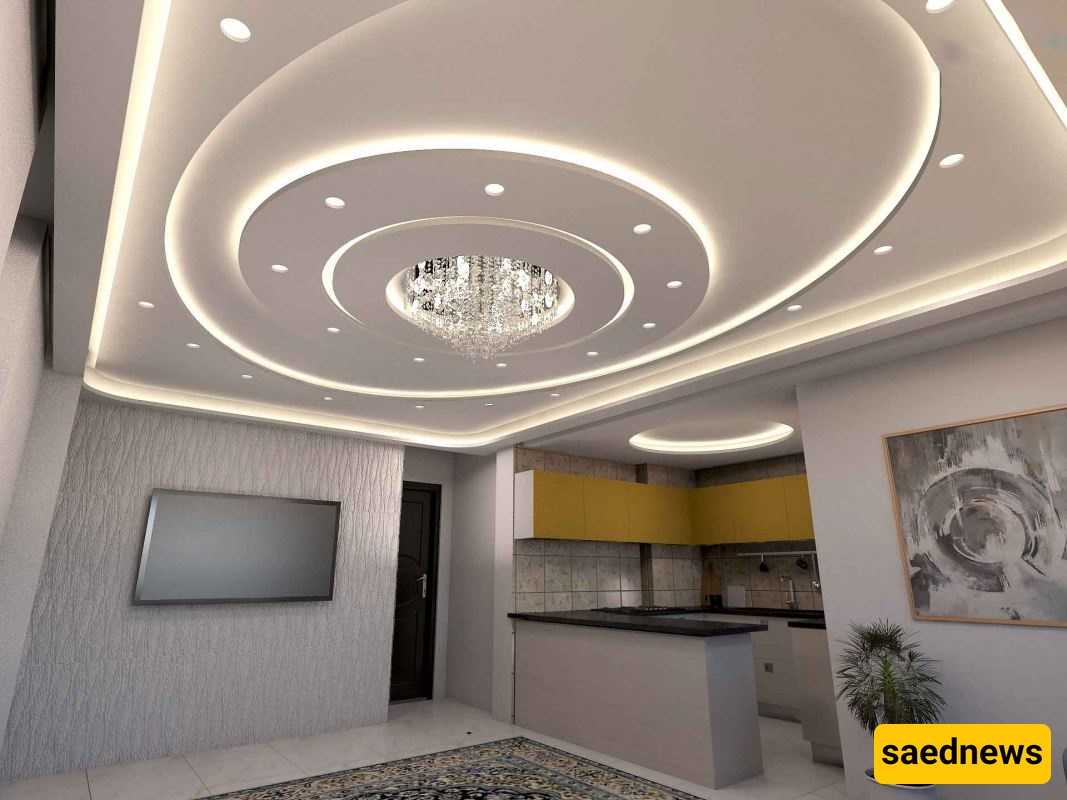
In this design, the ceiling is divided into several different levels to create depth and a more impressive appearance.
Multi-level ceilings are particularly suitable for large and luxurious living rooms.
However, avoid adding too many layers, as excessive detailing can make the ceiling look busy and overwhelming.
This design uses parallel lines or narrow grooves to create a contemporary and dynamic appearance.
Linear false ceilings are especially suitable for modern and minimalist living rooms. They can also make rectangular spaces appear longer and more visually balanced.
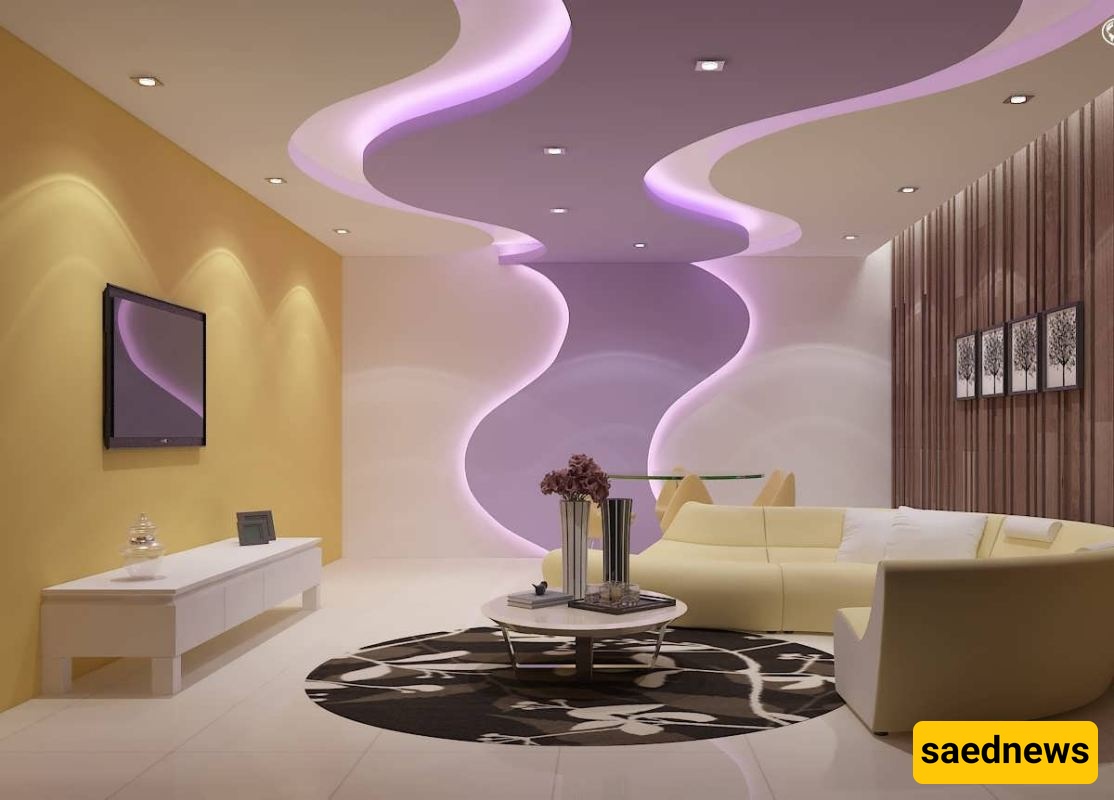
Curved false ceilings are ideal for homeowners looking for a distinctive and creative interior design.
They require precise installation and experienced professionals, which usually makes them more expensive.
Nevertheless, the finished result can be visually striking and give the living room a unique character.
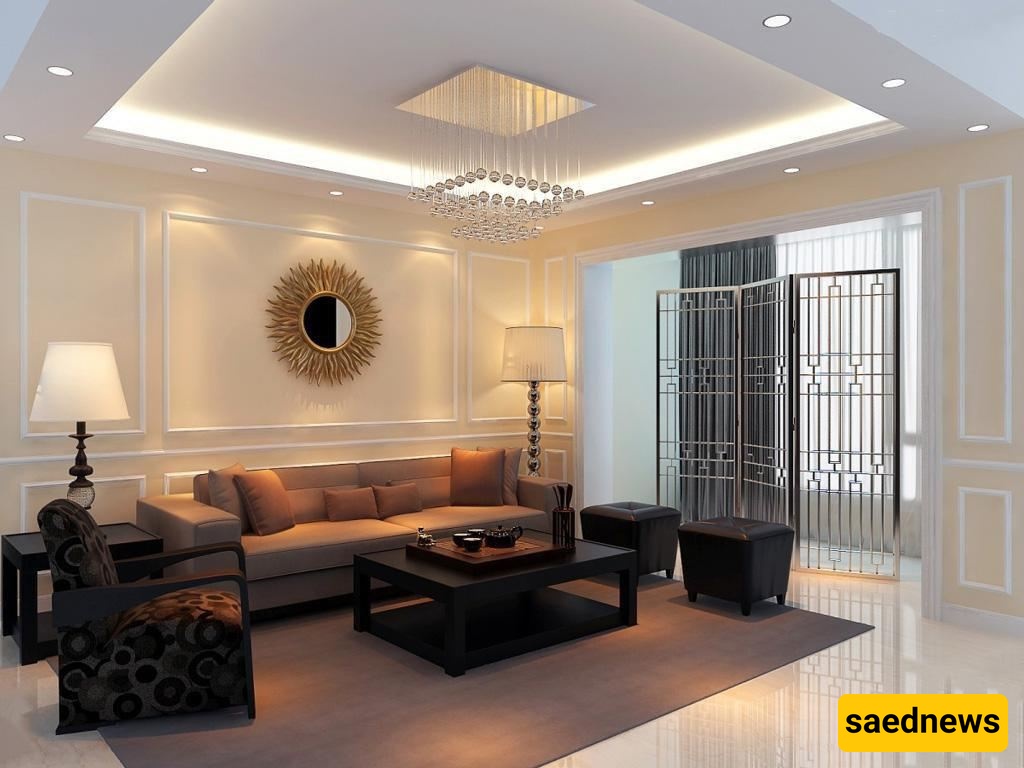
Classic false ceilings often feature decorative frames, ornamental moldings, and symmetrical patterns.
This style is particularly suitable for large, elegant homes with traditional furniture and classic interior decorations.
One of the most common mistakes is choosing an overly complicated design for a room with a low ceiling. This can make the living room appear smaller, darker, and more confined.
Another mistake is failing to consider the placement of lighting fixtures and ventilation outlets during the design process.
Choosing a ceiling style that does not match the overall interior design can also create visual inconsistency.
Many homeowners focus only on attractive ceiling designs they see in photographs without considering the actual dimensions and layout of their own living rooms.
Before making a decision, review your room's floor plan and consult an experienced installer or interior designer.
Before finalizing your design, make sure you:
Measure the ceiling height.
Consider the living room's dimensions and layout.
Identify your preferred interior design style.
Plan the lighting arrangement.
Check the location of ventilation outlets.
Calculate the complete installation budget.
Review the installer's previous projects.
Consider the ceiling's durability and maintenance requirements.
Choose high-quality, standard-compliant materials.
Put the installation agreement and project specifications in writing.
Choosing the right false ceiling design for your living room is an important interior design decision that should be based on the specific characteristics of your space.
Simple false ceilings are ideal for smaller rooms and homes with low ceilings, while multi-level, recessed, and curved designs can be attractive options for larger and more luxurious living rooms.
The most important consideration is ensuring that your chosen design complements the ceiling height, interior style, lighting plan, and available budget.
Before starting the installation, consult several experienced contractors, review their previous work, and prepare a detailed ceiling plan.
With the right false ceiling design, you can create a beautiful, bright, and functional living room that you and your guests will enjoy for years to come.