SAEDNEWS: The color change is caused by a combination of factors, including increased salinity, declining water levels, intense evaporation, and the growth of salt-loving microorganisms. The lake’s red color is not a sign of chemical pollution, but rather an indication of ecological imbalance and a warning of a growing water crisis.
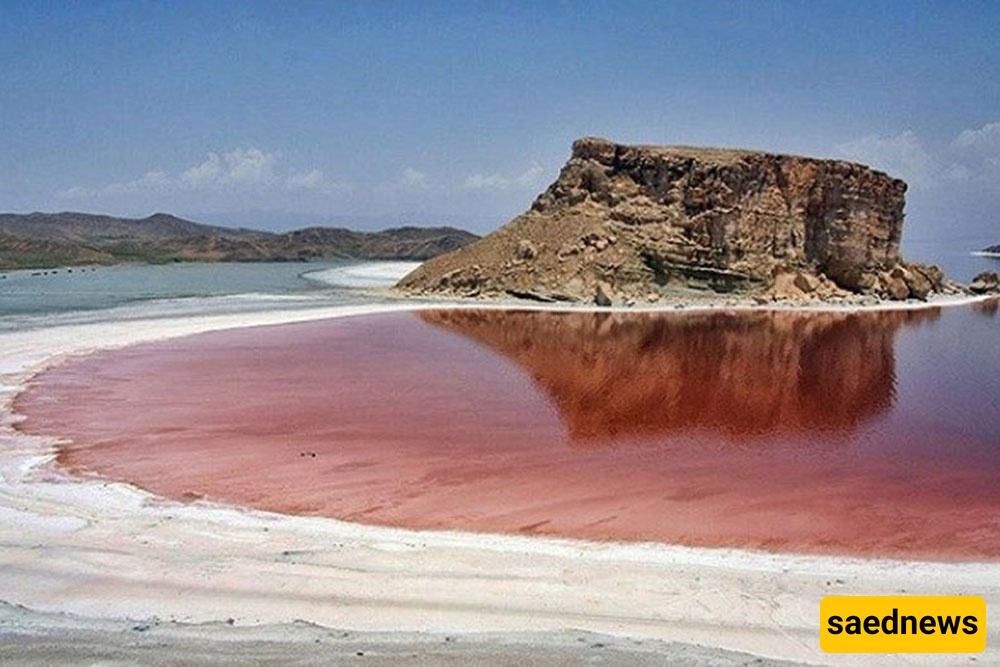
According to Saednews, Lake Urmia, one of Iran’s most important saltwater ecosystems and one of the largest salt lakes in the Middle East, has been seen displaying unexpected colors, including pink, orange, and red, in recent years. While these unusual colors attract tourists, they also signal changes in the lake’s ecological conditions.
The key question is: Why has Lake Urmia turned red, and what causes this phenomenon?
The short answer is that the red coloration is generally caused by a combination of increasing water salinity, declining water levels, intense evaporation, rising temperatures, strong sunlight, and the growth of salt-loving microorganisms.
Under these conditions, certain algae and bacteria adapted to highly saline environments produce pigments that turn the water or sediments pink, orange, or red.
Therefore, the red color of Lake Urmia does not necessarily indicate chemical pollution or the introduction of artificial dyes. Instead, it is primarily a biological and biochemical phenomenon associated with changes in water levels and salinity.
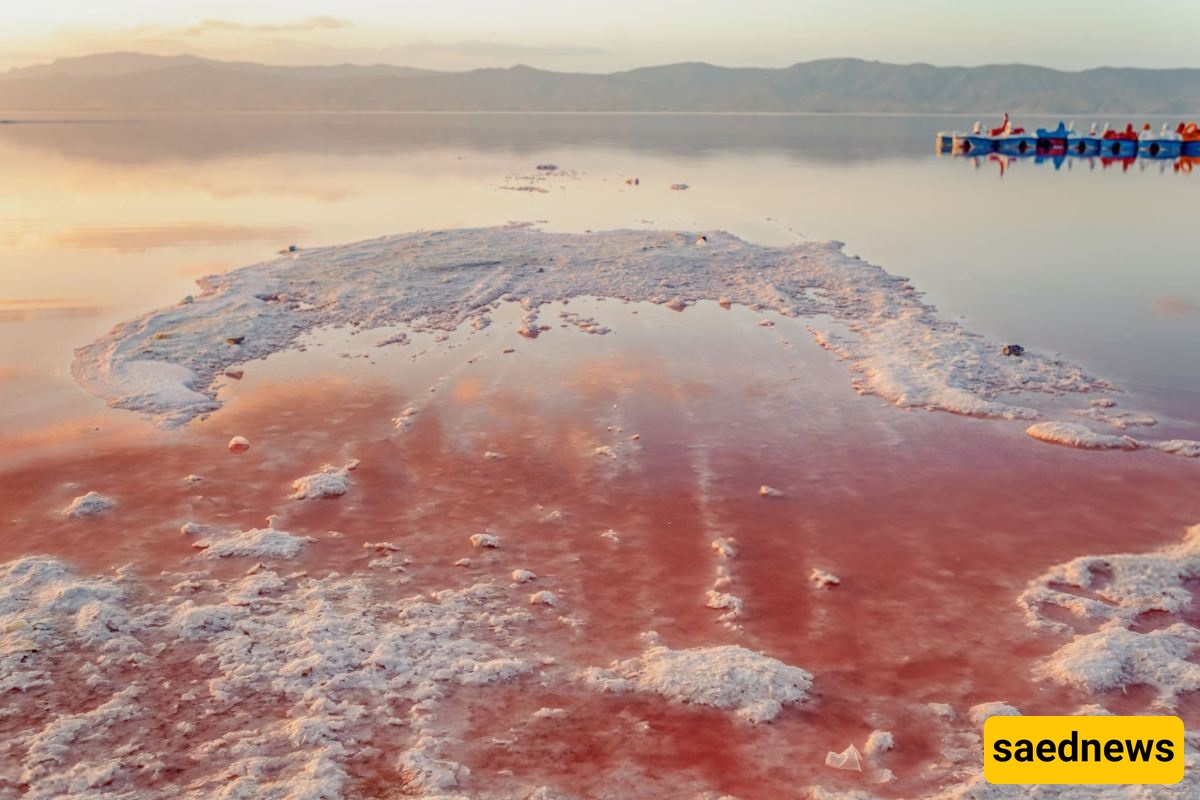
The red coloration of Lake Urmia is not a permanent phenomenon.
When the lake contains more water and its salinity remains relatively lower, its appearance is generally blue, green, or gray. However, as water levels decline, salt concentrations increase, creating favorable conditions for salt-loving microorganisms to grow and dominate the ecosystem.
Under these circumstances, the lake may turn pink, orange, or red.
The discoloration may be more intense in certain areas and can even appear as colorful patches in satellite images. Its intensity and distribution depend on several factors, including:
Seasonal changes
Water temperature
Water depth
Nutrient availability
The composition of microbial communities
For this reason, Lake Urmia does not remain red throughout the year. Rather, the phenomenon represents the ecosystem's response to specific environmental conditions, often occurring seasonally.
The primary explanation for Lake Urmia's red appearance is the activity of microorganisms adapted to highly saline environments.
Two major groups are involved:
Dunaliella salina: A single-celled green alga.
Halophilic bacteria: Salt-loving microorganisms, particularly members of the family Halobacteriaceae.
Both groups can produce pigments under high-salinity conditions, giving the water its distinctive pink or reddish appearance.
Dunaliella salina is a single-celled alga that thrives in saline and hypersaline waters.
Under normal conditions, this microorganism is green. However, when water salinity increases, temperatures rise, and sunlight becomes more intense, Dunaliella produces large amounts of beta-carotene as a protective mechanism.
Beta-carotene is the same natural pigment found in carrots and tomatoes, responsible for their orange and reddish colors.
As Dunaliella salina populations become more concentrated and beta-carotene production increases, the lake water can turn pink, orange, or red.
This phenomenon has also been observed in many salt lakes around the world, including Australia's salt lakes and several saline lakes in Africa and Asia.
Consequently, the reddening of Lake Urmia is a recognized biological response to extreme environmental conditions.
The second important group consists of salt-loving microorganisms that thrive in extremely saline waters.
These microorganisms belong to the family Halobacteriaceae. Some produce pigments known as bacteriorhodopsins.
Bacteriorhodopsin is a purple-red pigment that allows these microorganisms to capture energy from sunlight.
When populations of these bacteria increase significantly, the water can take on reddish or purple hues.
In simple terms, the combination of Dunaliella salina, halophilic bacteria, and other salt-loving microorganisms can transform the lake's appearance from blue and green to pink and red.
Because their populations vary across different areas and seasons, Lake Urmia's color can change over time.
Another important organism living in Lake Urmia is Artemia, commonly known as brine shrimp.
Artemia feeds on algae and microorganisms and plays an important role in the lake's food chain. Its population can influence the abundance of algae and other microscopic organisms.
When salinity conditions change, populations of Artemia and microorganisms also fluctuate.
These interconnected changes can increase or decrease the intensity of the lake's red coloration.
Therefore, the phenomenon cannot be attributed to a single organism. It is the result of interactions among several components of the lake's ecosystem.
The red coloration has attracted greater attention in recent years because the lake's hydrological and ecological conditions have changed.
Several major factors contribute to this phenomenon.
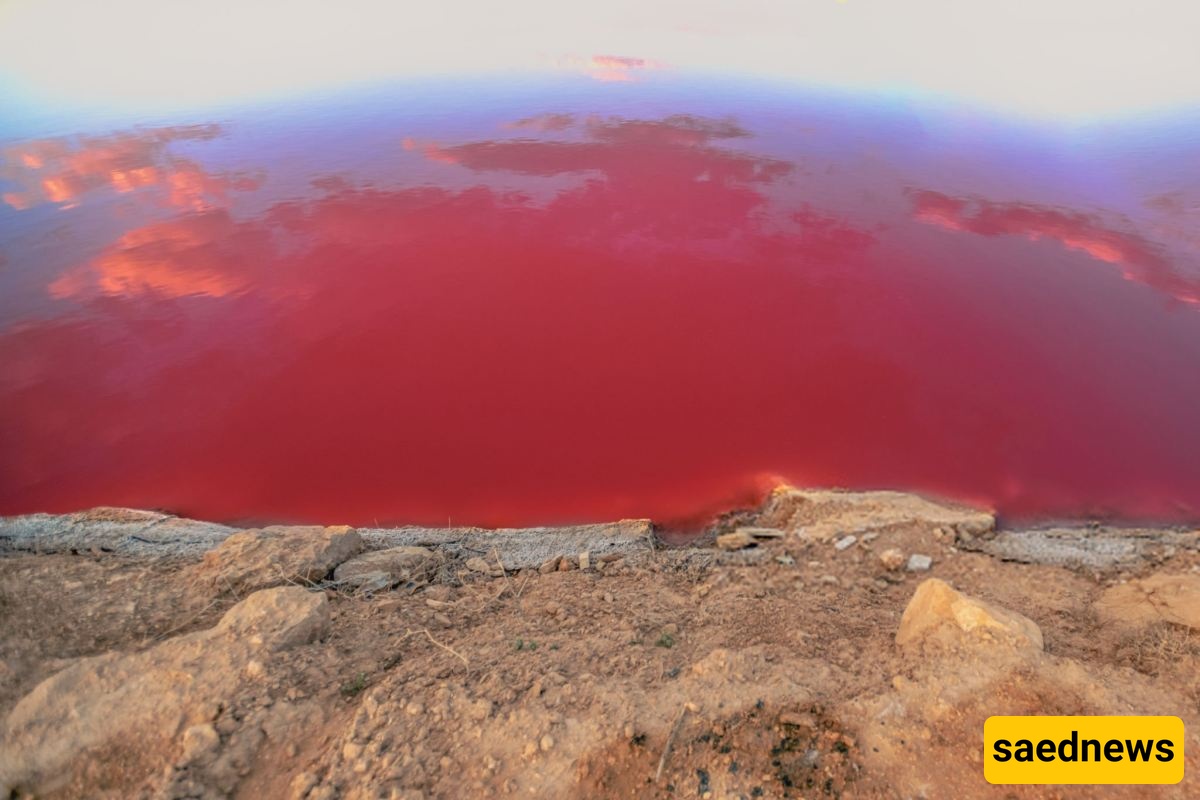
Lake Urmia depends on rivers, rainfall, and surface water flows to maintain its water levels.
Reduced precipitation, repeated droughts, water extraction for agriculture, and land-use changes have decreased the amount of water reaching the lake.
As water levels fall, the concentration of dissolved salts increases, creating more favorable conditions for salt-loving microorganisms.
Evaporation rates are particularly high in the region surrounding Lake Urmia.
When water levels decline, dissolved salts become increasingly concentrated.
High salinity is one of the main factors stimulating beta-carotene production in Dunaliella salina and supporting the growth of halophilic bacteria.
As a result, the lake's red coloration is often associated with periods of water scarcity and elevated salinity.
High temperatures and strong sunlight also contribute to the intensification of the red coloration.
Intense sunlight can stimulate the production of protective pigments in algae.
During warmer seasons, particularly late spring and summer, pink and red coloration may become more noticeable.
Nutrients entering the lake through agricultural runoff and wastewater can alter the composition of its microbial communities.
Although Lake Urmia is a saline ecosystem, changes in the balance of dissolved salts and available nutrients can encourage the growth of particular microorganisms.
These changes can also influence the color of the water.
The red coloration itself does not necessarily indicate chemical pollution. Similar phenomena occur naturally in many salt lakes around the world.
However, it should not be viewed merely as an attractive natural spectacle.
The reddish appearance may indicate:
Increasing water salinity.
Declining lake water levels.
Changes in the ecological balance.
Increasing environmental pressure on the ecosystem.
In other words, although the red color may look beautiful and fascinating, it can also signal underlying environmental problems.
The drying of parts of the lake and the accumulation of salt deposits may also contribute to salt dust storms and other environmental consequences.
Therefore, the main concern is not simply the color of the water, but the overall health of the lake and the sustainability of its surrounding watershed.
One common question is whether the red color of Lake Urmia indicates pollution.
The answer is that biological discoloration caused by salt-loving microorganisms is fundamentally different from industrial pollution or the discharge of chemical dyes.
Natural biological coloration is generally associated with seasonal changes, salinity, and temperature. It may also be concentrated in specific sections of the lake.
Chemical pollution, on the other hand, may be accompanied by other warning signs, such as:
Unpleasant odors.
Sudden and widespread changes in water appearance.
Aquatic organism deaths.
Reports of industrial or chemical contamination.
Nevertheless, identifying the exact cause of discoloration during any particular period requires scientific sampling and laboratory analysis.
For this reason, the red coloration of Lake Urmia should be understood as a multifactorial phenomenon that requires continuous environmental monitoring.
Reducing the severity and frequency of Lake Urmia's red coloration requires addressing its underlying causes, particularly declining water levels and increasing salinity.
Some of the most important measures include:
Restoring the lake's environmental water allocation.
Improving agricultural water management.
Preventing unauthorized water extraction.
Introducing more efficient irrigation systems.
Controlling the discharge of pollutants into the lake.
Conducting regular water-quality monitoring.
Measuring salinity and monitoring microorganism populations.
Using satellite imagery to track environmental changes.
Continuous scientific monitoring can help researchers better understand the relationship between water conditions, microbial populations, and the lake's changing colors.
It is important to remember that the red coloration is only one visible symptom of a much larger environmental problem.
If water conditions improve and salinity returns to more balanced levels, the likelihood of intense blooms of red-pigmented microorganisms may decrease, allowing the lake's more familiar colors to return.
However, if water scarcity and excessive salinity persist, this phenomenon may continue to occur and become a recurring feature of the lake's seasonal appearance.
The red coloration of Lake Urmia is primarily associated with blooms of salt-loving microorganisms, particularly the alga Dunaliella salina and halophilic bacteria, under conditions of high salinity, elevated temperatures, and declining water levels.
These microorganisms produce natural pigments, including beta-carotene and bacteriorhodopsin, which can turn the water pink, orange, or red.
Therefore, the causes of Lake Urmia's red appearance should be understood as a combination of biological, climatic, and human-related factors rather than simply chemical pollution.
The lake's red color is both fascinating and concerning.
It is fascinating because it demonstrates the remarkable ability of life to survive in extremely saline environments. At the same time, it is concerning because it may reflect declining water levels, increasing salinity, and growing pressure on the ecosystem.
Protecting Lake Urmia means preserving more than a beautiful natural landscape. It also means safeguarding biodiversity, ecological balance, and the quality of life for communities throughout the surrounding region.
The real secret behind Lake Urmia's red color lies in the interaction between salt-loving microorganisms and an ecosystem under increasing environmental stress.